Minnesota Motorcycle practice
Minnesota Motorcycle: Road Signs practice test
Learn the shapes, colors, and meanings of regulatory, warning, and guide signs — from stop and yield to construction and school-zone signs.
Content reviewed against official driver handbooks · August 12, 2026
12 questions · pass with 10 correct. You get instant feedback and an explanation after every answer.
Choose your level
Up to 20 questions on this topic, with feedback after every answer.
Study questions with answers
12 sample Road Signs questions with the correct answer, a short explanation, and the official handbook reference. Read through them, then take the quiz above.
Show all 12 questions with answers
1. A brown road sign in Minnesota is used to point out:

Correct answer: A landmark, park or similar place of interest
Brown is reserved for historic, cultural and recreational destinations, while blue is the color that directs you to driver services.
Source: Minnesota Driver's Manual — Sign color meanings
2. A sign carrying a diamond symbol indicates that a traffic lane is:
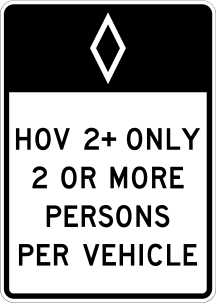
Correct answer: Set aside for particular vehicles or particular uses
The diamond marks a restricted lane, which may be limited to buses, bicycles, commercial vehicles or cars carrying two or more people.
Source: Minnesota Driver's Manual — Lane for Limited Uses
3. At a railroad crossing, a small plate mounted below the X-shaped crossbuck tells you:
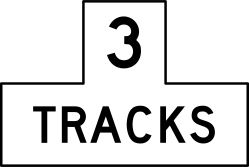
Correct answer: How many separate tracks you are about to cross
When a crossing carries more than one track, the plate states how many, so you do not pull forward after clearing only the first set of rails.
Source: Minnesota Driver's Manual — Railroad Crossings
4. A 'Lane Ends' sign shows the right lane merging into the left. Which drivers have to yield?

Correct answer: Drivers in the ending right lane
The lane that disappears gives way, so right-lane traffic yields and blends into the left-lane flow.
Source: Minnesota Driver's Manual — Lane Ends
5. You see a blue highway sign ahead. What is it there to tell you?

Correct answer: Where to find services such as fuel, food, lodging or a hospital
Blue is the color code for motorist services; green signs are the ones that handle guidance such as exits and mileage.
Source: Minnesota Driver's Manual — Motorist services signs
6. An 'exempt' sign posted at a railroad crossing means that:

Correct answer: Bus and truck drivers who normally must stop may roll through
It releases the vehicles that would otherwise have to stop, but every driver still has to look both ways for an approaching train.
Source: Minnesota Driver's Manual — Railroad Crossings
7. An 'Added Lane' sign warns you that:

Correct answer: The road picks up an extra lane, so entering traffic need not merge
Because the roadway gains a lane, vehicles joining from the side get a lane of their own instead of merging into yours.
Source: Minnesota Driver's Manual — Added Lane
8. A 'Slippery Road' warning sign tells you that:

Correct answer: The pavement ahead loses traction when it is wet
You will often meet this warning just before a bridge or overpass, where the surface loses grip once it is wet.
Source: Minnesota Driver's Manual — Slippery Road
9. Orange signs with black lettering are posted in order to:

Correct answer: Warn and control traffic where road work is under way
Work zones are marked in orange, so seeing one is your cue to slow down and expect lane restrictions, detours or workers on the road.
Source: Minnesota Driver's Manual — Sign color meanings
10. The orange triangular slow-moving vehicle emblem must be shown by vehicles that cannot exceed:
Correct answer: 30 mph
Farm implements, animal-drawn wagons and similar vehicles topping out at 30 mph or less must display the emblem whenever they use a public road.
Source: Minnesota Driver's Manual — Slow-Moving Vehicle Emblem
11. Fluorescent yellow-green signs are used in Minnesota mainly at:
Correct answer: Crossings for people on foot or on bicycles, and school areas
This bright shade is set aside for warning drivers near schools and at places where people walk or bike across the road.
Source: Minnesota Driver's Manual — Sign color meanings
12. A sign warning that a no-passing zone is beginning is posted on which side of a two-way highway?
Correct answer: The left side
It is placed on the left so it faces the driver who would have to cross the center line in order to pass.
Source: Minnesota Driver's Manual — No Passing Zone
More Motorcycle topics
Practice Road Signs in another state
Every Minnesota question is written from the official Minnesota driver handbook and checked against its current edition. DMV Test Free is a free, independent study resource — not affiliated with any DMV or government agency. About DMV Test Free