Hawaii Road Signs and Their Meanings
Hawaii does not license drivers at the state level. The four counties do — the City and County of Honolulu, the County of Hawaii, the County of Kauai and the County of Maui — so the office that gives you the written test and grades it is a county office, not a state motor vehicle agency. What the four share is one book. The State of Hawaii Driver's Manual is published under the Director of Transportation, and the Motor Vehicle Safety Office inside the state Department of Transportation heads the manual's own list of responsible agencies, marked "(Program Coordination)", with the four county offices underneath it. The manual then opens on those counties: an address link, a phone number, an appointment link and a written-testing window for each — and one of those windows closes half an hour earlier than the other three. You study statewide material and sit a county exam, so "who says so" has two different answers on this page.
Hawaii does name sign recognition as a test of its own. Under the heading Preliminary Examinations the manual writes: "You will be given the following tests when you apply for a driver's license or instruction permit as required: 1. Rules of the Road 2. Vision 3. Recognition of traffic control devices," and adds that "You must pass these tests before you are permitted to take the driver performance road test." Read literally, recognizing signs, signals and markings stands beside the rules-of-the-road test rather than sitting inside it. Two other passages in the same book put it two other ways. One folds it into a single item — "A knowledge test relating to rules of the road and traffic control devices" — which reads as one exam covering both. The graduated-licensing page for a first instruction permit leaves signs out of the sentence entirely: "You must pass the preliminary examinations by taking a vision screening test and a rules of the road test." None of the three attaches a number. The manual never says how many items you face, how many you may miss, or whether device recognition carries a score of its own. Treat "recognition of traffic control devices" as a stated requirement of unstated size.
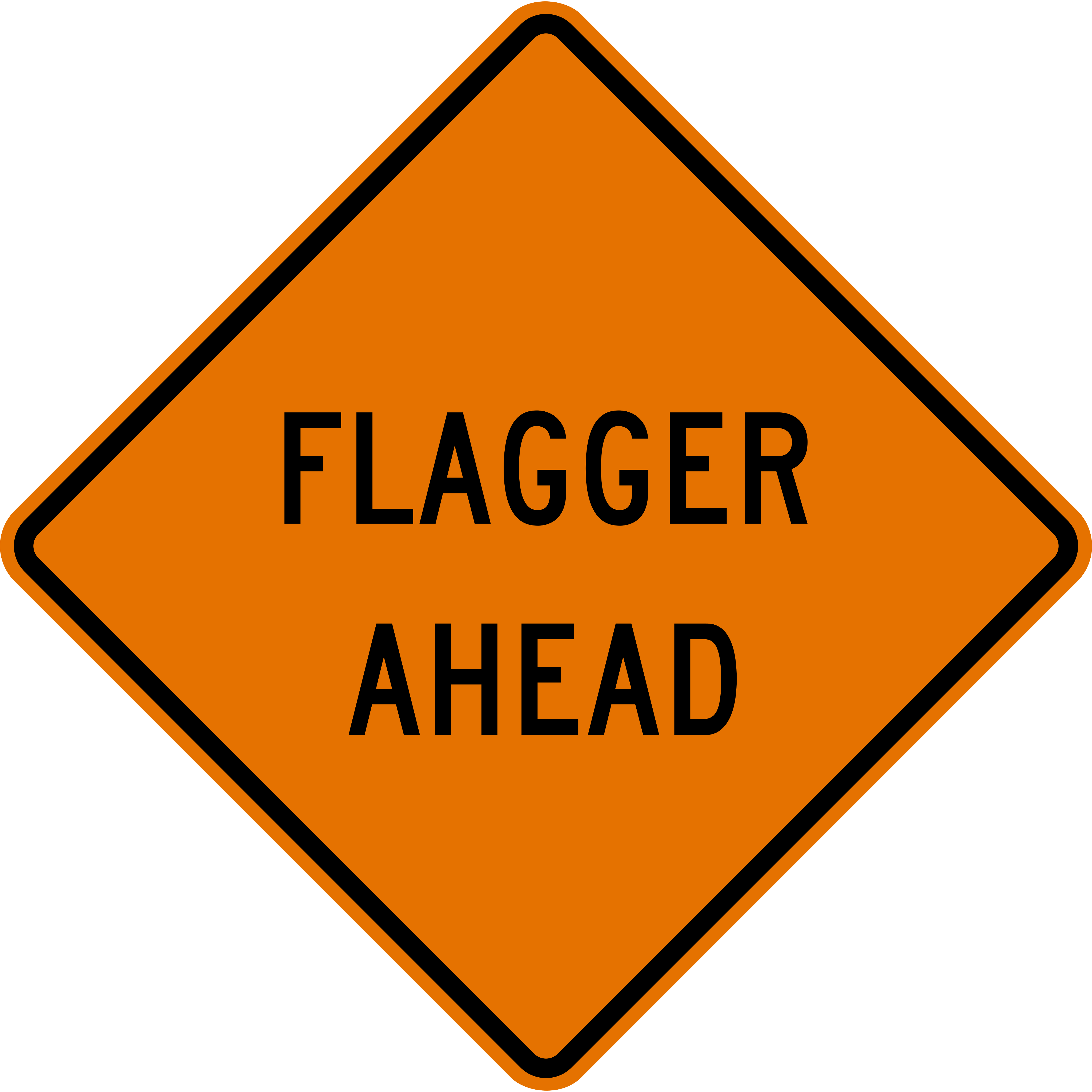
The signs material is Chapter VI, and the book cannot quite agree on what to call it: the table of contents lists it as Signals, Signs and Lane Markings while the chapter's own heading reads Traffic Signs, Signals and Markings. It opens by sorting every traffic control device into three families — regulatory, warning, and guide and information — and is blunt about the first: "All regulatory devices indicate action required by you. Failure to comply is subject to penalty." Then it makes you wait. Pavement markings fill the next several pages and traffic signals fill the pages after that, before anything headed Traffic Signs appears. When it does, it starts with Colors and Shapes and reads as a color key: red "indicates that an action is prohibited," yellow warns of hazard and "almost always appears on a diamond shaped sign," orange means road work, and "The Colors Black and White indicate a required action. Black and white signs are always rectangular in shape." Green, blue and brown are reserved for guide and information signs. Only then do individual signs arrive, in four blocks: Regulatory Signs — stop and yield, speed limit and reduced speed ahead, lane use control, do not pass, the pennant pointing to the start of a no-passing zone, pass with care, exclusion signs and a catch-all for the rest — then Warning Signs, Guide and Information Signs, and Construction and Maintenance Devices, where orange "is the basic color" and barricade stripes carry an instruction of their own: sloping downward to the right means bear right, downward to the left means bear left.
Each published Hawaii sign question here cites the manual and then a named part of it, so any answer can be walked back to the paragraph it rests on. Most land inside the signs chapter, under its regulatory-signs, colors-and-shapes and construction-and-maintenance headings — where Hawaii spends its words. One does not, and it is worth knowing before you decide what to read. The slow-moving vehicle emblem sits a chapter earlier, wedged into the passing rules, where the manual describes a highly reflective triangular emblem required on the rear of vehicles built for low speeds and tells you to reduce speed and approach cautiously. The signs chapter never mentions it. So a citation here can send you outside the signs pages, and when it does it is following the manual's own filing rather than wandering off. One thing more, plainly: these questions are written from the manual's explanatory chapters. Hawaii prints practice questions of its own in the back of the book, and nothing here is drawn from that section.
14 published Hawaii road-sign questions, each with an explanation and a citation to the handbook section it came from.
Content reviewed against official driver handbooks · August 12, 2026
Every sign you can be tested on in Hawaii
Regulatory signs
- Stop

- Yield

- Do Not Enter

- Wrong Way

- No U-Turn

- Speed Limit

- One Way

- All Way

- State Law: Yield to Pedestrians

- State Law: Stop for Pedestrians

- Truck Speed Limit

- Minimum Speed Limit

- Reduced Speed Limit Ahead

- Begin Higher Fines Zone

- End Higher Fines Zone

- No Right Turn

- No Left Turn

- No Turns

- Left Lane Must Turn Left

- Right Lane Must Turn Right

- Intersection Lane Control

- Bike Lane

- No Left or U-Turn

- No Straight Through

- Do Not Pass

- Pass With Care

- Slower Traffic Keep Right

- Begin Right Turn Lane — Yield to Bikes

- Trucks Use Right Lane

- Keep Right

- Keep Left

- Keep Right Except to Pass

- Do Not Drive on Shoulder

- No Trucks

- No Motor Vehicles

- No Bicycles

- No Pedestrians, Bicycles, or Motor-Driven Cycles

- No Parking Any Time

- Accessible Parking

- No Parking Bus Stop

- No Parking

- Stop Here on Red

- Do Not Block Intersection

- No Turn on Red

- Left Turn Yield on Green

- Road Closed

- Road Closed — Local Traffic Only

- Road Closed to Thru Traffic

- Weight Limit

- No Hazardous Materials

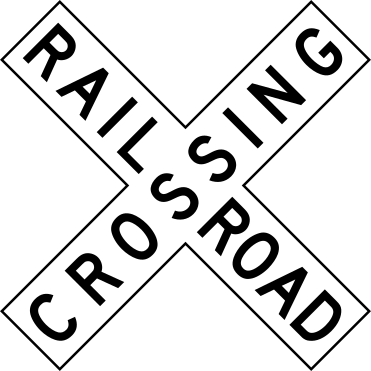
- Railroad Crossing (Crossbuck)
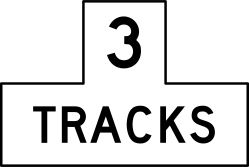
- Number of Tracks
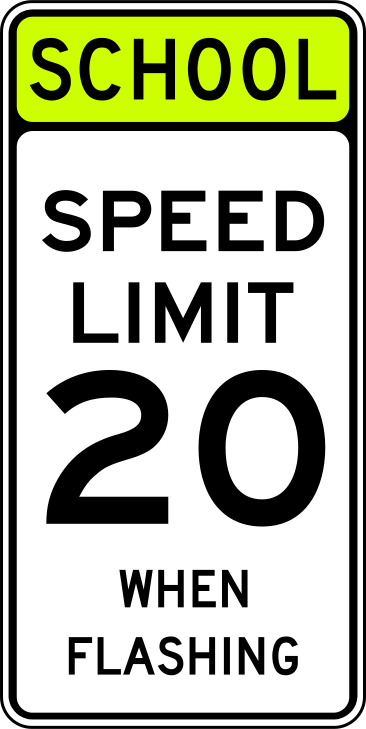
- School Speed Limit When Flashing
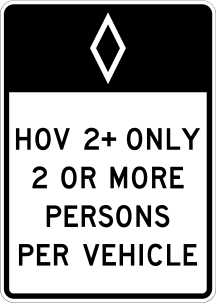
- HOV Lane
- Exempt

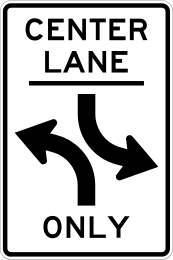
- Two-Way Left Turn Only
Warning signs
- Turn Ahead

- Stop Ahead

- Signal Ahead

- Pedestrian Crossing

- Curve

- Reverse Turn

- Reverse Curve

- Winding Road

- One-Direction Large Arrow

- Two-Direction Large Arrow

- Chevron Alignment

- Hairpin Curve

- Cross Road

- Side Road

- Roundabout Ahead

- Yield Ahead

- Be Prepared to Stop

- Reduced Speed Limit Ahead

- Merging Traffic

- Lane Ends

- Added Lane

- Lanes Merge

- Road Narrows

- Narrow Bridge

- One Lane Bridge

- Ramp Narrows

- Divided Highway Begins

- Divided Highway Ends

- Two-Way Traffic

- Hill / Steep Grade

- Bump

- Dip

- Pavement Ends

- Soft Shoulder

- Slippery When Wet

- Loose Gravel

- Rough Road

- Low Shoulder

- Uneven Lanes

- Grooved Pavement

- Metal Bridge Deck

- Railroad Crossing Ahead

- Bicycle Crossing

- Deer Crossing

- Cattle Crossing

- Farm Machinery

- Snowmobile Crossing

- Equestrian Crossing

- Persons with Disabilities

- Golf Cart Crossing

- Horse-Drawn Vehicle Crossing

- Low Clearance

- Advisory Speed

- Dead End

- No Outlet

- No Passing Zone

- Playground

- Speed Hump

- School

- Truck Rollover

- Bridge Ices Before Road

- Road May Flood

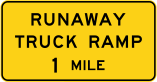
- Runaway Truck Ramp
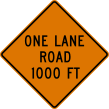
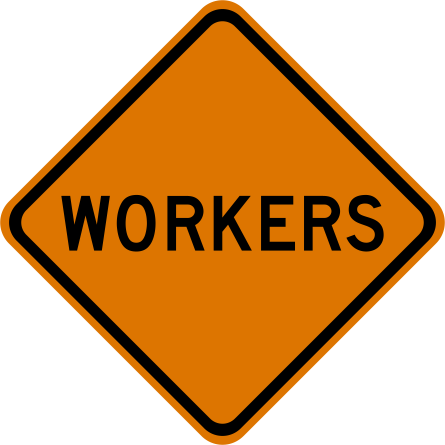
Construction & work-zone signs




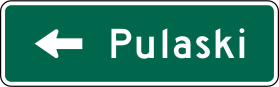
Guide signs


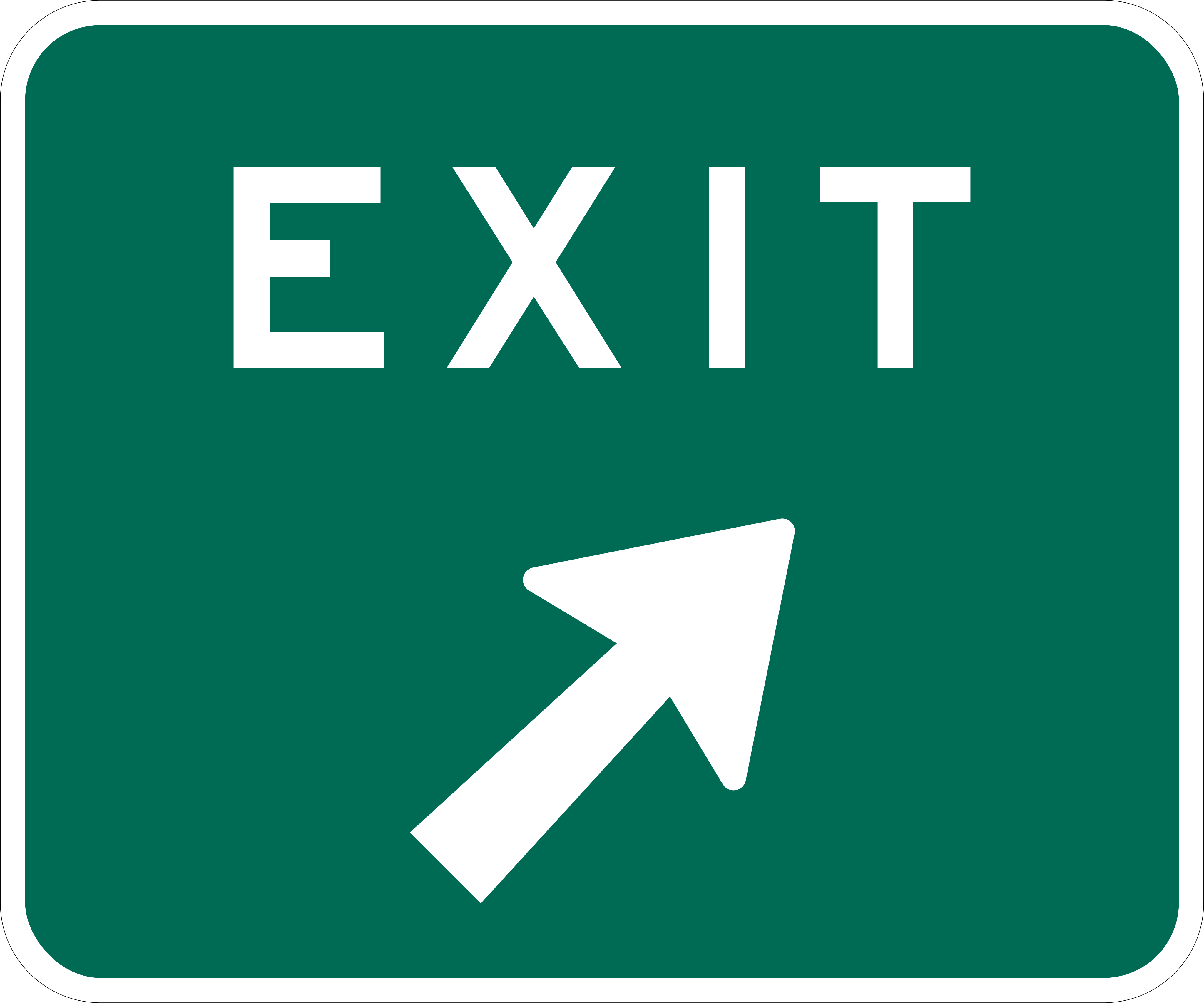


Service & information signs


Hawaii road signs: frequently asked questions
How many questions are on Hawaii's written test, and what score passes?
For the test you sit at a county licensing office, Hawaii publishes neither figure. The manual names the preliminary examinations and never sizes them, and the county driver-licensing pages checked for this page post no count and no passing score for in-person written testing. One route is different: the City and County of Honolulu describes the at-home version in a single sentence — "The 30 question test is currently offered in English and Spanish, and has a one hour time limit to complete." Even there, no pass mark is published, only the length and the clock. So any total or threshold you see quoted for Hawaii, including the figures this site uses to size a practice run, is a working model rather than a number a county or the state has put in writing.
Can I take Hawaii's written test from home?
For a Class 3 instruction permit — the car permit — yes. Honolulu's Department of Customer Services runs an online learner's permit test that needs a desktop or laptop with a mouse, a keyboard and a working webcam, and rules out phones, tablets and touchscreens. The price is the county fee plus a ten-dollar combined transaction and credit card fee: $12 in the City and County of Honolulu, $11 in Hawaii County, $20 in Kauai County and $25 in Maui County. Honolulu warns that "You must select the correct county when registering or you may forfeit your test result." Motorcycles are excluded — the page states it "is not applicable to the Class 2 (motorcycle) Driver's License." Passing does not itself produce a permit; you then have 60 days to bring the certificate and your documents to a licensing center appointment. The in-person route stays open by appointment, on set weekdays that vary between Honolulu's five driver licensing centers.
Does it matter which Hawaii county I test in?
Yes, and Maui County says so without hedging: "The Certificate of Completion issued upon successfully passing the Online permit test is County specific," and "Certificates of completion issued for City & County of Honolulu, Hawaii County, and Kauai County are not accepted in Maui County." The fee differs by county, and so do the counter hours. The manual's front pages give a written-testing window for each of the four, and the County of Hawaii's closes at 3:00 p.m. where the other three run to 3:30 p.m.; the County of Kauai's Division of Motor Vehicles adds on its own site that the day's last written permit test "needs to start no later than 3:00 pm." The counties share the manual and the sign families in it; they do not share the paperwork, the price or the schedule, so read your own county's page before you plan the day.
Can I take the Hawaii test in Spanish, or have it read aloud?
On the online route, both. Honolulu states that the test "is currently offered in English and Spanish," and answers the reading question directly: "The Online Learner's Permit Test can be read aloud in English or Spanish by the testing application, if you have speakers connected to your computer." For in-person testing the manual is silent — it makes no statement anywhere about what languages a county exam is given in. Honolulu's Kapalama Driver Licensing Center lists a "Hawaii Driver's License Oral Test" among its services, and it is the only one of the five Oahu centers whose service list names it; a spoken test and a translated one are different accommodations. The state Department of Transportation's driver's license page carries a language-access notice offering a free interpreter by telephone, Spanish among the languages listed, but that is a service line rather than a promise about the exam. Ask your county office before you assume.
What happens in Hawaii if I fail the written test?
The manual sets no waiting period of its own. Honolulu does, for the online version: you may take it "as many times as needed, but only twice in one day," every retake costs another full test fee, and "applicants who fail testing due to knowledge must wait seven (7) days before attempting to retake the test." That wording separates a failure for knowledge from a failure for procedure, and the same page spells out how the second kind happens. The cursor has to stay inside a marked box on screen; the software issues two warnings for looking away or leaving the test screen, and "The third time the program will stop the test and the applicant is failed for the attempt." Photographs are captured at random during the test and cross-referenced by the clerk at the follow-up appointment.
The Hawaii manual prints its own test questions at the back. Is that the real exam?
No, but read it anyway. The cover of the State of Hawaii Driver's Manual advertises "INCLUDES Complete Test Questions and Answers From State of Hawaii Dept. Of Transportation," and the last stretch of the book is a numbered multiple-choice section headed General Test Questions. Instead of printing a letter answer beside each item, it follows each run of questions with a "Ref. Pg." line pointing back to the manual page where the answer is explained, which makes the section a re-reading exercise as much as a quiz; several items send you to a picture printed alongside, signs included. It is a study aid the state chose to publish, not a copy of the exam your county will give you. Every question on this site is written independently from the manual's explanatory text, and none is taken from that section.
Official sources
- State of Hawaii Driver's Manual (Hawaii Department of Transportation)
- Hawaii DOT — Motor Vehicle Safety Office
- City and County of Honolulu — Online Learner's Permit Test
- City and County of Honolulu — Division of Motor Vehicles (driver licensing centers)
- County of Maui — Division of Motor Vehicles and Licensing
- County of Kauai — Division of Motor Vehicles
Checked against official state sources on 2026-08-29.