Idaho Road Signs and Their Meanings
Idaho prints the shape of its written exam where you can go and check it. Under the heading Knowledge Test: Class D (Non-Commercial), the Idaho Driver's Handbook says the test "consists of 40 questions; you can miss up to six (6) questions before failing the test," and it says where the material comes from in the same breath: "Knowledge test questions are taken directly from information included in the Driver's Handbook." Licensing belongs to the Idaho Transportation Department's Division of Motor Vehicles — the Idaho DMV — while the testing itself happens locally, at a county driver's license office, and the handbook's fee table puts $5.00 on the knowledge test. What the department has not published anywhere is a breakdown by subject. Neither the handbook nor ITD's Taking the Driver's Test guide says how many of those forty items will put a sign in front of you. So the honest answer to how many signs are on the Idaho test is that the state gives you the total, the margin for error and the source, and then stops.
There is no separate sign score to clear. Six wrong is six wrong in Idaho whether the misses were signs, right-of-way or blood-alcohol limits, and nothing in the handbook or in ITD's testing guide sets aside a portion of the forty for sign identification or requires you to name a minimum number of signs before the rest of your answers count. The closest thing Idaho publishes to a proportion is not the exam at all. The handbook closes with a set of Practice Test Questions — twenty of them, and three of the twenty print a picture and ask what the sign means. Its answer key is not at the back with them; it is near the front of the book, on page 11, more than a hundred pages ahead of the questions it answers. Take that set as the department showing you the format rather than quoting you a ratio, because nothing in the book claims the practice items were built to the same recipe as the real ones. ITD is explicit about the gap, in the knowledge-test section itself: "Web-based driver practice tests are not an accurate representation of Idaho knowledge tests, with the exception of the sample test questions provided by ITD through the itd.idaho.gov website." That is the department drawing a line around its own materials, and it is worth reading before you decide how much weight to put on anybody's practice questions, this site's included.
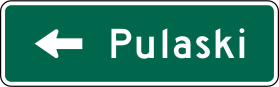
The book is the Idaho Driver's Handbook, published by the Idaho Transportation Department's Division of Motor Vehicles and dated July 2026 on its opening page — the same page that carries a caveat worth holding on to while you study: "The Idaho Driver's Handbook paraphrases the language of Idaho statutes. Courts go by the actual language of the statutes, not this text." Signs sit inside the chapter called Highway & Vehicle Knowledge, which opens at page 44 on a section titled Signs, Signals, & Pavement Markings. Its first paragraph widens the subject before narrowing it: "Traffic control devices include traffic signals, signs, and pavement markings. Traffic control may also be provided by law enforcement officers, highway personnel, or school crossing guards. You must obey these directions." The named parts that follow are Traffic Signs, Turn Prohibition & Lane Control Signs, Work Zone Signs, School Safety Patrols, Warning Signs, Guide Signs, Barricades, Traffic Signals, Pedestrian Crossings, Pavement Markings and Intersections. Two entries in that list are worth a second look. School Safety Patrols is a person rather than a sign, filed among the sign families because a patrol official displaying a STOP sign at a school crossing is, in Idaho's telling, one more traffic control device you must obey. And the turn-prohibition part is handed over to the signs themselves — Idaho prints them with no paragraph of explanation attached, so arrows and slashes have to carry the whole meaning. Warning Signs gets the longest run of any of the sign parts, four pages of it, starting from the standard shape and color — "Most warning signs are black on yellow and diamond-shaped. They also include the fluorescent yellow/green school warning signs" — and working through Open Range, added lanes, low clearance and the Emergency Notification System sign posted at railroad crossings. Guide Signs is the opposite: a single sentence of rule and then pictures. That sentence is the entire system in a line, though — white on green for direction and distance, white on blue for motorist's services, white on brown for cultural, historical or scenic points of interest.
The published Idaho sign questions here were written from that chapter and only from that chapter — not from the Practice Test Questions at the back of the handbook, and not from ITD's online sample test. Both of those are the department's own material and worth working through on their own terms; nothing on this page is lifted out of either. Each question carries a citation naming the part of the handbook it came from, which makes the weighting visible instead of leaving you to guess at it. Warning Signs carries the most, which tracks the way the handbook itself spends its pages. Guide Signs and Work Zone Signs each carry a share, and so does Barricades — a heading Idaho keeps standing on its own rather than folding into the work-zone pages, which is where most drivers would expect to meet a barricade in the first place. That separation is worth knowing before you plan your reading. A question about the V-shaped pattern that means the road is closed and traffic can go no further, or about lines angling down toward the side you are meant to pass on, sends you to the barricade heading and not to the work-zone advice just before it. Traffic Signs, the opening part where the regulatory shapes and colors are laid out, carries the smallest share of the citations, largely because Idaho keeps that part short and hands the detail to everything after it.
16 published Idaho road-sign questions, each with an explanation and a citation to the handbook section it came from.
Content reviewed against official driver handbooks · August 12, 2026
Every sign you can be tested on in Idaho
Regulatory signs
- Stop

- Yield

- Do Not Enter

- Wrong Way

- No U-Turn

- Speed Limit

- One Way

- All Way

- State Law: Yield to Pedestrians

- State Law: Stop for Pedestrians

- Truck Speed Limit

- Minimum Speed Limit

- Reduced Speed Limit Ahead

- Begin Higher Fines Zone

- End Higher Fines Zone

- No Right Turn

- No Left Turn

- No Turns

- Left Lane Must Turn Left

- Right Lane Must Turn Right

- Intersection Lane Control

- Bike Lane

- No Left or U-Turn

- No Straight Through

- Do Not Pass

- Pass With Care

- Slower Traffic Keep Right

- Begin Right Turn Lane — Yield to Bikes

- Trucks Use Right Lane

- Keep Right

- Keep Left

- Keep Right Except to Pass

- Do Not Drive on Shoulder

- No Trucks

- No Motor Vehicles

- No Bicycles

- No Pedestrians, Bicycles, or Motor-Driven Cycles

- No Parking Any Time

- Accessible Parking

- No Parking Bus Stop

- No Parking

- Stop Here on Red

- Do Not Block Intersection

- No Turn on Red

- Left Turn Yield on Green

- Road Closed

- Road Closed — Local Traffic Only

- Road Closed to Thru Traffic

- Weight Limit

- No Hazardous Materials

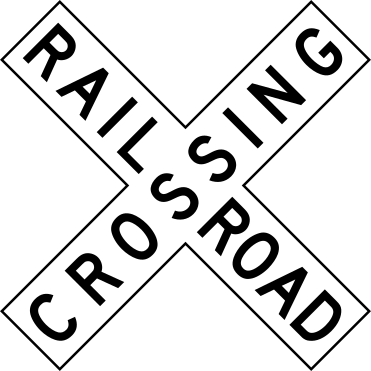
- Railroad Crossing (Crossbuck)
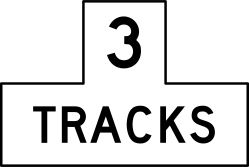
- Number of Tracks
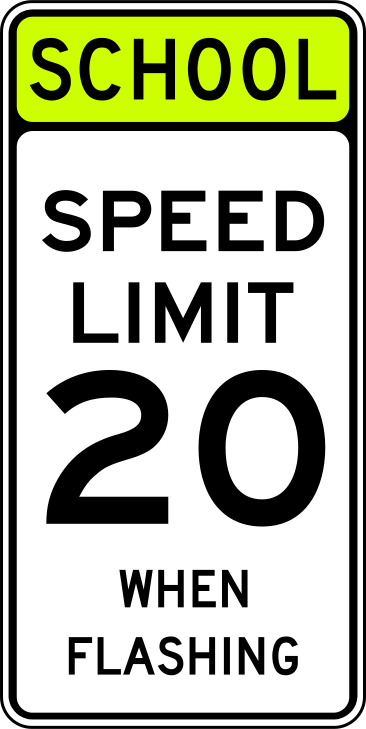
- School Speed Limit When Flashing
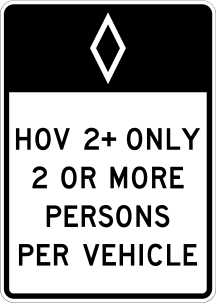
- HOV Lane
- Exempt

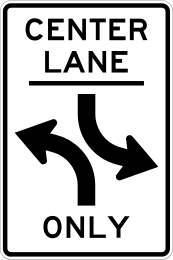
- Two-Way Left Turn Only
Warning signs
- Turn Ahead

- Stop Ahead

- Signal Ahead

- Pedestrian Crossing

- Curve

- Reverse Turn

- Reverse Curve

- Winding Road

- One-Direction Large Arrow

- Two-Direction Large Arrow

- Chevron Alignment

- Hairpin Curve

- Cross Road

- Side Road

- Roundabout Ahead

- Yield Ahead

- Be Prepared to Stop

- Reduced Speed Limit Ahead

- Merging Traffic

- Lane Ends

- Added Lane

- Lanes Merge

- Road Narrows

- Narrow Bridge

- One Lane Bridge

- Ramp Narrows

- Divided Highway Begins

- Divided Highway Ends

- Two-Way Traffic

- Hill / Steep Grade

- Bump

- Dip

- Pavement Ends

- Soft Shoulder

- Slippery When Wet

- Loose Gravel

- Rough Road

- Low Shoulder

- Uneven Lanes

- Grooved Pavement

- Metal Bridge Deck

- Railroad Crossing Ahead

- Bicycle Crossing

- Deer Crossing

- Cattle Crossing

- Farm Machinery

- Snowmobile Crossing

- Equestrian Crossing

- Persons with Disabilities

- Golf Cart Crossing

- Horse-Drawn Vehicle Crossing

- Low Clearance

- Advisory Speed

- Dead End

- No Outlet

- No Passing Zone

- Playground

- Speed Hump

- School

- Truck Rollover

- Bridge Ices Before Road

- Road May Flood

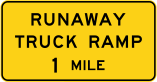
- Runaway Truck Ramp
Construction & work-zone signs




Guide signs




Service & information signs


Idaho road signs: frequently asked questions
How many road-sign questions are on Idaho's written test?
Idaho publishes the totals and not the mix. The handbook states that the knowledge test "consists of 40 questions; you can miss up to six (6) questions before failing the test," and that those questions "are taken directly from information included in the Driver's Handbook." Neither that section nor ITD's Taking the Driver's Test guide divides the forty by subject, and there is no minimum number of signs to identify held separately from the rest of your score. What does follow from a six-question margin is worth acting on: you can afford to be shaky on a handful of items across the whole exam, and signs are the cheapest part of the handbook to make certain of, because each one has a fixed answer that does not shift with the situation you are in.
Can I take the Idaho knowledge test in Spanish?
Yes. The handbook lists the knowledge test as available in English, Arabic, Chinese, Farsi, French, Korean, Russian, Serbo-Croatian, Spanish, Swahili, Vietnamese and American Sign Language, and ITD's testing guide adds how each is delivered — the spoken languages "written and aural," meaning you can read the question on screen or hear it, with ASL given by video. ITD also publishes a full Spanish edition of the handbook itself. A human translator is a much narrower option than that list suggests: the guide allows one only when the language being translated is not offered in the testing system, or when the customer "has attempted the knowledge test at least three (3) times in a language we offer and cannot pass." A translator may not be a family member, must read only the test and the answers, and must do it without hand gestures or a change in tone.
What am I allowed to bring into an Idaho testing area?
Less than most people expect, and ITD has written the list down so the answer is the same in every county. Not allowed: electronic devices of any kind, including cell phones, smart watches, cameras, tablets, laptops, headphones and earbuds; leaving the testing area to go anywhere other than to an examiner; driver manuals or other written material such as notes; interpreters, unless authorized; and talking with others. Three things are neither banned nor guaranteed but left to county discretion — children, bags and translators. The rule on manuals is the one that catches people out. Idaho draws every question from the handbook and then does not let you have the handbook with you, which is the whole argument for learning the signs before you arrive rather than intending to look them up.
What happens if I fail Idaho's knowledge test?
You wait three days and you pay again. The handbook puts it in capitals: if you fail a knowledge test you must wait three days to retest, and you will be required to pay the knowledge test fee again. Its fee section closes the loophole anyone might hope for, noting that all retest fees are the same as the original test fees — so a second attempt costs the same $5.00 as the first. Failing the skills test carries the same three-day wait but a heavier bill, because both the county fee and the skills test examiner's fee are charged over again. The handbook sets no cap on how many attempts you may make, which leaves the three-day gap as the real cost of a near miss: study time you had not planned for.
Is a practice test the same thing as Idaho's real exam?
No, and ITD says so itself, inside the knowledge-test section of the handbook: "Web-based driver practice tests are not an accurate representation of Idaho knowledge tests, with the exception of the sample test questions provided by ITD through the itd.idaho.gov website." That is a fair warning and this page will not argue with it. What a practice set can honestly do is make you fluent in the material the real exam is drawn from, which is why every question here is written from the handbook, in English and in Spanish, rather than copied from anywhere. Idaho's two official practice resources — the Practice Test Questions printed at the back of the handbook and the Idaho Sample Class D Driver Written Test that ITD runs online — are worth doing alongside this, not instead of it.
What does Idaho's Open Range sign mean?
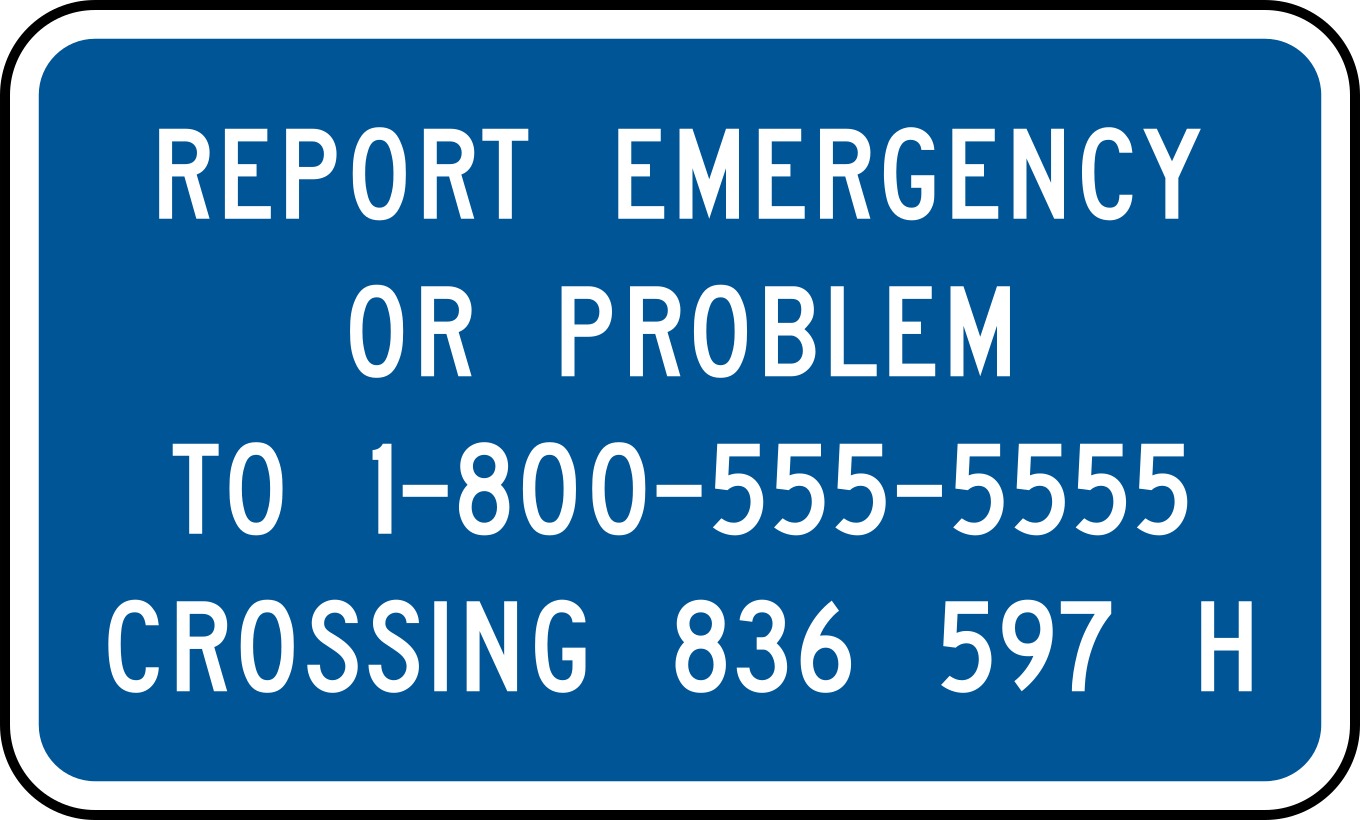
It means the livestock have priority. The handbook's warning-sign list defines Open Range as "You are traveling in an area where livestock have the right-of-way and are allowed to roam freely and unfenced" — a yellow diamond telling you that cattle may be standing in the road, that there is no fence between them and you, and that they are under no obligation to move. It is the clearest illustration of why warning signs are worth learning as Idaho writes them rather than in the abstract. The same list also carries an Emergency Notification System sign, posted at or near a railroad crossing with the railroad's phone number and that crossing's own identifying number on it, so a driver who finds a stalled vehicle on the tracks or a warning device that is not working knows who to call and exactly which crossing to name.
Official sources
- Idaho Driver's Handbook, July 2026 (Idaho Transportation Department, Division of Motor Vehicles)
- Idaho Transportation Department — Taking the Driver's Test (languages, translators and testing-area rules)
- Idaho Division of Motor Vehicles
- Idaho Driver's Handbook, Spanish edition (Idaho Transportation Department)
Checked against official state sources on 2026-08-29.