Iowa Road Signs and Their Meanings
Iowa runs driver licensing out of its Department of Transportation rather than a stand-alone DMV. The Motor Vehicle Division of the Iowa DOT issues licenses, permits and IDs, and its instruction permit page lists three ways to sit the knowledge test: at a DMV or an Iowa county treasurer's location, at home with a parent administering it, or at a participating school. Start, though, with what Iowa does not tell you. The DOT nowhere states how many questions the real knowledge test holds or what score passes it — not in the Iowa Driver's License Manual, not on the instruction permit page, not on the Skip the Trip page, not on the practice-test page. So anyone who quotes you a length for the Iowa exam is quoting something other than the Iowa exam, and nobody can tell you in advance how many of those questions will put a sign in front of you.
Iowa reserves no portion of the result for signs, and there is no stand-alone signs examination to pass, so a sign you get wrong subtracts exactly what anything else you get wrong subtracts. A pair of figures does circulate for Iowa, and it is worth seeing where they actually sit. They are on the DOT's own practice-test page, and they describe that practice test: "This practice test generates 25 questions, randomly chosen from a larger group of sample questions that includes questions from the real knowledge test given at any Iowa driver's license station or county treasurer's office," followed, of the results screen, by "A score of 80% or higher is needed for a passing score." Read that twice and notice what it does and does not claim. The pool borrows from the real test; the count and the threshold belong to the practice test. Neither is offered as the shape of the exam you sit for a permit, and no other Iowa DOT page supplies one. The length this site uses for a session is therefore our own working assumption, not a figure the state has released.
The book is the Iowa Driver's License Manual, and everything about signs lives in Chapter 2, Traffic Signs & Rules of the Road. Iowa numbers what is inside that chapter, which most state handbooks never bother to do: 2.1 Traffic Signs, 2.2 Regulatory Signs, 2.3 Warning Signs, 2.4 Pedestrian Conveyance, 2.5 Slow-Moving Vehicle Sign, 2.6 Guide Signs, 2.7 Service Signs, 2.8 Route Signs, 2.9 Traffic Signals, 2.10 Railroad Crossings, 2.11 Work Zones, 2.12 Pavement Markings and Other Lane Controls, and onward through crosswalks, lane use, school buses and parking to 2.27 Approaching Stopped Vehicles, where Iowa's Move Over or Slow Down Law sits, and 2.28 Steer It-Clear It. The contents page gives every one of those a line and a page number of its own, and the DOT posts Chapter 2 as a separate download beside the complete book, so the signs material can be carried around without the other four chapters attached. Section 2.1 is the part the rest of the chapter leans on. It opens "Traffic signs advise of traffic laws, hazards, location, directions, and where services are located. The shape and color of traffic signs give clues to the type of information they provide," and then sets out nine standard colors and eight standard shapes. The color list runs well past the obvious ones, into fluorescent yellow-green for "Pedestrian, bicycle, and school warning signs" and fluorescent pink for "Warning and guide signs for incident management such as crash clean up, debris removal, traffic, etc." — a color you are far likelier to meet at a crash cleanup than on a driving-school worksheet.
Most of the published Iowa sign questions here cite the manual and then the signs chapter as a whole, rather than a numbered subsection, so the citation drops you in the right chapter and leaves the paragraph to you. The rest go finer and name a family instead: Warning Signs, Guide Signs, Railroad Crossings, the Slow-Moving Vehicle Sign. That is a workable map once you know how it was drawn, because this chapter is indexed. A chapter-level pointer in a handbook whose subsections are numbered and page-listed is not the dead end it would be elsewhere — locate the family the question is plainly about, read that subsection and the ones on either side of it, and you have covered the ground the answer came from. The weighting sits well forward in the chapter, on the standard color list and the standard shape list — the pages where a sign's meaning is settled by its outline and its background before a single word on it has been read — and what remains spreads across warning signs, guide signs, railroad crossings and the orange triangle on the back of a slow vehicle. Each item shows you its explanation and its citation as soon as you answer.
15 published Iowa road-sign questions, each with an explanation and a citation to the handbook section it came from.
Content reviewed against official driver handbooks · August 12, 2026
Every sign you can be tested on in Iowa
Regulatory signs
- Stop

- Yield

- Do Not Enter

- Wrong Way

- No U-Turn

- Speed Limit

- One Way

- All Way

- State Law: Yield to Pedestrians

- State Law: Stop for Pedestrians

- Truck Speed Limit

- Minimum Speed Limit

- Reduced Speed Limit Ahead

- Begin Higher Fines Zone

- End Higher Fines Zone

- No Right Turn

- No Left Turn

- No Turns

- Left Lane Must Turn Left

- Right Lane Must Turn Right

- Intersection Lane Control

- Bike Lane

- No Left or U-Turn

- No Straight Through

- Do Not Pass

- Pass With Care

- Slower Traffic Keep Right

- Begin Right Turn Lane — Yield to Bikes

- Trucks Use Right Lane

- Keep Right

- Keep Left

- Keep Right Except to Pass

- Do Not Drive on Shoulder

- No Trucks

- No Motor Vehicles

- No Bicycles

- No Pedestrians, Bicycles, or Motor-Driven Cycles

- No Parking Any Time

- Accessible Parking

- No Parking Bus Stop

- No Parking

- Stop Here on Red

- Do Not Block Intersection

- No Turn on Red

- Left Turn Yield on Green

- Road Closed

- Road Closed — Local Traffic Only

- Road Closed to Thru Traffic

- Weight Limit

- No Hazardous Materials

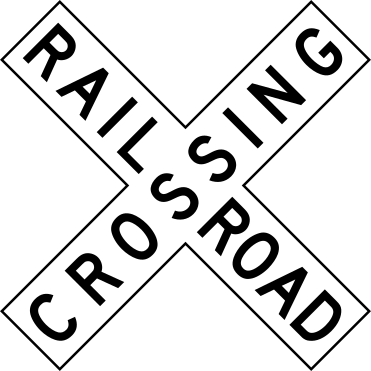
- Railroad Crossing (Crossbuck)
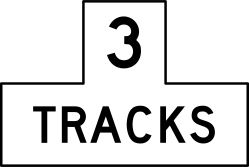
- Number of Tracks
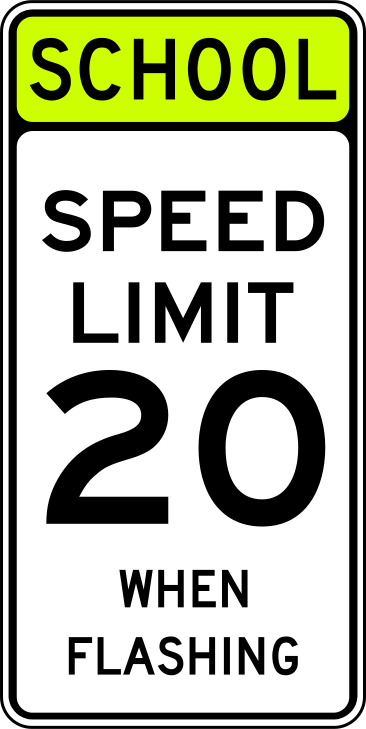
- School Speed Limit When Flashing
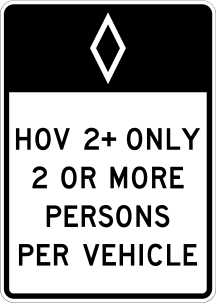
- HOV Lane
- Exempt

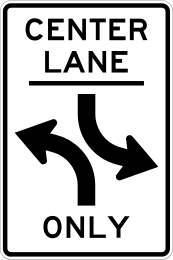
- Two-Way Left Turn Only
Warning signs
- Turn Ahead

- Stop Ahead

- Signal Ahead

- Pedestrian Crossing

- Curve

- Reverse Turn

- Reverse Curve

- Winding Road

- One-Direction Large Arrow

- Two-Direction Large Arrow

- Chevron Alignment

- Hairpin Curve

- Cross Road

- Side Road

- Roundabout Ahead

- Yield Ahead

- Be Prepared to Stop

- Reduced Speed Limit Ahead

- Merging Traffic

- Lane Ends

- Added Lane

- Lanes Merge

- Road Narrows

- Narrow Bridge

- One Lane Bridge

- Ramp Narrows

- Divided Highway Begins

- Divided Highway Ends

- Two-Way Traffic

- Hill / Steep Grade

- Bump

- Dip

- Pavement Ends

- Soft Shoulder

- Slippery When Wet

- Loose Gravel

- Rough Road

- Low Shoulder

- Uneven Lanes

- Grooved Pavement

- Metal Bridge Deck

- Railroad Crossing Ahead

- Bicycle Crossing

- Deer Crossing

- Cattle Crossing

- Farm Machinery

- Snowmobile Crossing

- Equestrian Crossing

- Persons with Disabilities

- Golf Cart Crossing

- Horse-Drawn Vehicle Crossing

- Low Clearance

- Advisory Speed

- Dead End

- No Outlet

- No Passing Zone

- Playground

- Speed Hump

- School

- Truck Rollover

- Bridge Ices Before Road

- Road May Flood

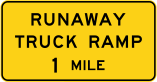
- Runaway Truck Ramp
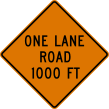
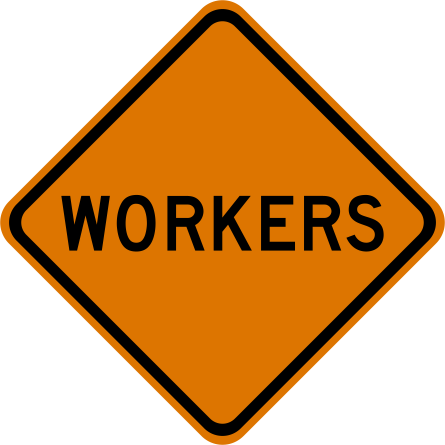
Construction & work-zone signs




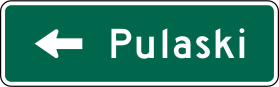
Guide signs


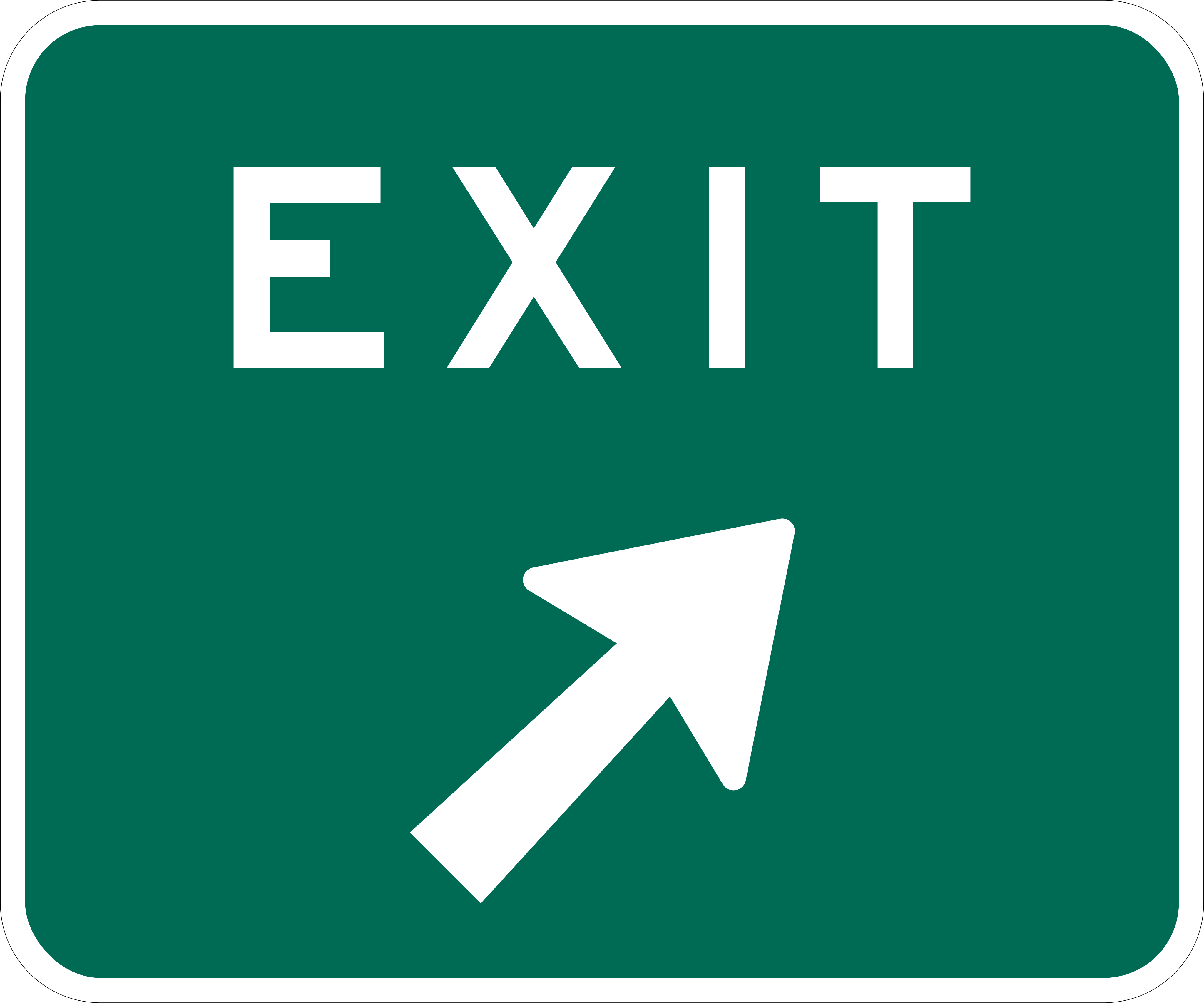


Service & information signs


Iowa road signs: frequently asked questions
Can I take Iowa's knowledge test at home?
Yes, and the program has a name: Skip the Trip. The Iowa DOT sets out who qualifies for the home version in three lines — "The student must be within 30 days of their 14th birthday and younger than 18," "The student will need an electronic device (not a phone or tablet) connected to the Internet," and "The parent/guardian administering the test must have a valid Iowa driver's license." The parent submits an Application to Proctor Knowledge Exam form, which the DOT says may take 7 to 14 days to process, and the emailed testing link expires after 72 hours; let it lapse and you start the application over. Passing at home does not hand you the permit either. You still make an appointment at a DMV or a county treasurer's office to have it issued. The same web-based test is offered at participating schools, which the DOT lists by name.
Is the Iowa Driver's License Manual available in Spanish?
It is, alongside a long list of others — Arabic, Bosnian, Burmese, Hmong, Korean, Nepali, Somali, Swahili, Ukrainian, Vietnamese and more share the page with the English book. Read the labels before you rely on one, though: every translation there is tagged "Archived," which makes the English edition the current text and any translation potentially a step behind it. The English manual is also split into per-chapter files, so the signs chapter downloads on its own. The DOT's practice-test page prints its instructions in Spanish beside the English ones. This practice set is written out fully in both languages, because the point is to recognize the sign, not to translate the question first.
I have a license from another state. Do I still take Iowa's knowledge test?
Probably not, but the DOT hedges and so should you. Its New to Iowa page says that "If you have a valid driver's license from one of the 50 United States (including District of Columbia), a U.S. territory, or Canada, you may not need to take the knowledge test," and repeats the same wording about the driving test. May not, not will not — that call is made at the counter, and the same page requires the license to be valid and not canceled, suspended or revoked in any state. Iowa also names four reciprocity agreements: "Iowa has driver's license reciprocity agreements with France, Germany, South Korea, and the Republic of China (Taiwan)." A valid, unexpired license from one of those may spare you both tests as well. The vision test is required either way.
What does the knowledge test cost in Iowa, and what happens if I fail?
Iowa's published fee table prices documents rather than testing. A Class C instruction permit is six dollars for a four-year term and a Class C operator's license is four dollars a year; the only test-linked charges printed on that page belong to commercial licensing. No fee for the non-commercial knowledge test, and none for retaking it, appears there at all. On what follows a failure the DOT is quiet as well — the instruction permit page, the Skip the Trip page and the practice-test page all describe how to take the test, and none of them names a waiting period between attempts, so ask at the DMV or county treasurer's office where you test rather than assuming one way or the other. If you were testing at home and the emailed link has expired, the way back in is a fresh proctor application.
Which parts of Iowa's sign chapter trip people up?
Three, reliably. The shapes list does not behave the way drivers expect: in Iowa a rectangle "Is used for regulatory, guide, and warning signs," a circle means "Railroad crossing ahead," and the pennant is defined by where it stands rather than by what it looks like — "This sign will be on the left side of the road. It warns you of a no passing zone." Railroad crossings then come in two named kinds. Actively protected ones have lights or gates; passively protected ones have neither and "will only be marked with a crossbuck and a stop or yield sign," which is why the instruction there is to slow down and expect a train anyway. And the slow-moving vehicle emblem carries a speed with it: "A reflective orange triangle on the rear of a vehicle means it is traveling 35 mph or less." The chapter also prints one sentence in capitals across a page — "FAILURE TO YIELD THE RIGHT-OF-WAY IS THE #1 CAUSE OF TRAFFIC-RELATED FATALITIES IN IOWA."
Is this Iowa's official practice test?
No. The Iowa DOT runs its own on iowadot.gov, free, and it is worth taking beside this one. The manual's opening pages are pointed about the rest of the internet: "There are several websites out there selling information that we provide for free. They make you think you're getting a new driver's license, but you're not." This site sells nothing and issues nothing; it is not the Iowa DOT and has no connection to it. What it adds is volume and a written explanation on every item, drawn from the same manual the DOT tells you to study, and you are never asked to create an account.
Official sources
- Iowa DOT — Driver's Licenses & IDs
- Iowa DOT — Driver's Manual (Iowa Driver's License Manual, by chapter and by language)
- Iowa DOT — Iowa Driver's License Practice Test
- Iowa DOT — Online Permit Test (Skip the Trip)
- Iowa DOT — Instruction Permit for Under Age 18
- Iowa DOT — New to Iowa
- Iowa DOT — Driver's License Fees
Checked against official state sources on 2026-08-29.