Louisiana Road Signs and Their Meanings
Louisiana's official guide does something unusual: it coaches you on how to sit the exam. Under the heading "Tips to Pass the Written Test", the Class D & E Driver's Guide advises reading the manual at least three times, memorizing "any numeric information in the manual: lengths, distances, measurements", reading the full question and every option before choosing, and arriving at the licensing office at least an hour before the last test of the day can be given. Then come two lines of a different kind: "Trust your gut instinct" and "Go with the 'safest sounding' answer." That advice earns its keep on a judgment question about following distance or right of way. It earns much less on a sign, where the answer is a fact about what a particular shape and color mean, and the safest-sounding option is often the one written to catch a guess.
Louisiana publishes both halves of this bar, but it takes three of its pages to collect them. The guide's Knowledge Test section says applicants "must correctly answer 80 percent of these questions to receive a passing score"; the Office of Motor Vehicles states on expresslane.la.gov that "an 80% is the minimum passing score for the knowledge test." Neither of those two sentences says how many questions "these questions" are. A third OMV page answers that: its Permits page describes the learner's-permit requirement as a vision check plus "a 40 question test with a minimum score of 80%", which puts the paper at forty items and the pass mark at thirty-two. R.S. 32:408 corroborates the percentage and adds a floor rather than a fixed length, requiring that a Group "D" or "E" knowledge test "shall contain at least thirty-two items". So the forty items with thirty-two right on this page are Louisiana's own figures, not a stand-in of ours — though none of those pages puts a clock on the test. Nothing carves out a sign portion beneath that eighty percent either — but signs do come first when the guide explains what the exam is for. It exists, in the guide's words, to confirm "your understanding of traffic signs and signals, as well as safe driving practices and Louisiana laws relative to driving": signs and signals lead a list of three, and everything on the paper is drawn from the manual itself.
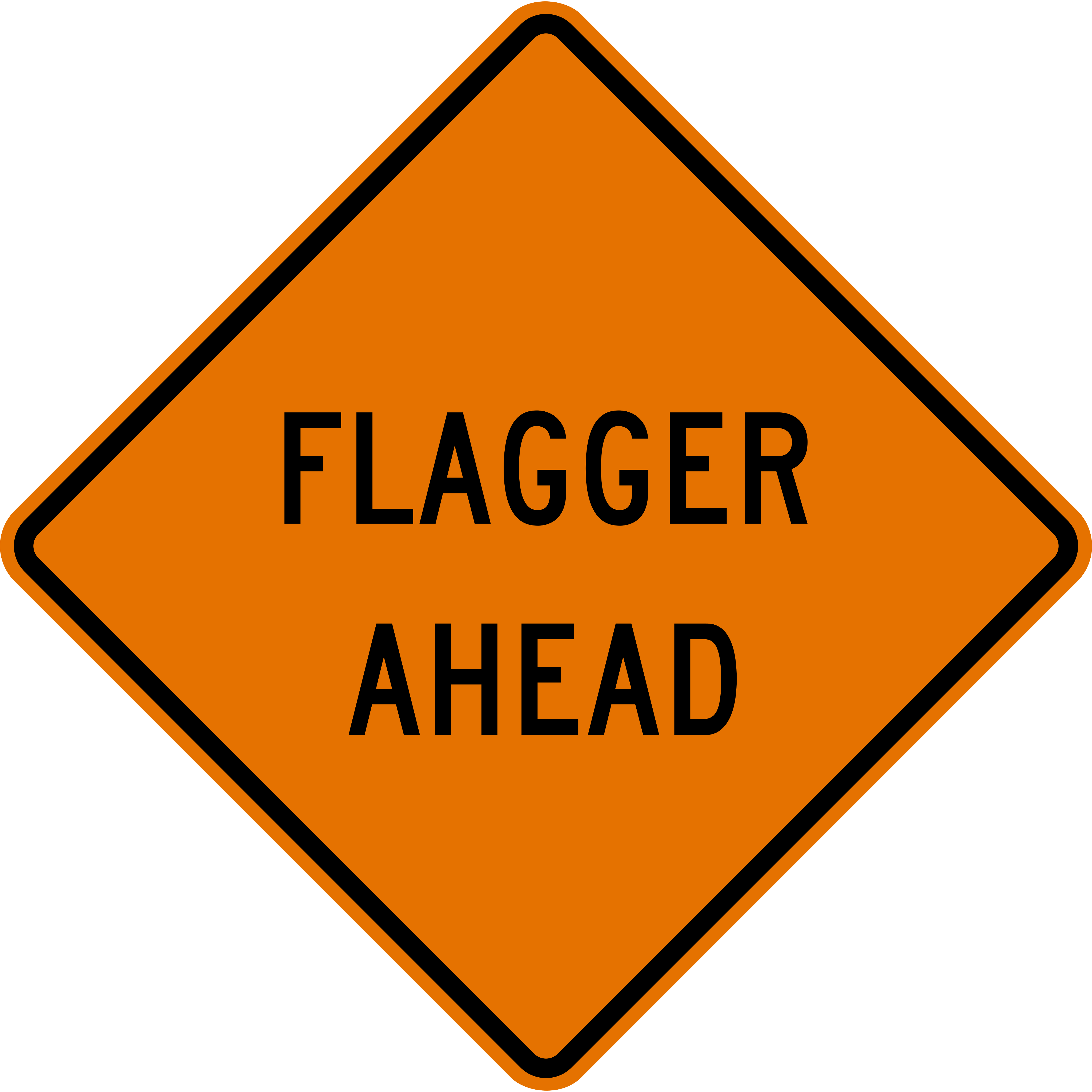
Chapter 3 of the Class D & E Driver's Guide is headed SIGNS, TRAFFIC LIGHTS, AND PAVEMENT MARKINGS, and signs take the largest share of it: TRAFFIC SIGNS opens the chapter on page 22 and runs until TRAFFIC SIGNALS begins on page 33. Two things in those pages catch readers out. The first is a word. In the shape paragraphs Louisiana calls the warning family "yellow diamond shaped signs"; a page later, in the color list, the same family is entered under Amber — "used as background color for warning signs and school signs. Means: Caution, be alert, prepare to slow down." If you have memorized a color list from anywhere else, that entry is not where you will look for it. The second is the crossbuck. Louisiana files the white cross buck under regulatory signs and equates the obligation it imposes with yielding, leaving the advance-warning job to the round yellow sign set back from the tracks. The chapter also carries a family many manuals skip: Incident Signs, fluorescent pink with black lettering, temporary, posted for a crash, a spill, a closure or a detour, and tied in the same paragraph to Louisiana's move-over law.
Color is the one topic in this Louisiana set that turns up twice under two different headings, and that is the guide's doing rather than ours: it names color once inside the run of sign shapes and again in a list of its own further down. The questions here follow both. Read only one of those passages and you will meet the warning family as a yellow diamond in one place and as Amber in the other, which is a genuinely easy way to answer a color question wrongly while believing you studied it. The rest of the set works through the chapter's paragraphs one at a time — shapes, the yield sign, do not enter, wrong way, no turn on red, guide and service signs, signs in construction areas, incident signs, the railroad cross buck — and every published question here stays inside that one chapter. None reaches past the signs into the traffic-signal or lane-marking material that shares the chapter's title, which is worth knowing, because your exam is not similarly bounded.
14 published Louisiana road-sign questions, each with an explanation and a citation to the handbook section it came from.
Content reviewed against official driver handbooks · August 12, 2026
Every sign you can be tested on in Louisiana
Regulatory signs
- Stop

- Yield

- Do Not Enter

- Wrong Way

- No U-Turn

- Speed Limit

- One Way

- All Way

- State Law: Yield to Pedestrians

- State Law: Stop for Pedestrians

- Truck Speed Limit

- Minimum Speed Limit

- Reduced Speed Limit Ahead

- Begin Higher Fines Zone

- End Higher Fines Zone

- No Right Turn

- No Left Turn

- No Turns

- Left Lane Must Turn Left

- Right Lane Must Turn Right

- Intersection Lane Control

- Bike Lane

- No Left or U-Turn

- No Straight Through

- Do Not Pass

- Pass With Care

- Slower Traffic Keep Right

- Begin Right Turn Lane — Yield to Bikes

- Trucks Use Right Lane

- Keep Right

- Keep Left

- Keep Right Except to Pass

- Do Not Drive on Shoulder

- No Trucks

- No Motor Vehicles

- No Bicycles

- No Pedestrians, Bicycles, or Motor-Driven Cycles

- No Parking Any Time

- Accessible Parking

- No Parking Bus Stop

- No Parking

- Stop Here on Red

- Do Not Block Intersection

- No Turn on Red

- Left Turn Yield on Green

- Road Closed

- Road Closed — Local Traffic Only

- Road Closed to Thru Traffic

- Weight Limit

- No Hazardous Materials

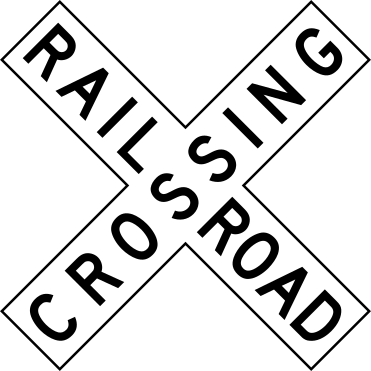
- Railroad Crossing (Crossbuck)
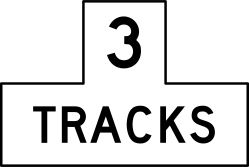
- Number of Tracks
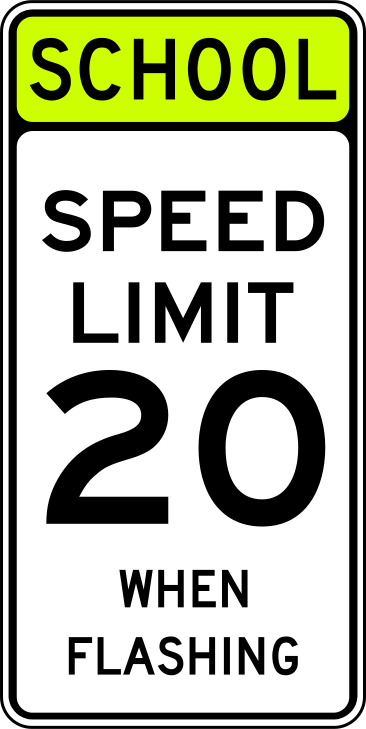
- School Speed Limit When Flashing
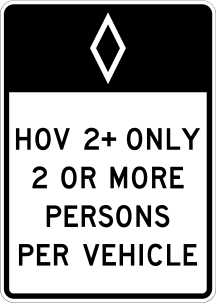
- HOV Lane
- Exempt

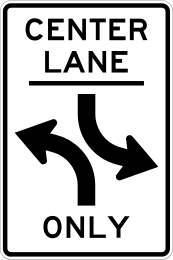
- Two-Way Left Turn Only
Warning signs
- Turn Ahead

- Stop Ahead

- Signal Ahead

- Pedestrian Crossing

- Curve

- Reverse Turn

- Reverse Curve

- Winding Road

- One-Direction Large Arrow

- Two-Direction Large Arrow

- Chevron Alignment

- Hairpin Curve

- Cross Road

- Side Road

- Roundabout Ahead

- Yield Ahead

- Be Prepared to Stop

- Reduced Speed Limit Ahead

- Merging Traffic

- Lane Ends

- Added Lane

- Lanes Merge

- Road Narrows

- Narrow Bridge

- One Lane Bridge

- Ramp Narrows

- Divided Highway Begins

- Divided Highway Ends

- Two-Way Traffic

- Hill / Steep Grade

- Bump

- Dip

- Pavement Ends

- Soft Shoulder

- Slippery When Wet

- Loose Gravel

- Rough Road

- Low Shoulder

- Uneven Lanes

- Grooved Pavement

- Metal Bridge Deck

- Railroad Crossing Ahead

- Bicycle Crossing

- Deer Crossing

- Cattle Crossing

- Farm Machinery

- Snowmobile Crossing

- Equestrian Crossing

- Persons with Disabilities

- Golf Cart Crossing

- Horse-Drawn Vehicle Crossing

- Low Clearance

- Advisory Speed

- Dead End

- No Outlet

- No Passing Zone

- Playground

- Speed Hump

- School

- Truck Rollover

- Bridge Ices Before Road

- Road May Flood

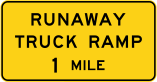
- Runaway Truck Ramp
Construction & work-zone signs


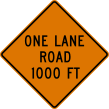

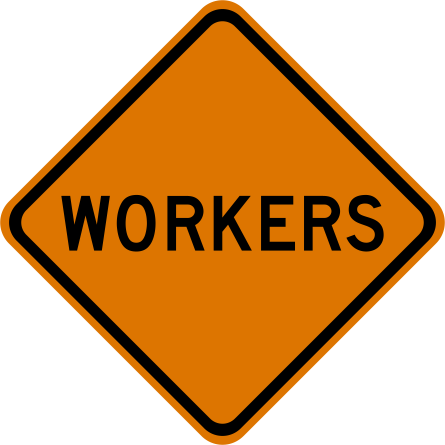

Guide signs


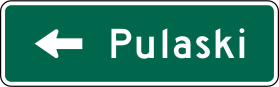
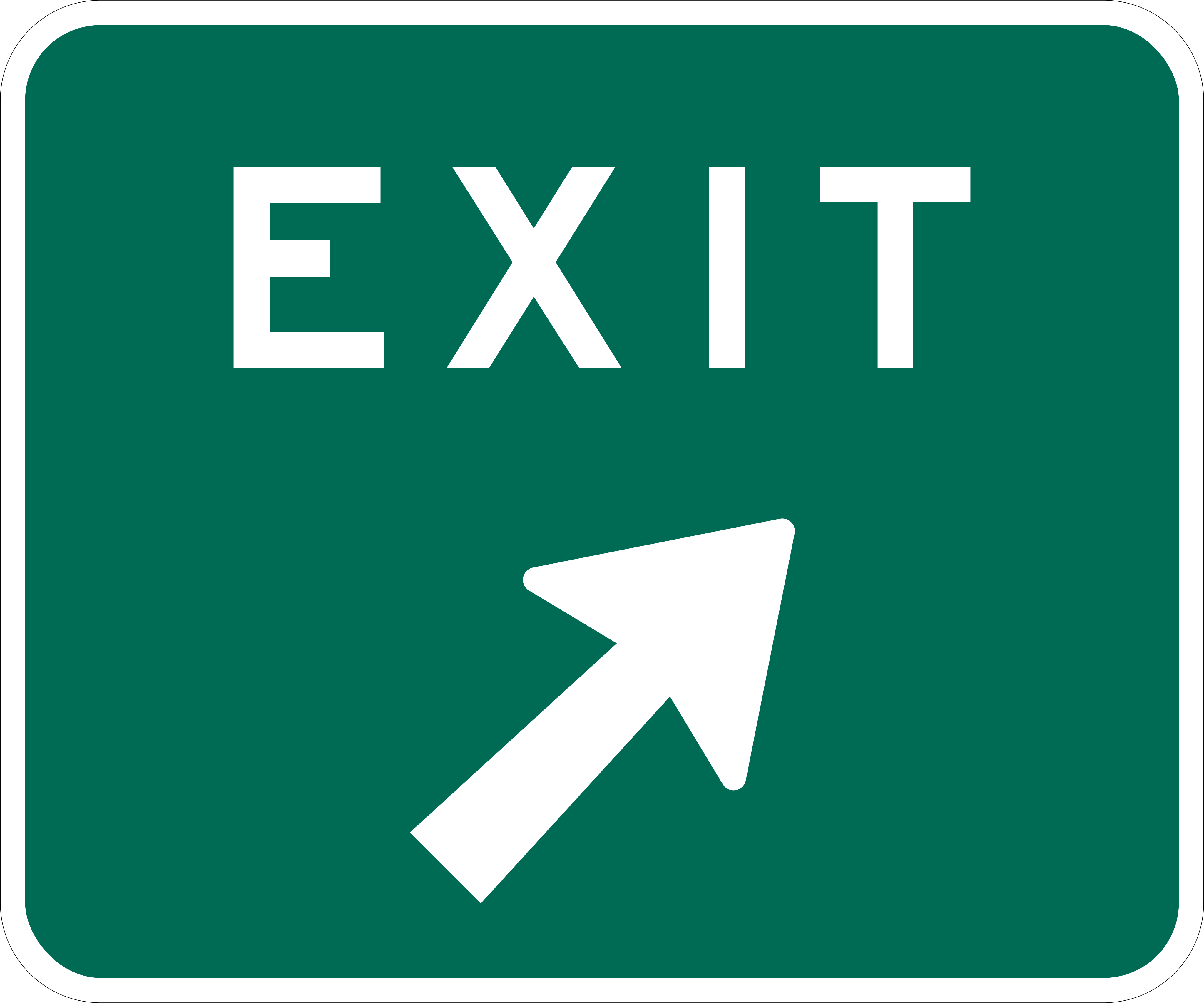


Service & information signs


Louisiana road signs: frequently asked questions
Louisiana's own guide tells me to trust my gut. Should I?
On the questions the advice was written for, yes — it is a reasonable tiebreaker when two plausible answers survive and one describes the more cautious action. On sign questions it is a poor substitute for knowing the answer, because sign items are usually built so that every option sounds cautious. The rest of the same list is stronger and less often followed: read the manual three times, memorize the numeric details, read every option before choosing, and give yourself an hour of margin at the office. Louisiana adds one practical requirement in the same paragraph — proper identification is required each time the test is taken, not only on the first attempt.
Do I need a permit before Louisiana will even let me sit the knowledge test?
Yes, and this catches out people who expect the written test to be the first step. The Office of Motor Vehicles states that all applicants must apply for a Class E Temporary Instructional Permit before participating in the knowledge test, before driving during on-road skills instruction, and before the on-road skills test. The permit can be issued from fourteen years of age, and you meet the usual identification requirements to get it. Students enrolled in a driver education or pre-licensing course before September 2018, and applicants in the National Guard Youth Challenge Program, are exempt from the requirement.
Louisiana files the railroad cross buck as a yield sign. Do I ever have to stop?
Yes, and the guide's two chapters do not sound alike about it. The signs chapter gives the cross buck one meaning and gives it twice: on the shapes page, "the white cross buck is a regulatory sign has the same meaning as a yield sign", and again in the regulatory list, where it "is required at all public railroad crossings and means you must yield the right of way to a train". The advance warning is a separate sign in that same passage — the round yellow AWS set back from the tracks. Stopping does not appear until Chapter 6. There the guide says cross buck signs will be found at all public crossings, that the driver should slow down and be prepared to stop upon seeing a train, and that a sign below the cross buck gives the number of tracks where there is more than one. R.S. 32:171 then makes a stop mandatory — within fifty feet of the nearest rail but no less than fifteen — when a signal device is flashing and a train is approaching, when a crossing gate is lowered, when a train sounds a warning and is an immediate hazard, or when a train is close enough to create one. Study the cross buck only from the signs chapter and you have half of what Louisiana asks of you at the tracks.
Where is the Louisiana knowledge test actually given?
Not always at a counter. The guide says the exam is given on a computer in most offices. The Office of Motor Vehicles adds, in the paragraph describing the learner's permit, that the required knowledge and skills tests are administered by the driver education provider — so for many applicants the written test happens at the driving school rather than at an OMV field office. The road skills test runs on the same pattern: it is available through the Office of Motor Vehicles or through a certified Third Party Tester provider.
What does a Louisiana Class E license cost, and how long does it last?
The Office of Motor Vehicles lists the basic license fee as $32.25 up to age sixty-nine and $18.75 from seventy, and notes that certain field offices may add a service fee of up to $8.00 on top. Cash, credit and debit cards and personal checks are all accepted. A Class E license expires on your birthday roughly six years after it is issued, which is worth noting on a page about signs: six years is long enough for a sign family you learned once to be redesigned, and Louisiana's own chapter already carries families — incident signs among them — that older drivers were never taught.
Official sources
- Louisiana OMV — driver manuals (Class D & E Driver's Guide)
- Louisiana OMV — new driver's licenses
- Louisiana OMV — Permits (40-question knowledge test, 80% pass)
Checked against official state sources on 2026-07-29.