Free Maryland DMV Car / Permit Practice Test 2026
The Maryland Car / Permit knowledge test has 25 questions, and you need 22 correct (88%) to pass. Practice free with questions written from the official Maryland driver handbook — every one has a clear explanation, and you can retake as often as you like with no sign-up.
Content reviewed against official driver handbooks · August 12, 2026
What's on the Maryland written test
The Maryland Car / Permit knowledge test has 25 questions; you need 22 correct (88%) to pass, within 20 minutes.
Based on the official Maryland exam format — always confirm current details with your state DMV.
Practice by topic
Focus on one area at a time — each topic has its own set of Maryland practice questions.
Learn the shapes, colors, and meanings of regulatory, warning, and guide signs — from stop and yield to construction and school-zone signs.
Speed limits, turning and signaling rules, headlight and seat-belt requirements, and the everyday laws every driver must follow.
How to read traffic signals, lane lines, and pavement markings — including yellow and white lines, arrows, and flashing lights.
Who goes first at intersections, four-way stops, roundabouts, and crosswalks, and how to yield to pedestrians and emergency vehicles.
Following distance, scanning, blind spots, using your lights, and the habits that prevent crashes and keep you in control.
Driving safely around motorcycles, bicycles, large trucks, pedestrians, and school buses — and knowing who has the right of way.
Blood alcohol limits, zero-tolerance and implied-consent laws, and how alcohol and drugs — legal or not — affect your driving.
Legal and illegal parking, colored curbs, distances from hydrants and crossings, and how to park safely on hills.
Choosing a safe speed, keeping a space cushion, adjusting for weather and traffic, and understanding stopping distance.
What to do when things go wrong — brake failure, tire blowouts, skids, and stalling on railroad tracks.
The point system, license suspension, provisional-license rules, insurance requirements, and other licensing basics.
How to pass the first time
- Read the official Maryland driver handbook at least once before test day.
- Practice by topic to find your weak spots, then fix them.
- Take full-length practice tests until you pass comfortably every time.
- Read every explanation — understanding beats memorizing.
Maryland Car / Permit test — frequently asked questions
How many questions are on the Maryland Car / Permit test?
The Maryland Car / Permit knowledge test has 25 questions, and you need 22 correct (88%) to pass. Our practice tests mirror that format.
How many questions can I miss on the Maryland Car / Permit test?
You can miss up to 3 of the 25 questions and still pass — you need 22 correct, which is 88%.
How long do I have to take the Maryland Car / Permit test?
The Maryland Car / Permit knowledge test has a 20-minute time limit. Our timed exam simulation uses the same limit so you can practice your pacing.
Can I retake the practice test?
Yes — practice as often as you like, completely free. The questions and answer choices are shuffled each time.
Can I take the Maryland practice test in Spanish?
Yes. Every question here is available in English and Spanish — switch languages anytime. Many states also offer the real knowledge test in languages other than English; confirm what Maryland offers with your DMV.
Can I practice on my phone?
Yes. The practice tests work in any mobile or desktop browser — no app or sign-up needed — so you can study anywhere.
Are these the real DMV test questions?
No. Our questions are original, written from the current official Maryland driver handbook to match the real test's topics and style. We are not affiliated with any DMV or government agency.
What's the best way to study?
Read the Maryland driver handbook, practice by topic to target weak areas, and finish with full-length tests until you consistently pass.
Other Maryland practice tests
Take the Car / Permit test in another state
Every Maryland question is written from the official Maryland driver handbook and checked against its current edition. DMV Test Free is a free, independent study resource — not affiliated with any DMV or government agency. About DMV Test Free
Maryland Car / Permit questions with answers
20 sample questions from the Maryland Car / Permit question bank — each with the correct answer, a short explanation, and the section of the official handbook it comes from.
Show all 20 questions with answers
1. In Maryland, a driver is considered to be driving under the influence when their blood alcohol concentration reaches what level?
Correct answer: .08 or higher
Maryland treats a blood alcohol concentration of .08 or higher as driving under the influence, though even smaller amounts can impair driving.
Source: Maryland Driver's Manual — Alcohol, Drugs and Driving
2. When a motor vehicle is turning and a bicyclist is going straight, who has the right-of-way?
Correct answer: The bicyclist, so the driver must yield
A bicyclist has the right-of-way when a motor vehicle is making a turn, so the driver must yield to the bicyclist.
3. A wide solid white line painted across a lane at an intersection is called what, and what does it do?
Correct answer: A stop line marking where to halt for a sign or red light
A stop line is a wide solid white line that shows exactly where a vehicle must stop for a stop sign or red light.
4. Before making a legal U-turn, a driver should first do what?
Correct answer: Confirm that U-turns are permitted at that location
Because U-turns are dangerous and not legal everywhere, a driver should first check that they are allowed, then signal, stop, yield to oncoming traffic, and turn into the right-hand lane going the other way.
5. Why does speeding increase the risk that other road users will misjudge your vehicle?
Correct answer: Others may misjudge how far away you are
At higher speeds, other drivers, bicyclists, and pedestrians may not accurately judge your distance, which raises the chance of a crash.
6. During a roadside emergency, if it is not safe to stay in the vehicle, what should occupants do?
Correct answer: Move away from the road and face oncoming traffic
If it is unsafe to remain inside, occupants should pick a safe moment to get out, move quickly away from the road, and face oncoming traffic while staying alert.
7. How should following distance change when the road is wet, snowy, or icy?
Correct answer: It should be much greater than on dry roads
On slick roads a driver needs much more space between vehicles than on dry pavement, because stopping takes longer.
Source: Maryland Driver's Manual — Driving in Inclement Weather
8. After passing a large truck, when is it safe to move back into the lane in front of it?
Correct answer: Once you can see both of the truck's headlights in your mirror
A driver should return to the truck's lane only after both of the truck's headlights are visible in the rear-view mirror, and should not slow down afterward.
9. When a driver sees orange signs on the road, what do they usually indicate?
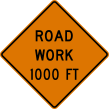
Correct answer: A construction or maintenance work area
Orange is reserved for construction and maintenance work areas, so orange signs mean a driver should expect changed conditions ahead.
Source: Maryland Driver's Manual — Traffic Signs: Colors and Shapes
10. How long must a driver hold a Provisional License before becoming eligible for a full driver's license?
Correct answer: 18 months
A Provisional License must be held for at least 18 months, free of moving-violation convictions, before a driver can qualify for a full license.
11. Even with a valid disability placard, what is a driver still prohibited from doing?
Correct answer: Blocking an access aisle next to a disability space
A disability placard does not permit blocking a curb cut or parking on the access aisle beside a disability space, which people use to reach their vehicles.
Source: Maryland Driver's Manual — Use of Disability Parking Spaces
12. What does Maryland's open container law prohibit?
Correct answer: Having an open alcohol container in the passenger area
It is illegal to drive with an open container of alcohol in the passenger area, which includes the seats and any place occupants can easily reach.
13. At a crosswalk with no traffic signal, what must a driver do for a pedestrian who is crossing?
Correct answer: Stop and let the pedestrian cross
Where there is no signal, a driver must stop for pedestrians who are in a crosswalk, whether it is marked or unmarked.
14. When a traffic signal is completely dark and not working, how should a driver proceed?
Correct answer: Stop, yield to traffic and pedestrians, then go when safe
A dead signal should be treated as a stop: stop at the stop line, crosswalk, or intersection, yield to others, and continue only when it is safe.
15. Which of the following may direct a driver to disregard a traffic control device?
Correct answer: A police officer directing traffic
Drivers must obey traffic control devices unless a police officer, other emergency personnel, or a uniformed school crossing guard directs otherwise.
Source: Maryland Driver's Manual — Signs, Signals and Pavement Markings
16. What does the posted speed limit on a road represent?
Correct answer: The top legal speed under ideal conditions
The posted speed limit is the maximum legal speed for that road under ideal conditions, and a driver should never exceed it.
Source: Maryland Driver's Manual — Understanding Vehicle Speed
17. If a driver strikes an unattended parked vehicle and cannot find the owner, what must they do?
Correct answer: Leave a note with contact information where it can be found
A driver must stop, try to locate the owner, and if the owner cannot be found, leave a note with contact details and an account of what happened where it can be easily seen.
18. What is true about safe driving speeds on snow-covered or icy roads?
Correct answer: No speed is completely safe on ice or snow
There is no truly safe speed on ice or snow; a driver must slow down because nothing makes driving on such surfaces safe at normal speeds.
19. Large trucks often swing wide to the left before making a right turn. What should a driver behind them avoid doing?
Correct answer: Trying to pass on the truck's right side
Because a truck may move left before turning right, a driver should not try to squeeze past on the truck's right side, where they could be caught between the truck and the curb.
20. What does a pennant-shaped sign along the roadway mark?
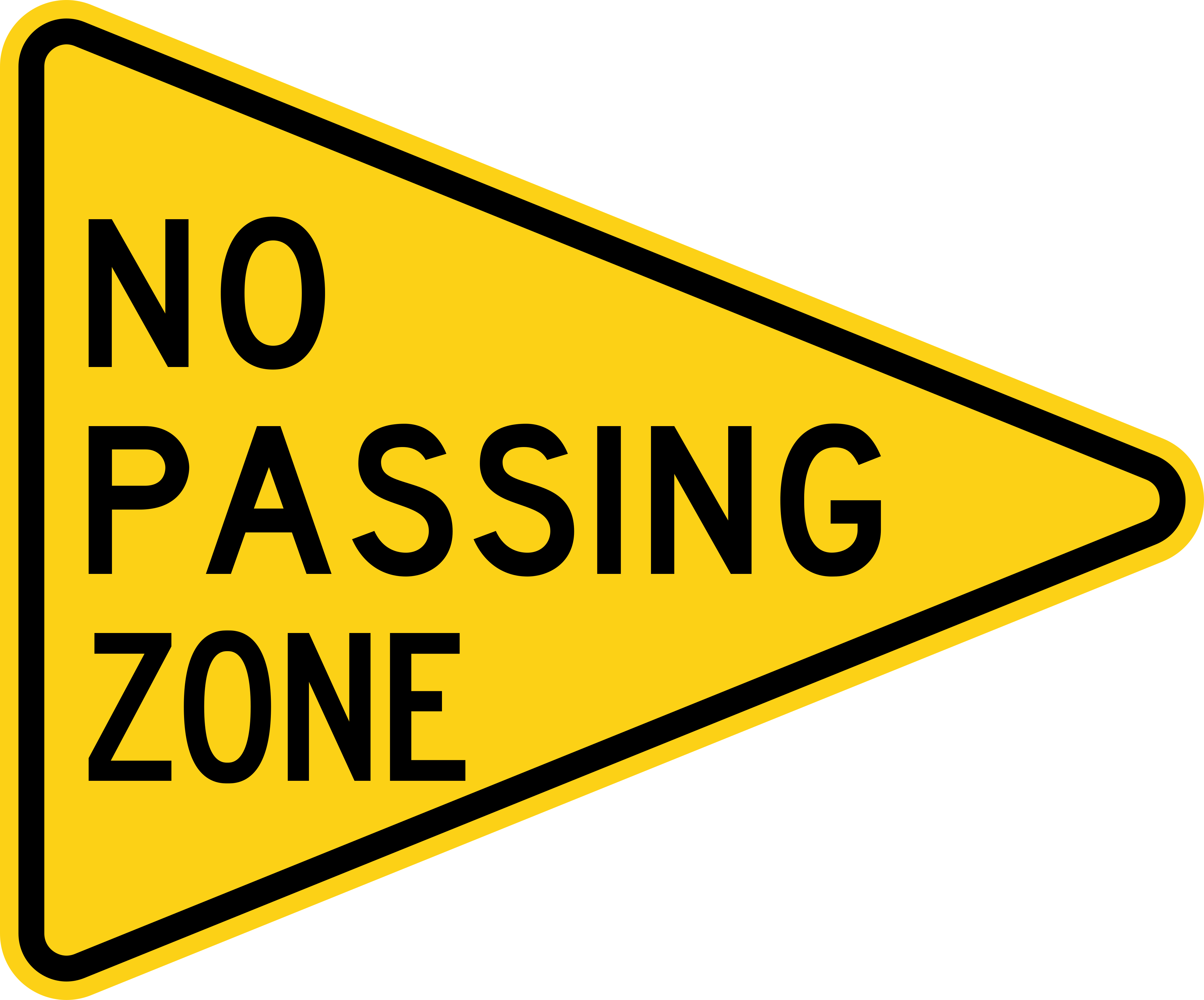
Correct answer: The start of an area where passing is prohibited
The pennant shape marks the beginning of a no-passing zone, warning drivers not to pass other vehicles there.
Source: Maryland Driver's Manual — Traffic Signs: Colors and Shapes