Free Maryland DMV Motorcycle Practice Test 2026
The Maryland Motorcycle knowledge test has 25 questions, and you need 22 correct (88%) to pass. Practice free with questions written from the official Maryland driver handbook — every one has a clear explanation, and you can retake as often as you like with no sign-up.
Content reviewed against official driver handbooks · August 12, 2026
What's on the Maryland written test
The Maryland Motorcycle knowledge test has 25 questions; you need 22 correct (88%) to pass, within 20 minutes.
Based on the official Maryland exam format — always confirm current details with your state DMV.
Practice by topic
Focus on one area at a time — each topic has its own set of Maryland practice questions.
Helmets, eye protection, and abrasion-resistant gear — what the motorcycle handbook requires and why each piece matters in a crash.
Throttle, clutch, both brakes, and shifting — the controls you must operate smoothly before the road test.
Countersteering, the slow-look-press-roll technique, and choosing the right line through a curve at motorcycle speeds.
Using both brakes together, stopping quickly without locking a wheel, and recovering from a skid.
Where to position yourself in the lane to be seen, managing blind spots, and sharing the road safely with cars and trucks.
Conspicuity — reflective and bright clothing, headlight use, and lane position that make a rider easier for drivers to see.
Gravel, wet pavement, grooved roads, and railroad tracks — reading and handling surfaces that matter far more on two wheels.
Learn the shapes, colors, and meanings of regulatory, warning, and guide signs — from stop and yield to construction and school-zone signs.
Speed limits, turning and signaling rules, headlight and seat-belt requirements, and the everyday laws every driver must follow.
Who goes first at intersections, four-way stops, roundabouts, and crosswalks, and how to yield to pedestrians and emergency vehicles.
Blood alcohol limits, zero-tolerance and implied-consent laws, and how alcohol and drugs — legal or not — affect your driving.
How to read traffic signals, lane lines, and pavement markings — including yellow and white lines, arrows, and flashing lights.
Following distance, scanning, blind spots, using your lights, and the habits that prevent crashes and keep you in control.
Driving safely around motorcycles, bicycles, large trucks, pedestrians, and school buses — and knowing who has the right of way.
Legal and illegal parking, colored curbs, distances from hydrants and crossings, and how to park safely on hills.
Choosing a safe speed, keeping a space cushion, adjusting for weather and traffic, and understanding stopping distance.
What to do when things go wrong — brake failure, tire blowouts, skids, and stalling on railroad tracks.
The point system, license suspension, provisional-license rules, insurance requirements, and other licensing basics.
How to pass the first time
- Read the official Maryland driver handbook at least once before test day.
- Practice by topic to find your weak spots, then fix them.
- Take full-length practice tests until you pass comfortably every time.
- Read every explanation — understanding beats memorizing.
Maryland Motorcycle test — frequently asked questions
How many questions are on the Maryland Motorcycle test?
The Maryland Motorcycle knowledge test has 25 questions, and you need 22 correct (88%) to pass. Our practice tests mirror that format.
How many questions can I miss on the Maryland Motorcycle test?
You can miss up to 3 of the 25 questions and still pass — you need 22 correct, which is 88%.
How long do I have to take the Maryland Motorcycle test?
The Maryland Motorcycle knowledge test has a 20-minute time limit. Our timed exam simulation uses the same limit so you can practice your pacing.
Can I retake the practice test?
Yes — practice as often as you like, completely free. The questions and answer choices are shuffled each time.
Can I take the Maryland practice test in Spanish?
Yes. Every question here is available in English and Spanish — switch languages anytime. Many states also offer the real knowledge test in languages other than English; confirm what Maryland offers with your DMV.
Can I practice on my phone?
Yes. The practice tests work in any mobile or desktop browser — no app or sign-up needed — so you can study anywhere.
Are these the real DMV test questions?
No. Our questions are original, written from the current official Maryland driver handbook to match the real test's topics and style. We are not affiliated with any DMV or government agency.
What's the best way to study?
Read the Maryland driver handbook, practice by topic to target weak areas, and finish with full-length tests until you consistently pass.
Other Maryland practice tests
Take the Motorcycle test in another state
Every Maryland question is written from the official Maryland driver handbook and checked against its current edition. DMV Test Free is a free, independent study resource — not affiliated with any DMV or government agency. About DMV Test Free
Maryland Motorcycle questions with answers
20 sample questions from the Maryland Motorcycle question bank — each with the correct answer, a short explanation, and the section of the official handbook it comes from.
Show all 20 questions with answers
1. When your bike needs more distance than usual to come to a halt, what should you do with your space cushion?
Correct answer: Increase it to allow more room
A larger cushion of space is needed whenever your motorcycle needs extra distance to stop, so increase your following distance.
Source: Maryland Motorcycle Operator Manual (DL-001) — Keeping Your Distance: Following Another Vehicle
2. During the on-cycle skill test, failing to stop where a STOP sign requires it will cause the examiner to do what?
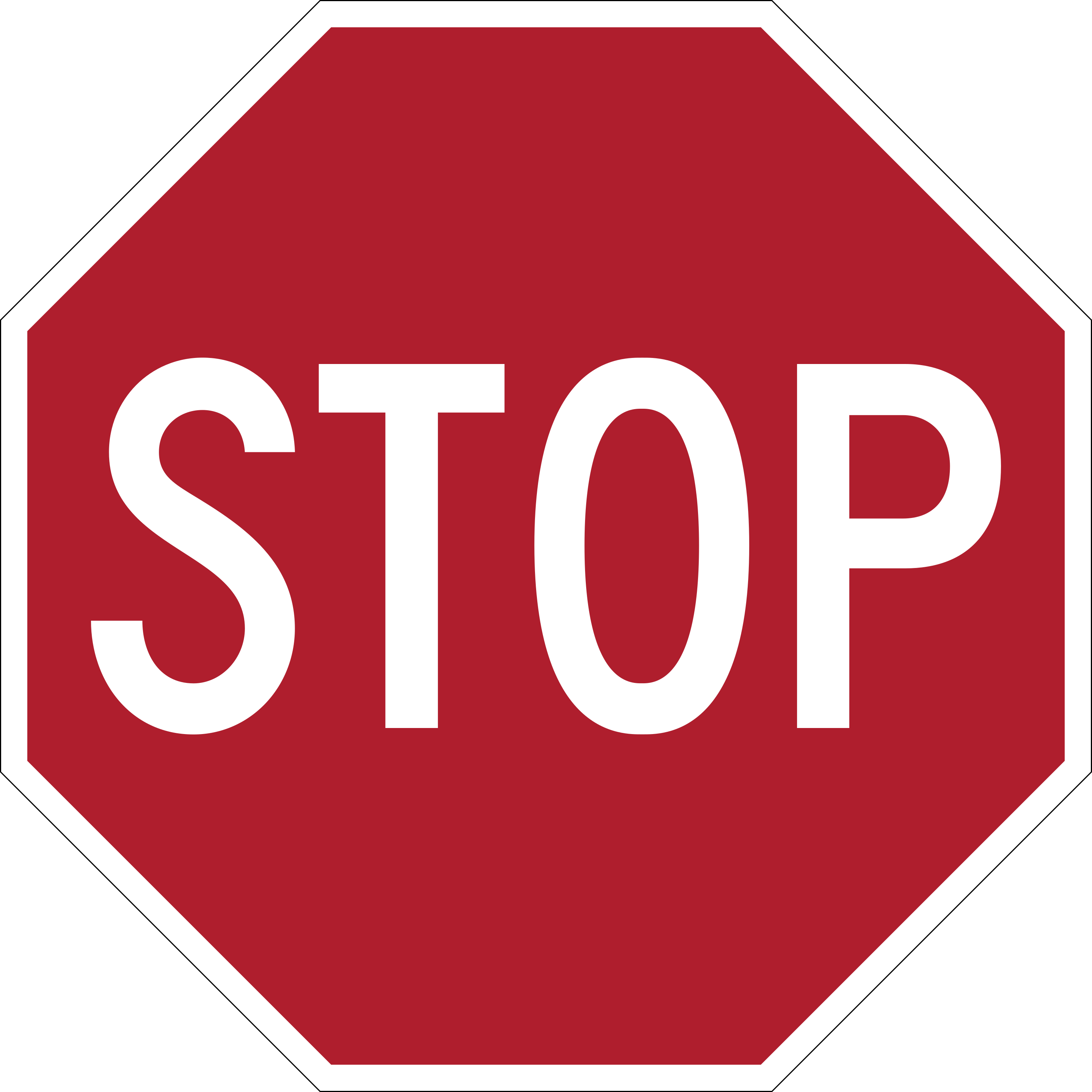
Correct answer: End the test and fail the applicant
Rolling past a STOP sign, or letting the front tire cross the white stop bar, counts as a traffic-regulation violation and the examiner must end the test.
Source: Maryland Motorcycle Operator Manual (DL-001) — Termination of Test: Violation of Traffic Regulations
3. Why should tinted eye protection be avoided at night?
Correct answer: It cuts down the little light available at night
Tinted shields or glasses should not be worn at night or whenever light is low because they reduce the little available light even further.
Source: Maryland Motorcycle Operator Manual (DL-001) — Wear the Right Gear: Eye and Face Protection
4. Where should your wrists and knuckles start out on the throttle?
Correct answer: Wrist low with the knuckles raised
Beginning with the wrist dropped and the knuckles raised makes it much harder to roll on more throttle than you intended.
Source: Maryland Motorcycle Operator Manual (DL-001) — Basic Vehicle Control: Body Position
5. As you approach an intersection, adjusting your lane position should aim to do what?
Correct answer: Increase your visibility to the driver
Choose a lane position that increases your visibility to the driver who might cross your path, and reduce speed while covering the controls.
Source: Maryland Motorcycle Operator Manual (DL-001) — Intersections
6. What are the four steps for safely taking a turn?
Correct answer: Slow, Look, Press, Roll
The manual teaches SLOW, LOOK, PRESS, ROLL: slow before the turn, look through it, press the handgrip to lean, then roll on the throttle.
Source: Maryland Motorcycle Operator Manual (DL-001) — Ride Within Your Abilities: Turning
7. Why does the manual warn about oil spots where you put a foot down to stop or park?
Correct answer: Your foot can slide out from under you and you can go down
A greasy patch under the boot offers no grip, so a rider who plants a foot there can slip and drop the machine.
Source: Maryland Motorcycle Operator Manual (DL-001) — Handling Dangerous Surfaces: Slippery Surfaces
8. Besides reaching the point limit, which action requires the examiner to end the skill test?
Correct answer: Stalling the engine four times
The examiner must stop the test if the rider stalls the engine four times, drops the bike, commits an unsafe act, or violates a traffic regulation.
Source: Maryland Motorcycle Operator Manual (DL-001) — The Skill Test / Termination of Test
9. When are frequent mirror checks most important for a motorcyclist?
Correct answer: When stopped at an intersection, before lane changes, and before slowing
Make a point of checking mirrors when stopped at an intersection, before changing lanes, and before slowing, so you know what is happening behind you.
Source: Maryland Motorcycle Operator Manual (DL-001) — Increasing Conspicuity: Using Your Mirrors
10. Maryland requires every motorcycle operator and passenger to wear protective headgear meeting which standard?
Correct answer: FMVSS 218 (DOT) helmet standard
Helmets must comply with Federal Motor Vehicle Safety Standard 218; a DOT label or Snell certification shows the helmet meets that standard.
Source: Maryland Motorcycle Operator Manual (DL-001) — Required Operator Equipment
11. What must you do at a flashing yellow traffic signal?
Correct answer: Reduce speed and go ahead carefully
A yellow light that blinks is a caution message: ease off your speed and move through the area alert for trouble, rather than stopping.
Source: Maryland Driver's Manual — Traffic Signals: Vehicle Signals
12. How should you handle riding over rain grooves or a bridge grating?
Correct answer: Relax, keep a steady speed, and ride straight across
The wandering feeling on grooves or gratings is generally not dangerous; relax, keep a steady speed, and ride straight across rather than zigzagging.
Source: Maryland Motorcycle Operator Manual (DL-001) — Handling Dangerous Surfaces: Grooves and Gratings
13. According to studies, roughly what portion of riders who died in motorcycle crashes had consumed alcohol?
Correct answer: About 40 to 45 percent
Studies indicate that about 40 to 45 percent of riders who die in these crashes had been drinking, and many were under the legal limit yet still impaired.
Source: Maryland Motorcycle Operator Manual (DL-001) — Why This Information Is Important
14. Why should two riders in a group never ride directly side by side?
Correct answer: There is no room to escape a hazard
Pairing up leaves nowhere to go if you suddenly must dodge a car or road debris, so never ride directly beside another rider.
Source: Maryland Motorcycle Operator Manual (DL-001) — Group Riding: Keep Your Distance
15. How far ahead does the manual advise a rider to scan their path of travel?
Correct answer: About 12 seconds ahead
Scanning your path of travel about 12 seconds ahead helps you spot and separate hazards before they become emergencies.
Source: Maryland Motorcycle Operator Manual (DL-001) — Know Your Responsibilities
16. The best way to help other drivers notice your motorcycle in daylight is to do what?
Correct answer: Keep the headlight on
Keeping the headlight on makes a motorcycle about twice as likely to be noticed during the day, which is why bikes since 1978 run lights automatically.
Source: Maryland Motorcycle Operator Manual (DL-001) — Increasing Conspicuity: Headlight
17. What is the rule about braking and swerving at the same time?
Correct answer: Brake before or after, never while swerving
Keep braking separate from swerving: brake before or after, but never while you swerve, because doing both at once can cause a loss of control.
Source: Maryland Motorcycle Operator Manual (DL-001) — Crash Avoidance: Swerving or Turning Quickly
18. According to the manual, most crash-involved riders make which braking mistake?
Correct answer: Underbrake the front and overbrake the rear
Studies show most crash-involved riders underbrake the front tire and overbrake the rear, and fail to separate braking from swerving.
Source: Maryland Motorcycle Operator Manual (DL-001) — Crash Avoidance
19. You should open up to at least a three-second following distance in which situation?
Correct answer: When the pavement is slippery or you can't see past the vehicle ahead
Increase to three or more seconds when the pavement is slippery, you can't see past the vehicle ahead, or traffic is heavy and someone may cut in.
Source: Maryland Motorcycle Operator Manual (DL-001) — Keeping Your Distance: Following Another Vehicle
20. What does a pennant-shaped traffic sign mark?
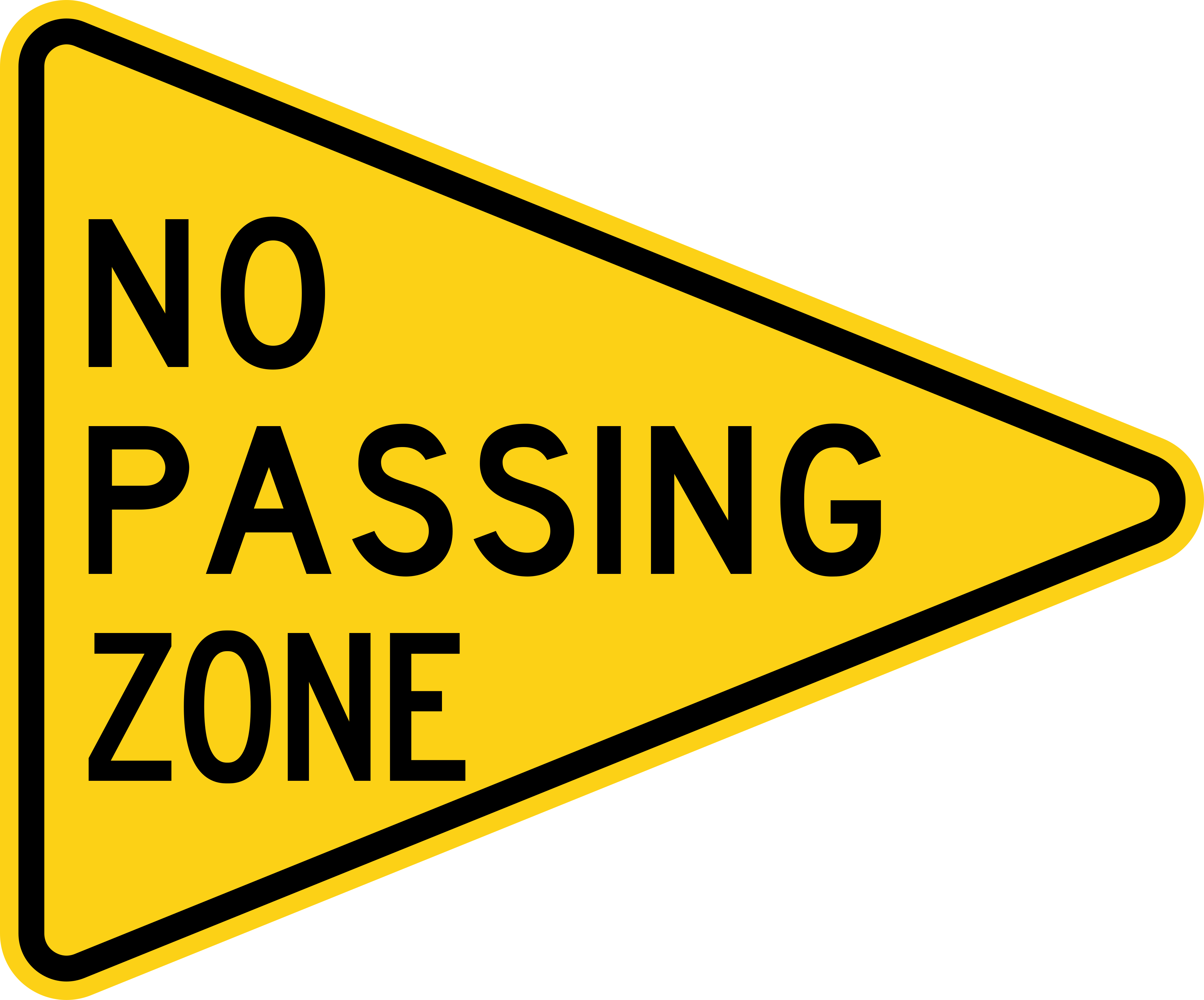
Correct answer: The beginning of a zone where passing is banned
The narrow pennant outline is reserved for the point where a stretch of road closed to passing begins, so do not pull out around another vehicle past that sign.
Source: Maryland Driver's Manual — Traffic Signs: Colors and Shapes