Maryland Road Signs and Their Meanings
Maryland sets a higher bar to pass its knowledge test than any other state on this site. The Motor Vehicle Administration states the passing standard for the noncommercial test outright — you must score 88 percent or higher — and that is the highest passing percentage any state on this site sets for its car knowledge test as a whole. On the twenty-five question Class C paper, with twenty minutes to work through it, that leaves room for three wrong answers and none for a fourth. The Maryland Driver's Manual names the three subjects the test draws on: motor vehicle laws, safe driving practices, and traffic signs. Signs are the third of those, and on a paper this unforgiving they are the part you can make certain of in advance, because a sign either is the shape you remember or it is not.
Nowhere does Maryland say how many of the twenty-five questions are about signs. The MVA's knowledge-test page comes close without ever committing: it lists the subjects, then breaks the sign subject into shapes — octagon, triangle, circle — and meanings — stop, yield, speed limits, warnings — and stops there. What that same page does commit to is everything around the test. The question count changes with the class you are applying for: twenty-five for Class C, Class M and a moped permit, twenty for Class A and Class B. One time limit and one passing score are listed for the noncommercial test. Tests are usually taken on a computer, and the noncommercial Class C test is offered in English, Spanish, American Sign Language and more than a dozen further languages, with spoken-language interpreters permitted. Fail, and the retake rule the MVA's own FAQ sets out has three parts, not one: the next business day after a first failure, only if an appointment is available, and at least seven calendar days once you have failed twice or more — a wait it applies to every noncommercial and commercial knowledge test alike.
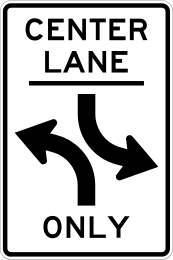
The book the questions come from is the Maryland Driver's Manual, catalogued by the MVA as DL-002 and currently in its October 2025 edition. Signs live in Section 4, titled Signs, Signals and Pavement Markings, and its Traffic Signs part opens on color rather than on any individual sign. Maryland's color list runs well past the familiar ones: alongside red, yellow, white, orange, green, blue and brown it names fluorescent yellow-green for school, pedestrian and bicycle signs, fluorescent pink for emergency traffic incidents, and black, which it assigns to One Way signs and to signs that change messages. The shape list runs long as well, ending on a trapezoid the manual assigns to recreation and cultural interest areas and to National Forest Routes. That list teaches by name — Octagon: Stop — and the regulatory page that follows it switches notation for exactly three of its entries, counting sides instead of naming shapes: 8-Sided Sign, White Letters on Red; 3-Sided Sign, Red Letters on White; Rectangular (4-Sided) Signs, Black on White. Only those three. The rest of that page names its signs outright, fourteen of them, from No Right Turn and No U-Turn through Do Not Pass, Bike Lane and Wrong Way, and explains the two-way left-turn lane, the One Way and the HOV entries as it goes.
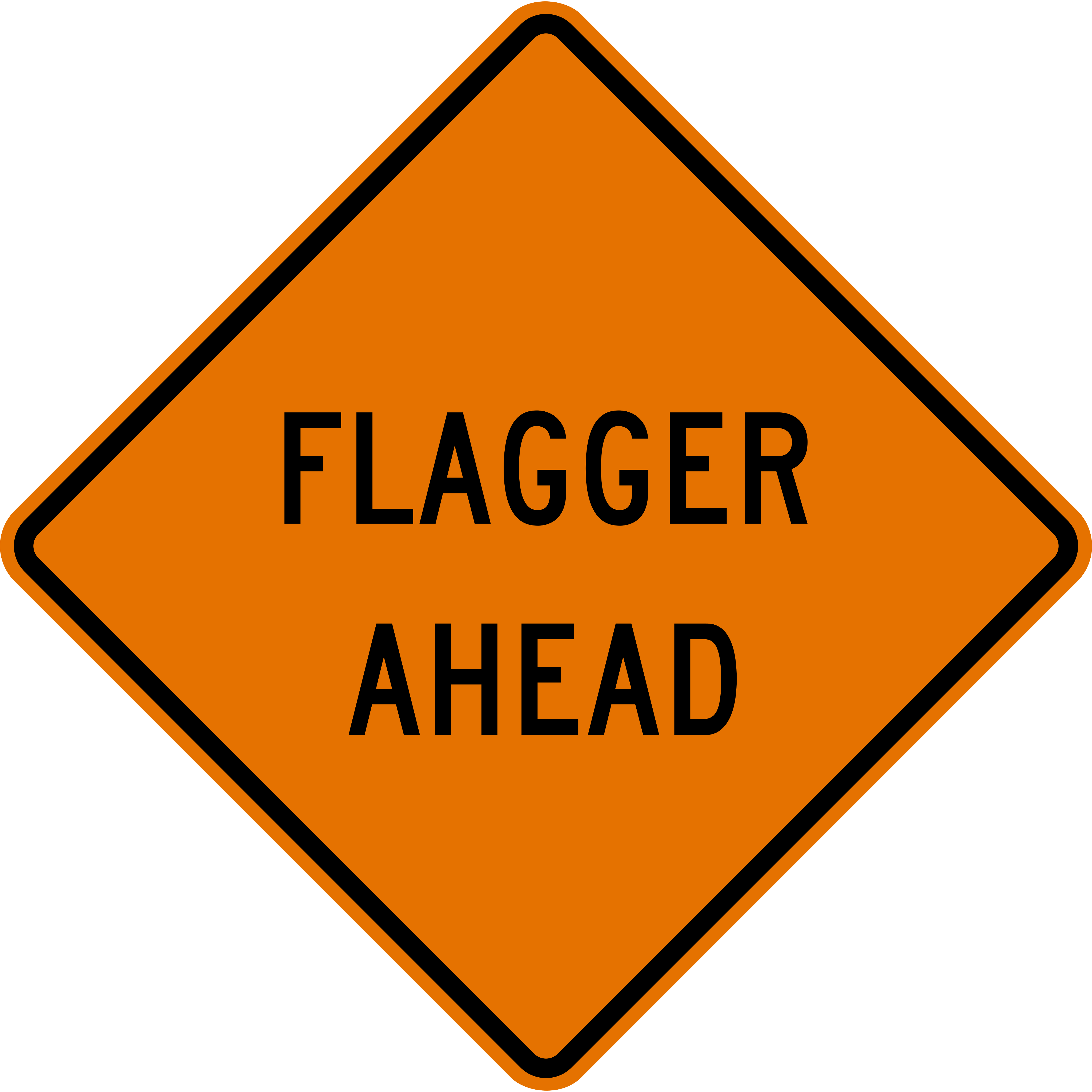
Notice where the Maryland manual stops explaining. Its warning-sign page offers a single sentence of definition and then hands you a wall of captioned pictures — stop ahead, slippery when wet, deer crossing, flagger ahead — with no accompanying text at all, so a reader who has never met those signs is left to work them out from the drawings. The published Maryland questions here sit where the manual actually argues its case: on the color list, on the shape list, and on the handful of regulatory entries the manual sets out and explains one by one. Each carries the section it came from and an explanation of why the answer is right, which means each of them lands on a part of the manual that explains itself rather than on a caption that only labels.
18 published Maryland road-sign questions, each with an explanation and a citation to the handbook section it came from.
Content reviewed against official driver handbooks · August 12, 2026
Every sign you can be tested on in Maryland
Regulatory signs
- Stop

- Yield

- Do Not Enter

- Wrong Way

- No U-Turn

- Speed Limit

- One Way

- All Way

- State Law: Yield to Pedestrians

- State Law: Stop for Pedestrians

- Truck Speed Limit

- Minimum Speed Limit

- Reduced Speed Limit Ahead

- Begin Higher Fines Zone

- End Higher Fines Zone

- No Right Turn

- No Left Turn

- No Turns

- Left Lane Must Turn Left

- Right Lane Must Turn Right

- Intersection Lane Control

- Bike Lane

- No Left or U-Turn

- No Straight Through

- Do Not Pass

- Pass With Care

- Slower Traffic Keep Right

- Begin Right Turn Lane — Yield to Bikes

- Trucks Use Right Lane

- Keep Right

- Keep Left

- Keep Right Except to Pass

- Do Not Drive on Shoulder

- No Trucks

- No Motor Vehicles

- No Bicycles

- No Pedestrians, Bicycles, or Motor-Driven Cycles

- No Parking Any Time

- Accessible Parking

- No Parking Bus Stop

- No Parking

- Stop Here on Red

- Do Not Block Intersection

- No Turn on Red

- Left Turn Yield on Green

- Road Closed

- Road Closed — Local Traffic Only

- Road Closed to Thru Traffic

- Weight Limit

- No Hazardous Materials

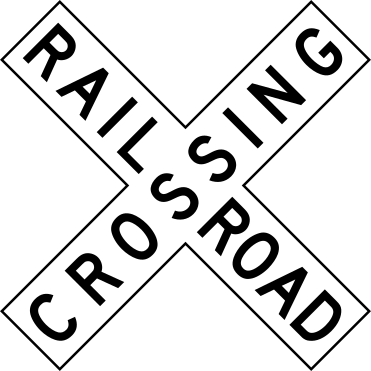
- Railroad Crossing (Crossbuck)
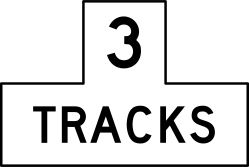
- Number of Tracks
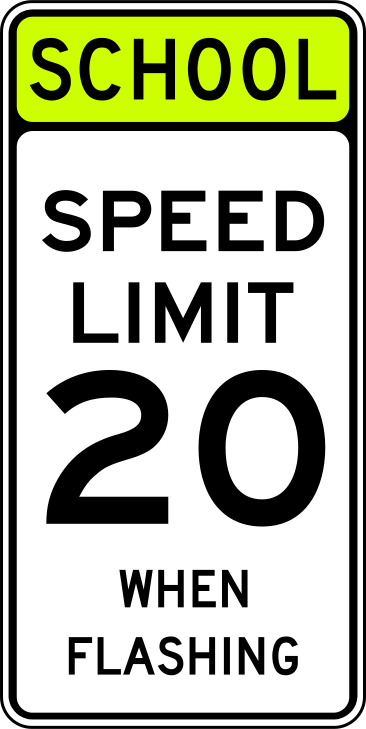
- School Speed Limit When Flashing
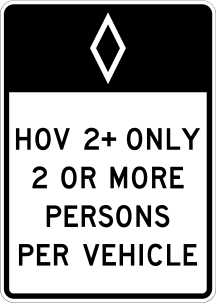
- HOV Lane
- Exempt

- Two-Way Left Turn Only
Warning signs
- Turn Ahead

- Stop Ahead

- Signal Ahead

- Pedestrian Crossing

- Curve

- Reverse Turn

- Reverse Curve

- Winding Road

- One-Direction Large Arrow

- Two-Direction Large Arrow

- Chevron Alignment

- Hairpin Curve

- Cross Road

- Side Road

- Roundabout Ahead

- Yield Ahead

- Be Prepared to Stop

- Reduced Speed Limit Ahead

- Merging Traffic

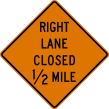
- Lane Ends

- Added Lane

- Lanes Merge

- Road Narrows

- Narrow Bridge

- One Lane Bridge

- Ramp Narrows

- Divided Highway Begins

- Divided Highway Ends

- Two-Way Traffic

- Hill / Steep Grade

- Bump

- Dip

- Pavement Ends

- Soft Shoulder

- Slippery When Wet

- Loose Gravel

- Rough Road

- Low Shoulder

- Uneven Lanes

- Grooved Pavement

- Metal Bridge Deck

- Railroad Crossing Ahead

- Bicycle Crossing

- Deer Crossing

- Cattle Crossing

- Farm Machinery

- Snowmobile Crossing

- Equestrian Crossing

- Persons with Disabilities

- Golf Cart Crossing

- Horse-Drawn Vehicle Crossing

- Low Clearance

- Advisory Speed

- Dead End

- No Outlet

- No Passing Zone

- Playground

- Speed Hump

- School

- Truck Rollover

- Bridge Ices Before Road

- Road May Flood

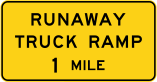
- Runaway Truck Ramp
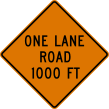
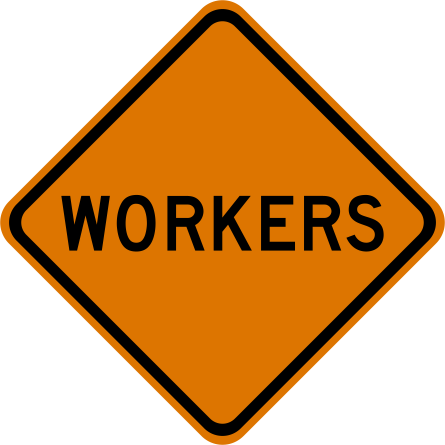
Construction & work-zone signs




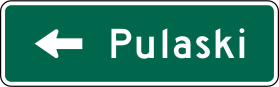
Guide signs


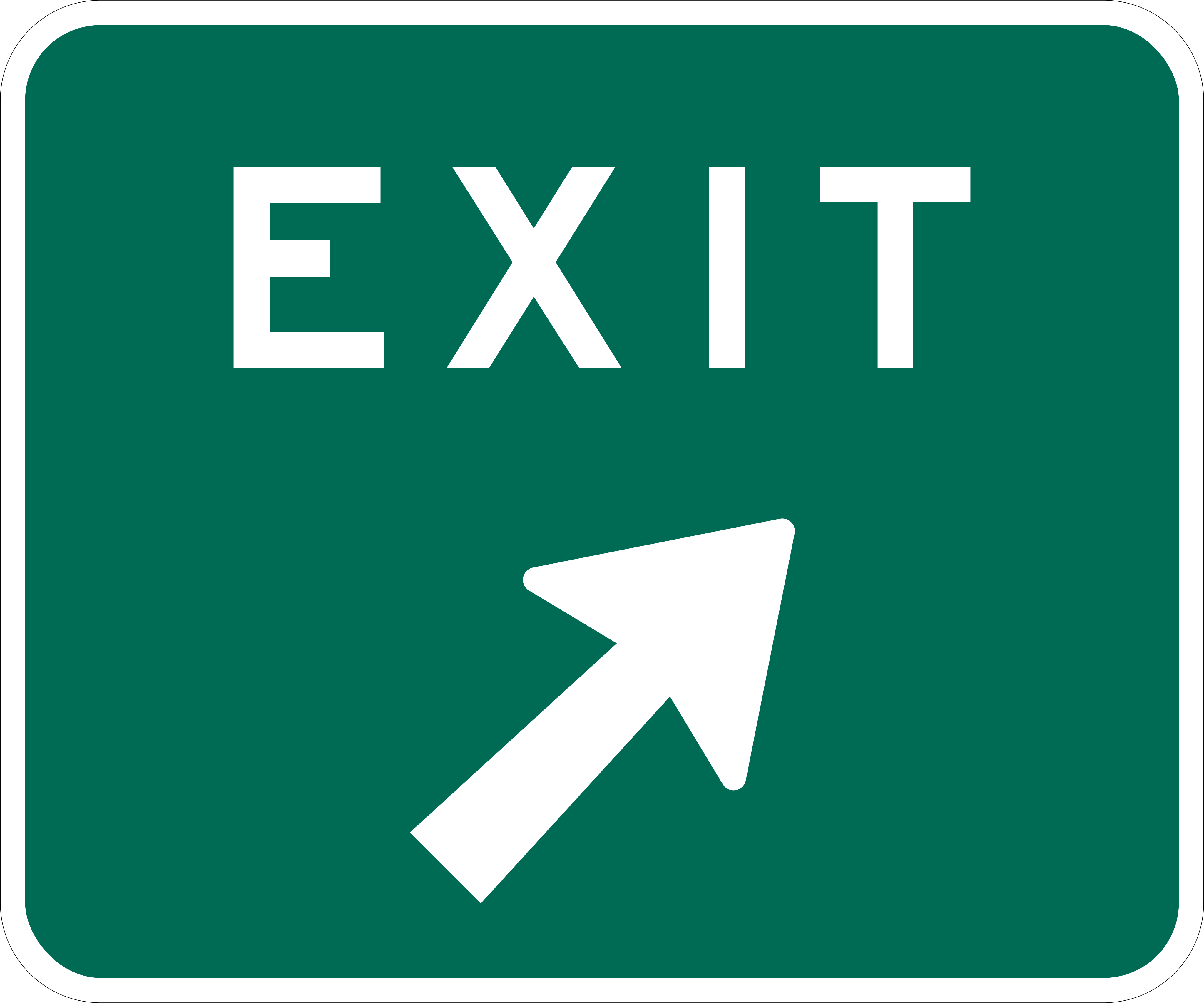


Service & information signs


Maryland road signs: frequently asked questions
What score do I need to pass the Maryland knowledge test?
88 percent or higher, and the MVA prints that figure on its knowledge-test page. For a Class C license the test is 25 questions with a 20-minute limit, which leaves room for three wrong answers. Class A and Class B applicants answer 20 questions instead. The manual and the MVA page agree on the count and the clock for Class C; the passing percentage appears on the web page rather than in the book.
How many road-sign questions will be on my Maryland test?
Maryland does not publish that split. Traffic signs are named as one of the three subjects the knowledge test covers, and the MVA's study guidance divides signs into shapes and meanings, but no official page states how many of the questions come from that subject. Anyone quoting you a number for Maryland is estimating.
In what languages can I take the Maryland knowledge test?
Amharic, Arabic, Traditional Chinese, Farsi, French, Hindi, Korean, Nepali, Portuguese, Russian, Tagalog, Urdu, Vietnamese and Yoruba, on top of the three the MVA names first. The Maryland Driver's Manual is published online in the same set, so the book and the exam match. Commercial testing is narrower — computer-delivered in two languages only, with oral versions given in English by an MVA agent and requiring an appointment.
I failed the Maryland knowledge test. How long must I wait?
That depends on how many times you have failed. After a first failure you may retest the next business day — and only if an appointment is available. After failing two or more times you must wait at least seven calendar days, and the MVA applies that wait to all noncommercial and commercial knowledge tests. Note that the step-by-step summary higher up the same MVA page compresses all of that to "you may retake it the next day" — the fuller rule is the one in the page's own FAQ, and it is the one to plan around. The advice printed alongside it is worth taking literally: understand the areas you missed before you go back. Knowledge tests are taken at an MVA office location, and a retake is scheduled at a branch office or through the MVA website. Accommodations are available if a disability makes testing difficult; the MVA asks to be contacted in advance for those.
Why does the Maryland manual list a trapezoid among the sign shapes?
Because Maryland assigns that shape a job — recreational and cultural destinations, plus the National Forest Routes. It sits at the end of a shape list that also covers the octagon for stop, the downward triangle for yield, the diamond for warning, the pennant that marks the start of a no-passing zone, the pentagon for school zones and school crossings, the round railroad warning and the crossbuck at the crossing itself. Reading that list as a list — shape first, then meaning — is closer to how Maryland teaches signs than memorizing individual pictures.
Official sources
Checked against official state sources on 2026-07-29.