Minnesota Road Signs and Their Meanings
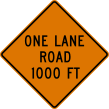
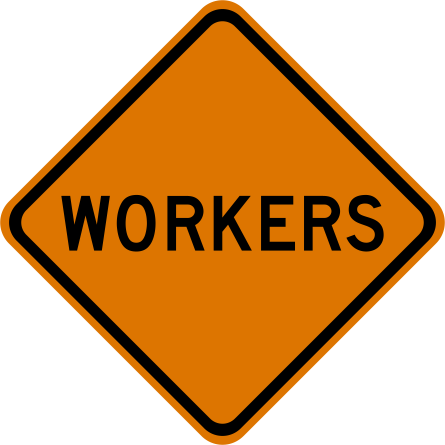
Minnesota teaches sign color before it shows a single sign, and it groups the colors instead of listing them. Chapter 5 of the Minnesota Driver's Manual sorts them into three families: regulatory, where red prohibits and commands and white regulates; warning, where yellow warns, yellow-green warns in pedestrian, bicycle and school areas, and orange warns in construction zones; and informational, where green guides, blue describes services for motorists, and brown marks historic, cultural or recreational sites. Seven common shapes follow — octagon, triangle, diamond, rectangle, pentagon, crossbuck, circle — on the reasoning the chapter states outright: shape and color "give you a general idea of what the sign means, even before you can read it up close."
Minnesota does not score signs on their own. Sign identification is folded into the single Class D knowledge test, which the manual describes as multiple-choice and true-or-false questions on Minnesota traffic laws and road signs. The bar itself is published, in one sentence: "You may take only one written test per day and must score 80 percent to pass." What Minnesota leaves out is what the 80 percent is counted out of — no question count appears anywhere in the manual, and neither does a time limit — so the question total shown for Minnesota on this site is our own inference, while the 80 percent is the state's own number. Appointments are required, the online pre-application at the department's myDVS service has to be completed no more than 30 days before the appointment, and an applicant under 18 also brings a certificate of enrollment — the "Blue Card" — showing the classroom instruction is done.
Chapter 5, Signs, signals and pavement markings, begins on page 56 of the Minnesota Driver's Manual, published by Driver and Vehicle Services within the Department of Public Safety. Every Minnesota sign question in this bank is cited to that chapter, and the citations name a Chapter 5 heading and nothing else — no separate manual title, no page number — because Chapter 5 is where Minnesota keeps the sign material this bank draws on, down to the slow-moving vehicle emblem. DVS offers the manual itself two ways: a written manual and an audio manual, with other languages routed through its Driver's License for All resources.
Nearly every question in this Minnesota set carries a different heading from the chapter on signs, signals and pavement markings — regulatory signs, warning signs, common shapes, sign color meanings, construction signs, motorist services, guidance and information, school zones, the slow-moving vehicle emblem, railroad crossings, no-passing zones, wrong way, yield, reduced speed ahead — with only regulatory signs appearing more than once. That makes the set a breadth check rather than a drill: closer to a sweep across the chapter than to repeated attempts at a single category. Worked through honestly, it tells a candidate which headings they cannot yet explain, and each answer comes with an explanation, so a heading you miss points you at the part of the chapter to reread rather than at the whole of it.
15 published Minnesota road-sign questions, each with an explanation and a citation to the handbook section it came from.
Content reviewed against official driver handbooks · August 12, 2026
Every sign you can be tested on in Minnesota
Regulatory signs
- Stop

- Yield

- Do Not Enter

- Wrong Way

- No U-Turn

- Speed Limit

- One Way

- All Way

- State Law: Yield to Pedestrians

- State Law: Stop for Pedestrians

- Truck Speed Limit

- Minimum Speed Limit

- Reduced Speed Limit Ahead

- Begin Higher Fines Zone

- End Higher Fines Zone

- No Right Turn

- No Left Turn

- No Turns

- Left Lane Must Turn Left

- Right Lane Must Turn Right

- Intersection Lane Control

- Bike Lane

- No Left or U-Turn

- No Straight Through

- Do Not Pass

- Pass With Care

- Slower Traffic Keep Right

- Begin Right Turn Lane — Yield to Bikes

- Trucks Use Right Lane

- Keep Right

- Keep Left

- Keep Right Except to Pass

- Do Not Drive on Shoulder

- No Trucks

- No Motor Vehicles

- No Bicycles

- No Pedestrians, Bicycles, or Motor-Driven Cycles

- No Parking Any Time

- Accessible Parking

- No Parking Bus Stop

- No Parking

- Stop Here on Red

- Do Not Block Intersection

- No Turn on Red

- Left Turn Yield on Green

- Road Closed

- Road Closed — Local Traffic Only

- Road Closed to Thru Traffic

- Weight Limit

- No Hazardous Materials

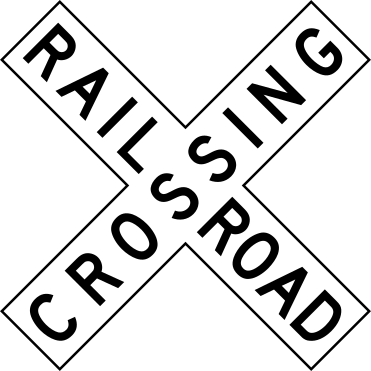
- Railroad Crossing (Crossbuck)
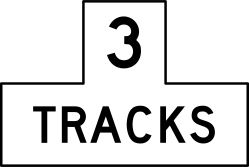
- Number of Tracks
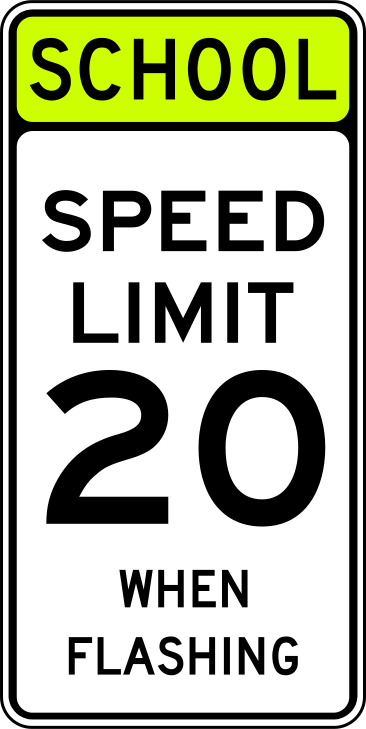
- School Speed Limit When Flashing
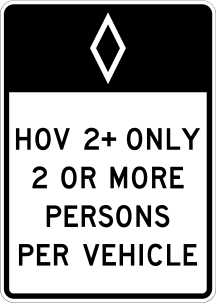
- HOV Lane
- Exempt

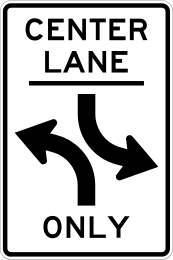
- Two-Way Left Turn Only
Warning signs
- Turn Ahead

- Stop Ahead

- Signal Ahead

- Pedestrian Crossing

- Curve

- Reverse Turn

- Reverse Curve

- Winding Road

- One-Direction Large Arrow

- Two-Direction Large Arrow

- Chevron Alignment

- Hairpin Curve

- Cross Road

- Side Road

- Roundabout Ahead

- Yield Ahead

- Be Prepared to Stop

- Reduced Speed Limit Ahead

- Merging Traffic

- Lane Ends

- Added Lane

- Lanes Merge

- Road Narrows

- Narrow Bridge

- One Lane Bridge

- Ramp Narrows

- Divided Highway Begins

- Divided Highway Ends

- Two-Way Traffic

- Hill / Steep Grade

- Bump

- Dip

- Pavement Ends

- Soft Shoulder

- Slippery When Wet

- Loose Gravel

- Rough Road

- Low Shoulder

- Uneven Lanes

- Grooved Pavement

- Metal Bridge Deck

- Railroad Crossing Ahead

- Bicycle Crossing

- Deer Crossing

- Cattle Crossing

- Farm Machinery

- Snowmobile Crossing

- Equestrian Crossing

- Persons with Disabilities

- Golf Cart Crossing

- Horse-Drawn Vehicle Crossing

- Low Clearance

- Advisory Speed

- Dead End

- No Outlet

- No Passing Zone

- Playground

- Speed Hump

- School

- Truck Rollover

- Bridge Ices Before Road

- Road May Flood

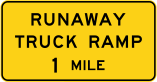
- Runaway Truck Ramp
Construction & work-zone signs




Guide signs




Service & information signs


Minnesota road signs: frequently asked questions
I already drive — will Minnesota make me sit the written test again?
It depends on the document you are holding. A Minnesota license expired more than one year but less than five brings back the written test and the vision test. Moving in at 21 or older with a valid, unexpired out-of-state license, you need only the vision test and an application. But if that former state license expired less than a year ago you take the written test, and if it expired more than a year ago you take the written and road tests. Minnesota gives new residents 60 days to convert.
Where does the 40-question figure for Minnesota come from?
The manual gives the passing mark — 80 percent — and no count to go with it, and no time limit either. Minnesota is specific about the pass and silent about the paper. This site fills that gap with 40 questions and 32 correct, both inferred rather than published; the 80 percent that generates them is Minnesota's own. You also get one written test per day, so a failed attempt costs you the rest of the day.
Can I take Minnesota's knowledge test out loud, or with an interpreter?
DVS runs group oral Class D knowledge tests at four exam stations — Anoka, Eagan, Buffalo and downtown Saint Paul — requested by email, with a minimum of three testers and a maximum of seven per session. The request names the location, the language, and the interpreters. Testers check in at least 15 minutes early, and any change has to reach DVS seven business days before the appointment.
On paper or on screen — and in what language is Minnesota's written test given?
Either. The manual says the test may be taken on paper or on a computer, and that exam stations offering the computer version give it in English, in several other languages, or in American Sign Language. Headphones are available so you can hear the questions while you read them, and anyone needing other accommodations is told to ask at the exam station.
What speed defines a slow-moving vehicle in Minnesota?
Thirty miles per hour or less. Minnesota requires the slow-moving vehicle emblem — the orange triangle — on every vehicle that travels at 30 mph or under, naming farm implements and animal-drawn vehicles as examples. The emblem is covered in Chapter 5 alongside the signs, which is why the question about it in this bank cites that chapter like the rest.
Official sources
- Minnesota Driver's Manual (Class D)
- Minnesota DVS — Class D forms, documents and manuals
- Minnesota DVS — group Class D knowledge testing
Checked against official state sources on 2026-07-29.