Free Mississippi DMV Motorcycle Practice Test 2026
The Mississippi Motorcycle knowledge test has ~25 questions, and you need ~20 correct (~80%) to pass. Practice free with questions written from the official Mississippi driver handbook — every one has a clear explanation, and you can retake as often as you like with no sign-up.
Content reviewed against official driver handbooks · August 12, 2026
What's on the Mississippi written test
The Mississippi Motorcycle knowledge test has ~25 questions; you need ~20 correct (~80%) to pass.
Based on the official Mississippi exam format — always confirm current details with your state DMV.
Practice by topic
Focus on one area at a time — each topic has its own set of Mississippi practice questions.
Helmets, eye protection, and abrasion-resistant gear — what the motorcycle handbook requires and why each piece matters in a crash.
Throttle, clutch, both brakes, and shifting — the controls you must operate smoothly before the road test.
Countersteering, the slow-look-press-roll technique, and choosing the right line through a curve at motorcycle speeds.
Using both brakes together, stopping quickly without locking a wheel, and recovering from a skid.
Where to position yourself in the lane to be seen, managing blind spots, and sharing the road safely with cars and trucks.
Conspicuity — reflective and bright clothing, headlight use, and lane position that make a rider easier for drivers to see.
Gravel, wet pavement, grooved roads, and railroad tracks — reading and handling surfaces that matter far more on two wheels.
Learn the shapes, colors, and meanings of regulatory, warning, and guide signs — from stop and yield to construction and school-zone signs.
Speed limits, turning and signaling rules, headlight and seat-belt requirements, and the everyday laws every driver must follow.
Who goes first at intersections, four-way stops, roundabouts, and crosswalks, and how to yield to pedestrians and emergency vehicles.
Blood alcohol limits, zero-tolerance and implied-consent laws, and how alcohol and drugs — legal or not — affect your driving.
How to pass the first time
- Read the official Mississippi driver handbook at least once before test day.
- Practice by topic to find your weak spots, then fix them.
- Take full-length practice tests until you pass comfortably every time.
- Read every explanation — understanding beats memorizing.
Mississippi Motorcycle test — frequently asked questions
How many questions are on the Mississippi Motorcycle test?
The Mississippi Motorcycle knowledge test has ~25 questions, and you need ~20 correct (~80%) to pass. Our practice tests mirror that format.
How many questions can I miss on the Mississippi Motorcycle test?
You can miss up to ~5 of the ~25 questions and still pass — you need ~20 correct, which is ~80%.
Can I retake the practice test?
Yes — practice as often as you like, completely free. The questions and answer choices are shuffled each time.
Can I take the Mississippi practice test in Spanish?
Yes. Every question here is available in English and Spanish — switch languages anytime. Many states also offer the real knowledge test in languages other than English; confirm what Mississippi offers with your DMV.
Can I practice on my phone?
Yes. The practice tests work in any mobile or desktop browser — no app or sign-up needed — so you can study anywhere.
Are these the real DMV test questions?
No. Our questions are original, written from the current official Mississippi driver handbook to match the real test's topics and style. We are not affiliated with any DMV or government agency.
What's the best way to study?
Read the Mississippi driver handbook, practice by topic to target weak areas, and finish with full-length tests until you consistently pass.
Other Mississippi practice tests
Take the Motorcycle test in another state
Every Mississippi question is written from the official Mississippi driver handbook and checked against its current edition. DMV Test Free is a free, independent study resource — not affiliated with any DMV or government agency. About DMV Test Free
Mississippi Motorcycle questions with answers
20 sample questions from the Mississippi Motorcycle question bank — each with the correct answer, a short explanation, and the section of the official handbook it comes from.
Show all 20 questions with answers
1. Why does the manual recommend a jacket even on a warm summer day?
Correct answer: It helps prevent dehydration, and many are built not to overheat you
Covering up helps hold off dehydration, and many jackets are designed to protect without cooking the rider.
Source: Motorcycle Operator Manual — Wear the Right Gear, Clothing
2. On a multi-lane road running your direction, which lane should you normally occupy?
Correct answer: The far right lane, unless you are passing or setting up a left turn
Stay in the far right lane except when you are passing or getting ready to turn left.
Source: Mississippi Driver's License Manual — Traffic Lanes
3. You must stop quickly in a curve and conditions allow it. What is the preferred move?
Correct answer: Get the machine as upright as possible, then brake
Where road and traffic permit, bring the machine as close to upright as you can and square the bars, then brake.
Source: Motorcycle Operator Manual — Crash Avoidance, Stopping Quickly in a Curve
4. About how fast does the body clear alcohol?
Correct answer: About one drink an hour
Roughly one drink an hour, though how much is retained varies from person to person.
Source: Motorcycle Operator Manual — Being in Shape to Ride, Blood Alcohol Concentration
5. What does rolling on the throttle do during a turn?
Correct answer: It helps stabilize the motorcycle through the corner
A steady roll-on holds or slightly raises your speed through the corner, which helps steady the machine.
Source: Motorcycle Operator Manual — Basic Vehicle Control, Turning
6. How should ordinary railroad or trolley tracks that cross your lane be taken?
Correct answer: Ride straight ahead within your own lane
It is usually safer to keep riding straight within your own lane; swinging around to meet the rails squarely can carry you into a neighboring lane of traffic.
Source: Motorcycle Operator Manual — Handling Dangerous Surfaces, Railroad Tracks, Trolley Tracks and Pavement Seams
7. How does the manual treat eye contact with a driver waiting to cross your path?
Correct answer: It is no guarantee the driver will yield, or has even seen you
Eye contact proves nothing: drivers stare straight at riders and still fail to register them, so the only eyes worth trusting are yours. Treat any car that could enter your path as though it will.
Source: Motorcycle Operator Manual — Intersections
8. How does a flat front tire feel compared with a flat rear one?
Correct answer: The front feels heavy to steer; the rear jerks or sways
A soft front makes the steering feel heavy, while a soft rear sets the back of the machine jerking or swaying from side to side.
Source: Motorcycle Operator Manual — Mechanical Problems, Tire Failure
9. Who has the right of way in a crosswalk?
Correct answer: The pedestrian, marked crosswalk or not
A person crossing within a crosswalk always holds it, whether the crosswalk is painted or not.
Source: Mississippi Driver's License Manual — Yielding Right-of-Way to Pedestrians
10. What does a posted speed limit number represent?
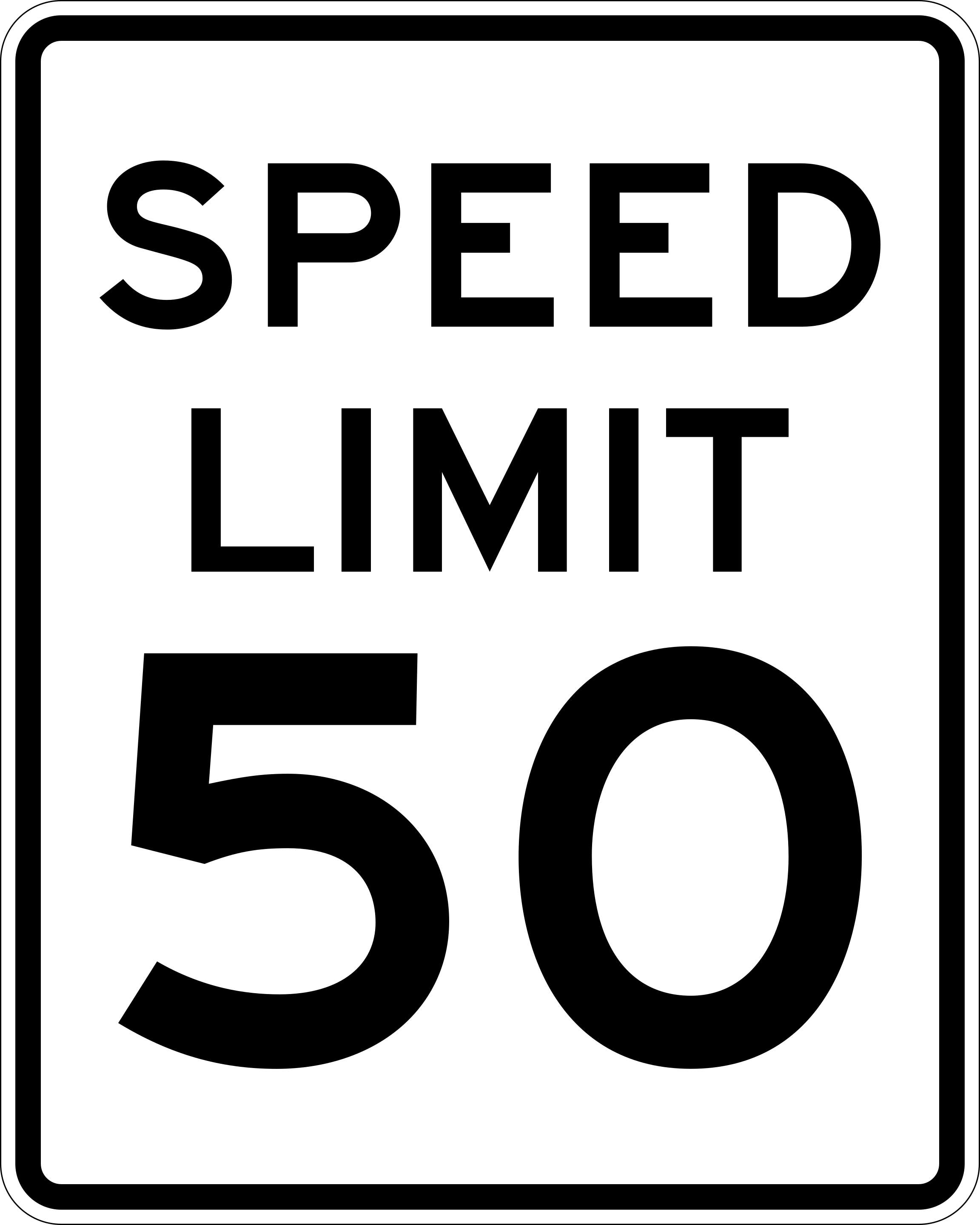
Correct answer: The maximum allowed under ideal driving conditions
It marks the maximum allowed under ideal driving conditions — bad weather, poor visibility or heavy traffic all call for less.
Source: Mississippi Driver's License Manual — Regulatory Signs
11. Where in a group do the least experienced riders belong?
Correct answer: Just behind the leader
New riders sit directly behind the leader. That way they are never left chasing the group, and the seasoned riders further back can watch how they are getting on.
Source: Motorcycle Operator Manual — Group Riding, Plan
12. What is the point of hearing protection on a motorcycle?
Correct answer: It reduces noise while still letting you hear horns and sirens
Good hearing protection knocks down the wind and engine roar while still letting horns and sirens through; years of that noise can damage hearing permanently even under a full-face helmet.
Source: Motorcycle Operator Manual — Wear the Right Gear, Clothing
13. How close to a bridge, railroad crossing or intersection does Mississippi bar passing?
Correct answer: Within one hundred feet
Passing is barred within a hundred feet of a bridge, viaduct, overpass, railroad crossing, crosswalk or intersection, and on hills and curves or anywhere your view is blocked.
Source: Mississippi Driver's License Manual — Passing Other Vehicles
14. What is anti-lock braking designed to do?
Correct answer: Keep a wheel from locking up and skidding in a straight-line panic stop
ABS is there to stop a wheel locking and skidding during a hard straight-line stop; it does its work when you put maximum pressure on both controls.
Source: Motorcycle Operator Manual — Basic Vehicle Control, Anti-Lock Braking Systems
15. How does Mississippi treat driving while impaired by medical cannabis?
Correct answer: It is a violation of state law and can result in arrest
Smoking medical cannabis inside a vehicle, or driving or having actual physical control of one while impaired by it, violates state law and can bring an arrest; impairing prescription drugs are treated the same way.
Source: Mississippi Driver's License Manual — Marijuana & the Driver
16. Why does the manual warn that every curve is different?
Correct answer: Because a curve may hold steady, widen, tighten or contain several bends
A curve may hold a constant radius, open out gradually, tighten up, or string several bends together — so read it before you commit and stay inside your own skill level and the posted limit.
Source: Motorcycle Operator Manual — Crash Avoidance, Curves
17. Which of these does the manual list among the surfaces that give poor traction?
Correct answer: Painted lane markings, steel plates and manhole covers
Wet pavement, gravel and sand, mud, leaves, snow and ice, and painted lane markings, steel plates and manhole covers — especially when they are wet.
Source: Motorcycle Operator Manual — Handling Dangerous Surfaces, Slippery Surfaces
18. What following distance does the manual want after dark?
Correct answer: Three seconds or more
Night takes away the shadows and contrasts your eyes use to judge distance, so open the gap to three seconds or more and allow extra room to pass and be passed.
Source: Motorcycle Operator Manual — Increasing Conspicuity, Riding at Night
19. If the throttle sticks open, what should you do first, and what next if that fails?
Correct answer: Twist it back and forth; if it stays stuck, use the cut-off switch while squeezing the clutch lever
Twist the throttle back and forth a few times to try to free the cable; if it stays stuck, hit the engine cut-off switch and pull the clutch in at the same moment.
Source: Motorcycle Operator Manual — Mechanical Problems, Stuck Throttle
20. What share of car-and-motorcycle collisions does the manual blame on drivers entering the rider's right of way?
Correct answer: More than half
More than half. The worst offenders are cars turning left across your path — including from the lane to your right — and cars pulling out of side streets.
Source: Motorcycle Operator Manual — Intersections