Mississippi Road Signs and Their Meanings
Mississippi has no Department of Motor Vehicles. Driver licensing belongs to the Driver Service Bureau, a division of the Mississippi Department of Public Safety, and the book it publishes is the Driver's License Manual, revised December 2024. That manual never calls the written test a knowledge test. It calls it the Computerized Exam, and its glossary of common terms defines the phrase outright: "a multiple-choice question test you must pass as one of the requirements for a Mississippi driver's license." What the Bureau nowhere publishes is how long that exam runs or how many correct answers clear it. Neither figure appears in the manual, on the Regular Learner's Permit page, or on the Class R page. Nor is the exam one hurdle among several. The Class R page states that "At this time, no skills (road) test is required of any applicant seeking a regular driver's license," so together with the vision check it is the examination — the whole of what an applicant has to pass.
No part of that exam is set aside for signs, and Mississippi runs no separate signs test, so a sign question missed costs exactly what any other miss costs. Where signs do appear is in the brief the manual writes for the examination before it describes the test at all. It lists what the exam is designed to find out, and one of those things is "Can you read, understand, and follow signs and signals?" — set beside knowing the state's traffic laws, holding the proper attitude toward the rights of pedestrians and other drivers, keeping a vehicle in safe condition, and being physically and mentally capable of driving safely. A paragraph later the manual narrows its aim: the Computerized Exam "especially focuses on Mississippi traffic laws, safe driving rules, and driver's license requirements," a list with no signs in it. Both sentences are the Bureau's own, and read together they place signs among the things the exam exists to establish rather than among the quotas it fills. That leaves the chapter itself, and not a share of the score, as the thing worth knowing.
The chapter is TRAFFIC SIGNS AND SIGNALS, listed at page 27 in the manual's contents, and it opens on a transition rather than on a rule: "You must be able to recognize and obey traffic signs and signals. The U.S. is currently converting to an international style, which uses pictures and symbols rather than words. This change will be gradual: New designs will be accompanied by word messages until the public is familiar with them." A driver reading that is being told to expect the same instruction in two forms, symbol and sentence, and to treat neither as the settled one. The section that follows, STANDARD SHAPES AND COLORS, begins "Signs have eight standard shapes and eight standard colors. Each one has a specific meaning," and then gives every shape and every color a single line of gloss. The wording of those lines repays attention. Three shapes are marked "Exclusively" — the octagon for STOP signs, the equilateral triangle for YIELD signs, and the diamond "to warn of existing or possible hazard on or adjacent to roadway" — while both rectangles are hedged to "Usually," horizontal for guide signs and vertical for regulatory ones such as speed limits. Black and white are handed the identical one-word meaning, "Regulation." And round is not a general-purpose shape here at all: "ROUND: Warning of railroad crossing ahead." The rest of the chapter works through regulatory signs, warning signs, guide signs and route markers, work zone signs, slow-moving vehicles, railroad crossings, traffic signal lights, lane direction control, traffic officers and pedestrian signals.
Every published Mississippi sign question here cites the Driver's License Manual and then the heading inside that chapter it was drawn from, so an explanation you want to argue with can be checked against the paragraph behind it. The headings are not evenly loaded. Standard Shapes and Colors supplies more of this set than any other heading does, which follows from what that legend is for: it is the part of the chapter that lets you read a sign you have never met before, from its outline and its color, before you have made out a word on it. Regulatory signs come next in weight, and what remains is spread across warning signs, work zone signs, railroad crossings and the orange-and-red emblem the manual assigns to slow-moving vehicles. Every question carries a written explanation as well as a correct answer, and all of it is free, with no account to create.
20 published Mississippi road-sign questions, each with an explanation and a citation to the handbook section it came from.
Content reviewed against official driver handbooks · August 12, 2026
Every sign you can be tested on in Mississippi
Regulatory signs
- Stop

- Yield

- Do Not Enter

- Wrong Way

- No U-Turn

- Speed Limit

- One Way

- All Way

- State Law: Yield to Pedestrians

- State Law: Stop for Pedestrians

- Truck Speed Limit

- Minimum Speed Limit

- Reduced Speed Limit Ahead

- Begin Higher Fines Zone

- End Higher Fines Zone

- No Right Turn

- No Left Turn

- No Turns

- Left Lane Must Turn Left

- Right Lane Must Turn Right

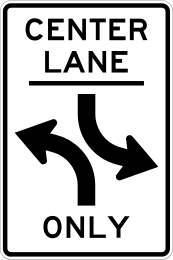
- Intersection Lane Control

- Bike Lane

- No Left or U-Turn

- No Straight Through

- Do Not Pass

- Pass With Care

- Slower Traffic Keep Right

- Begin Right Turn Lane — Yield to Bikes

- Trucks Use Right Lane

- Keep Right

- Keep Left

- Keep Right Except to Pass

- Do Not Drive on Shoulder

- No Trucks

- No Motor Vehicles

- No Bicycles

- No Pedestrians, Bicycles, or Motor-Driven Cycles

- No Parking Any Time

- Accessible Parking

- No Parking Bus Stop

- No Parking

- Stop Here on Red

- Do Not Block Intersection

- No Turn on Red

- Left Turn Yield on Green

- Road Closed

- Road Closed — Local Traffic Only

- Road Closed to Thru Traffic

- Weight Limit

- No Hazardous Materials

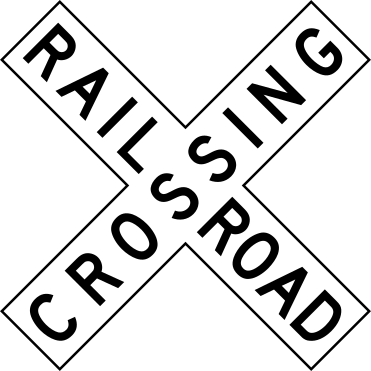
- Railroad Crossing (Crossbuck)
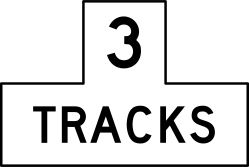
- Number of Tracks
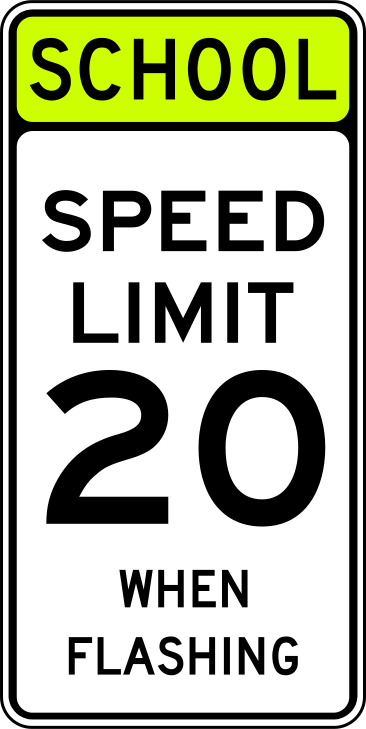
- School Speed Limit When Flashing
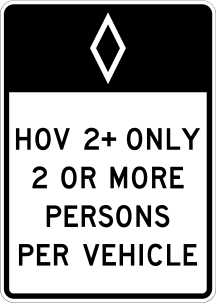
- HOV Lane
- Exempt

- Two-Way Left Turn Only
Warning signs
- Turn Ahead

- Stop Ahead

- Signal Ahead

- Pedestrian Crossing

- Curve

- Reverse Turn

- Reverse Curve

- Winding Road

- One-Direction Large Arrow

- Two-Direction Large Arrow

- Chevron Alignment

- Hairpin Curve

- Cross Road

- Side Road

- Roundabout Ahead

- Yield Ahead

- Be Prepared to Stop

- Reduced Speed Limit Ahead

- Merging Traffic

- Lane Ends

- Added Lane

- Lanes Merge

- Road Narrows

- Narrow Bridge

- One Lane Bridge

- Ramp Narrows

- Divided Highway Begins

- Divided Highway Ends

- Two-Way Traffic

- Hill / Steep Grade

- Bump

- Dip

- Pavement Ends

- Soft Shoulder

- Slippery When Wet

- Loose Gravel

- Rough Road

- Low Shoulder

- Uneven Lanes

- Grooved Pavement

- Metal Bridge Deck

- Railroad Crossing Ahead

- Bicycle Crossing

- Deer Crossing

- Cattle Crossing

- Farm Machinery

- Snowmobile Crossing

- Equestrian Crossing

- Persons with Disabilities

- Golf Cart Crossing

- Horse-Drawn Vehicle Crossing

- Low Clearance

- Advisory Speed

- Dead End

- No Outlet

- No Passing Zone

- Playground

- Speed Hump

- School

- Truck Rollover

- Bridge Ices Before Road

- Road May Flood

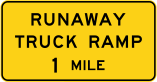
- Runaway Truck Ramp
Construction & work-zone signs




Guide signs




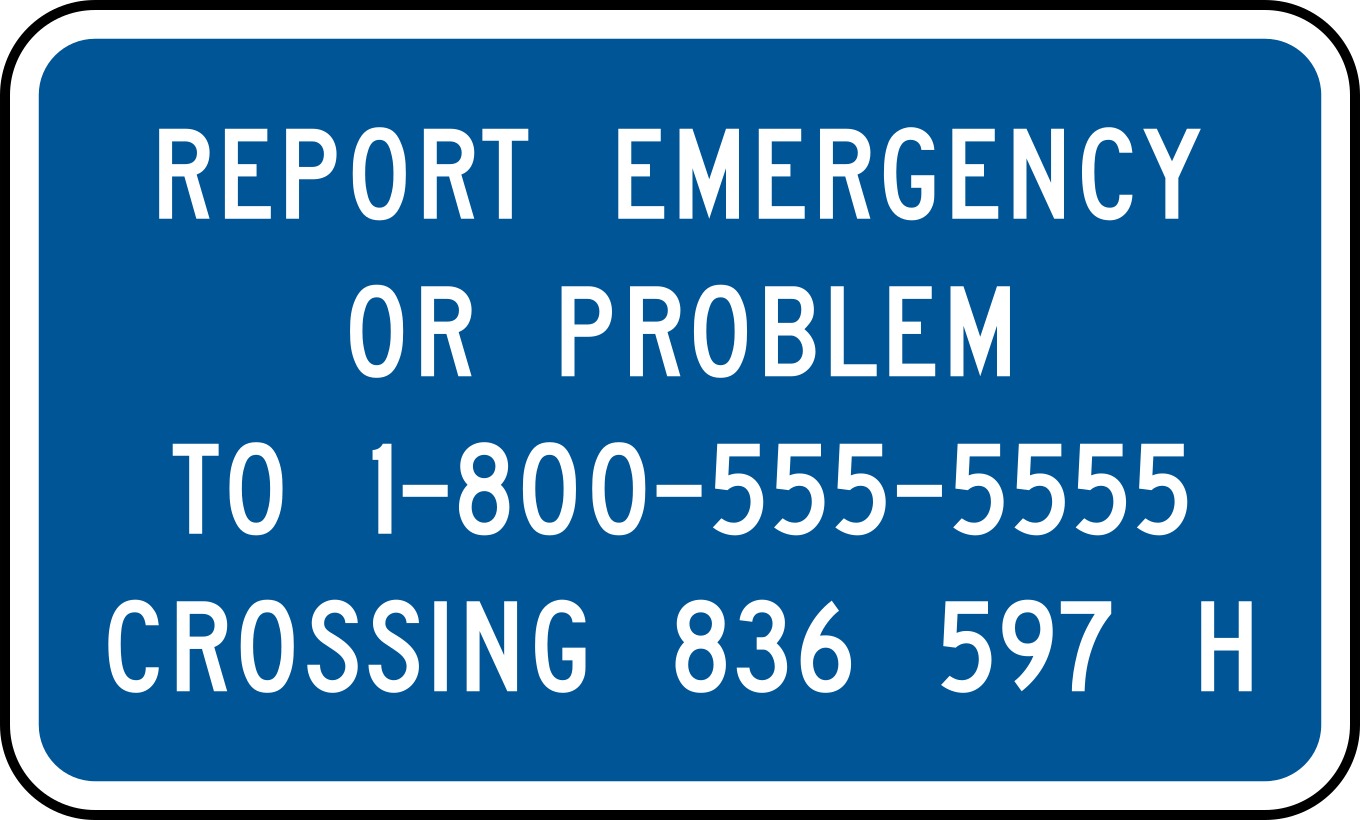
Service & information signs


Mississippi road signs: frequently asked questions
How many sign questions are on Mississippi's Computerized Exam?
Mississippi does not say. The Driver Service Bureau publishes no total for the exam, no passing score and no breakdown by subject — not in the Driver's License Manual, and not on the permit and license pages that send you to it. The closest the manual comes is the six-part brief it gives for the examination, which promises only that the test will establish whether you can "read, understand, and follow signs and signals." So any specific number quoted for Mississippi, including the length this site uses to size a practice run, is a model rather than a published Mississippi figure. The one commitment the manual does make is about the source: "The Computerized Exam is based on the information in this manual."
Can I take the Mississippi exam online, and what may I bring into the testing area?
No to the first, and very little to the second. The Regular Learner's Permit page is blunt: "All knowledge exams must be taken in person. No cell phones, ear buds, smart watches, or other electronics will be allowed in the testing area." The Bureau's published Testing Policy repeats the ban for examiners and spells out what follows: a test on which cheating is caught "shall be cancelled immediately," the applicant is asked to leave the facility, a note goes into their record, and they may not return to test until six months have passed. An appeal has to be in writing, sent to the Driver Service Bureau's Driver's Education Program Coordinator, and the permit page gives thirty days to send it. The same page notes that the state has no study app of its own; the manual is the study material, downloadable free or sold at a Driver License Station for three dollars.
What if I do not read English well — or do not read well at all?
Two different accommodations exist, and they are published in two different places. For a language barrier, the Class R page directs you to bring your own: "If an interpreter is needed, please complete the Mississippi Interpreter Oath and bring the form and your interpreter with you to take the Driver's License exam." That is an interpreter you supply, not a translated exam — neither the manual nor those pages offers a Spanish version of the Computerized Exam. For a reading difficulty the manual describes the testing machine itself: "The Computerized Exam includes a headset, and the machine will read the questions and answers aloud for you," advising first that someone teach you the contents of the manual. This practice set is written out in full in English and in Spanish either way, because a sign is easier to fix in memory in the language you think in.
Once I pass in Mississippi, how long does that score stay good?
Two years. The manual answers this in its own question-and-answer format: a Computerized Exam score is valid for two years, and a learner's permit holder who supplies the affidavit — a parent, teacher or guardian certifying they have witnessed at least fifty hours of driving and attesting to your proficiency — before those two years run out does not have to sit the exam again. Let more than two years pass and it comes back, along with a school attendance affidavit. The permit itself is also valid for two years and normally has to be held for twelve months before a Class R license, though the Bureau's Class R page adds that applicants seventeen and older skip the holding period entirely and can obtain the permit and the license on the same day.
I already hold a license from another state. Do I still have to take it?
If that license is valid, no. The Class R page says a new Mississippi resident holding a valid out-of-state license is not required to take the knowledge exam, and the manual agrees, waiving the Computerized Exam and leaving the vision screening in place. Expired is where the two sources part company. The page requires the knowledge exam of any new resident whose out-of-state license has expired at all; the manual allows a grace period, requiring it only once that license has been "expired over thirty days." The manual settles its own case in the front matter, where the Driver Service Bureau reserves the right to overrule any information obtained from it — so ask the Driver License Station rather than counting on the grace period. Separately, a Mississippi license of your own that has been expired more than sixty months brings the exam back too.
Official sources
- Mississippi Driver's License Manual (Department of Public Safety, Driver Service Bureau)
- Driver Service Bureau — Regular Learner's Permit
- Driver Service Bureau — Regular Driver License, Class R
- Driver Service Bureau — Knowledge Testing Policy
Checked against official state sources on 2026-08-29.