Oklahoma Road Signs and Their Meanings
Oklahoma has no Department of Motor Vehicles. Driver licensing belongs to Service Oklahoma, the agency that took the work over from the Department of Public Safety, so the examiner who scores your written test does not work for a DMV and the office you sit it in is not one either. The exam is short: twenty questions, fifteen correct to pass, and sixty minutes on the clock for the online version — the limit Service Oklahoma publishes for at-home testing. Service Oklahoma's written-test page describes what those questions draw on as "Oklahoma traffic laws, road signs, safe driving practices, and other essential driving knowledge" — signs named second in a list of four. Neither that page nor the Oklahoma Driver Manual breaks the twenty down by subject, so nobody can tell you how many of them will show you a sign.
Nothing in Oklahoma's rules sets aside part of that score for signs. Fifteen right passes and fourteen fails, no matter which subjects the misses came from. The two official descriptions of the test are worth reading side by side, because they do not match. The manual's own testing page says the questions "will be taken from this manual" and that you will be asked about "Oklahoma traffic laws, safe driving practices and drug and alcohol laws/effects" — a list with no mention of signs in it. Service Oklahoma's page, quoted above, names road signs outright. The manual's promise is the reliable part: whatever the balance turns out to be on the day, everything you can be asked is inside the book, and signs are one of its chapters.
That chapter is Chapter 4, Signs, Signals and Markings, and its own contents listing shows how much rides under the one heading: regulatory signs, warning signs, railroad warning signs, construction and maintenance signs, guide signs and service signs, then traffic signals, pedestrian signals, lane control signals and pavement markings. Six families of sign, then four things that are not signs at all. The chapter opens by arguing for shape and color as a system rather than a list to memorize: "Even if a stop sign is damaged or blocked by dirt or snow, you know by the octagonal shape and red color that you must stop. Learn the standard colors and shapes, so you know what a sign means, even at a distance." It then makes the same point from the other end, and labels what follows an example: "For example, a rectangle is always a regulatory sign, telling you about laws and regulations or giving you instructions. Speed limit signs are regulatory." Take that as shorthand for the chapter it introduces rather than as a rule covering every rectangle on the road. The same chapter files guide signs and service signs as families of their own, and the same passage, a few lines earlier, points at "the little blue rectangles that direct you to a library or hospital."
Every published Oklahoma sign question in this set carries the same citation line, word for word: the manual, then its signs chapter by full title — Signs, Signals and Markings. Not a bullet inside the chapter, not a page — the chapter, every time. That chapter is organized into named parts, so the paragraph behind any given question is findable; the citation simply does not point at it for you. The practical consequence is that Oklahoma is a state to read whole rather than to spot-check. Work the chapter end to end and you will have covered the source of everything here, which is a reasonable trade for a chapter this compact.
14 published Oklahoma road-sign questions, each with an explanation and a citation to the handbook section it came from.
Content reviewed against official driver handbooks · August 12, 2026
Every sign you can be tested on in Oklahoma
Regulatory signs
- Stop

- Yield

- Do Not Enter

- Wrong Way

- No U-Turn

- Speed Limit

- One Way

- All Way

- State Law: Yield to Pedestrians

- State Law: Stop for Pedestrians

- Truck Speed Limit

- Minimum Speed Limit

- Reduced Speed Limit Ahead

- Begin Higher Fines Zone

- End Higher Fines Zone

- No Right Turn

- No Left Turn

- No Turns

- Left Lane Must Turn Left

- Right Lane Must Turn Right

- Intersection Lane Control

- Bike Lane

- No Left or U-Turn

- No Straight Through

- Do Not Pass

- Pass With Care

- Slower Traffic Keep Right

- Begin Right Turn Lane — Yield to Bikes

- Trucks Use Right Lane

- Keep Right

- Keep Left

- Keep Right Except to Pass

- Do Not Drive on Shoulder

- No Trucks

- No Motor Vehicles

- No Bicycles

- No Pedestrians, Bicycles, or Motor-Driven Cycles

- No Parking Any Time

- Accessible Parking

- No Parking Bus Stop

- No Parking

- Stop Here on Red

- Do Not Block Intersection

- No Turn on Red

- Left Turn Yield on Green

- Road Closed

- Road Closed — Local Traffic Only

- Road Closed to Thru Traffic

- Weight Limit

- No Hazardous Materials

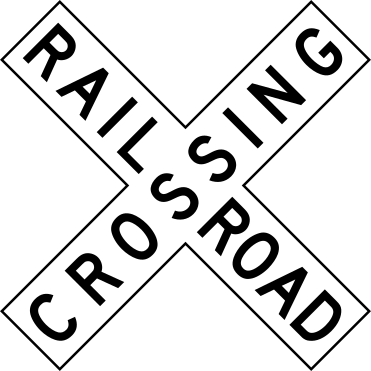
- Railroad Crossing (Crossbuck)
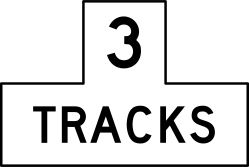
- Number of Tracks
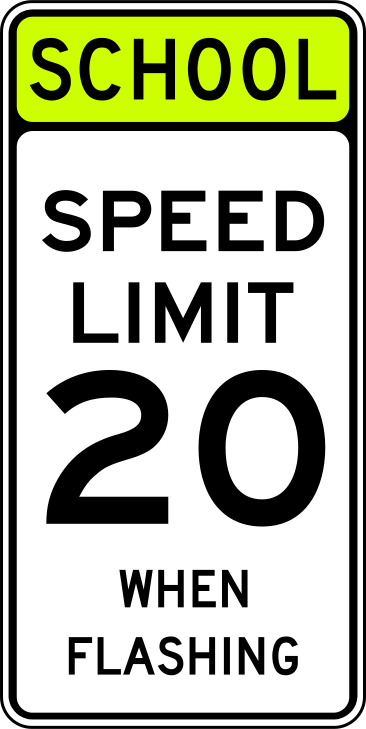
- School Speed Limit When Flashing
- HOV Lane
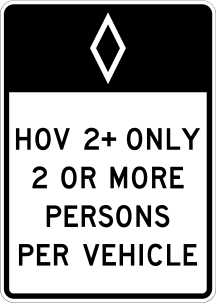
- Exempt

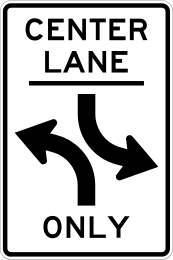
- Two-Way Left Turn Only
Warning signs
- Turn Ahead

- Stop Ahead

- Signal Ahead

- Pedestrian Crossing

- Curve

- Reverse Turn

- Reverse Curve

- Winding Road

- One-Direction Large Arrow

- Two-Direction Large Arrow

- Chevron Alignment

- Hairpin Curve

- Cross Road

- Side Road

- Roundabout Ahead

- Yield Ahead

- Be Prepared to Stop

- Reduced Speed Limit Ahead

- Merging Traffic

- Lane Ends

- Added Lane

- Lanes Merge

- Road Narrows

- Narrow Bridge

- One Lane Bridge

- Ramp Narrows

- Divided Highway Begins

- Divided Highway Ends

- Two-Way Traffic

- Hill / Steep Grade

- Bump

- Dip

- Pavement Ends

- Soft Shoulder

- Slippery When Wet

- Loose Gravel

- Rough Road

- Low Shoulder

- Uneven Lanes

- Grooved Pavement

- Metal Bridge Deck

- Railroad Crossing Ahead

- Bicycle Crossing

- Deer Crossing

- Cattle Crossing

- Farm Machinery

- Snowmobile Crossing

- Equestrian Crossing

- Persons with Disabilities

- Golf Cart Crossing

- Horse-Drawn Vehicle Crossing

- Low Clearance

- Advisory Speed

- Dead End

- No Outlet

- No Passing Zone

- Playground

- Speed Hump

- School

- Truck Rollover

- Bridge Ices Before Road

- Road May Flood

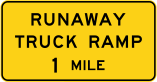
- Runaway Truck Ramp
Construction & work-zone signs




Guide signs




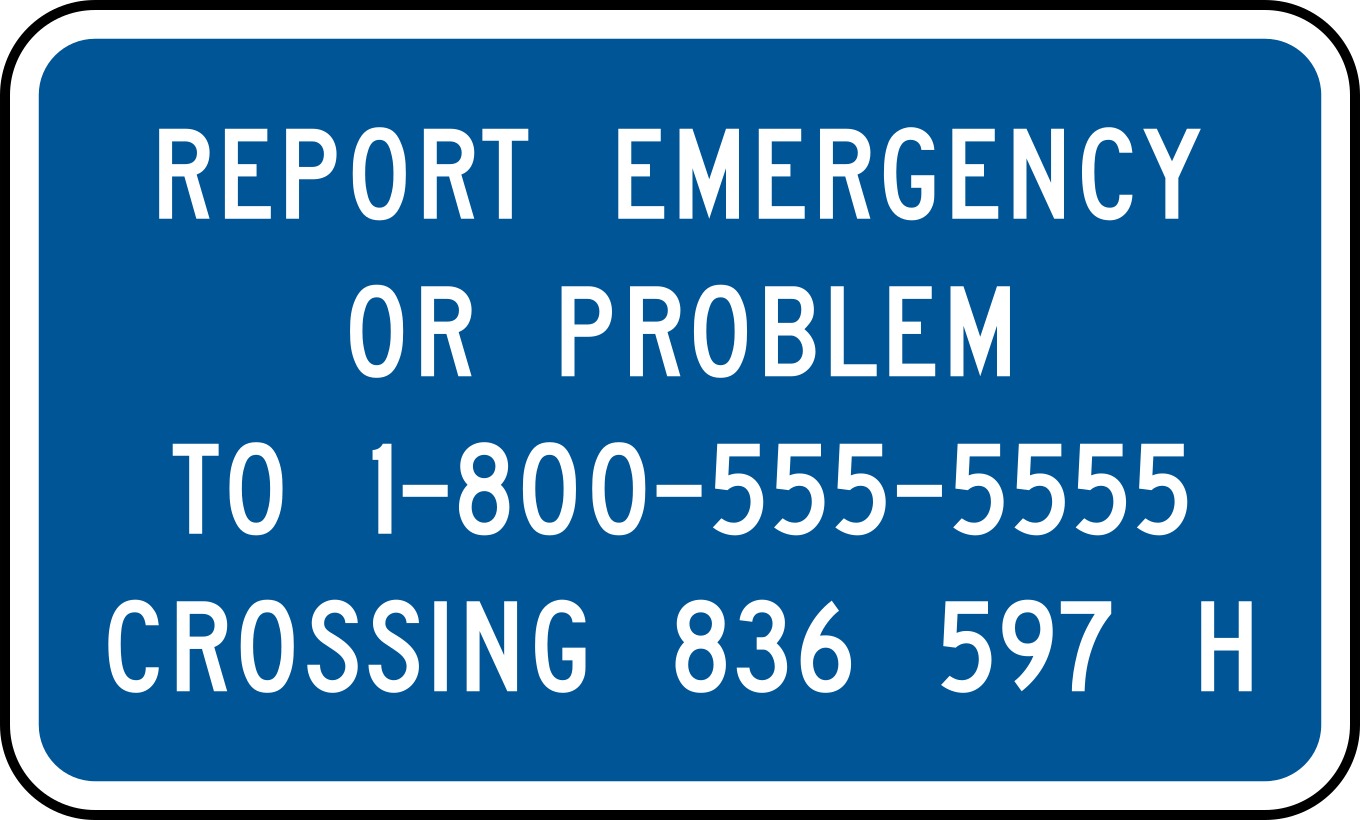
Service & information signs


Oklahoma road signs: frequently asked questions
If I fail Oklahoma's written exam, when can I try again — and does it cost me anything?
The Oklahoma Driver Manual states that if you fail the written test, by law you must wait at least one day before retesting. Service Oklahoma adds a separate limit for the at-home version: you may take the written exam online twice, and after two failures you have to come in person for further attempts. The exam itself can be taken as many times as needed, but a four-dollar fee is added to your account for every failed attempt, due at the time of issuance. Service Oklahoma says so in the paragraph where it prices the learner permit: the per-fail charge lands on top of the fee to issue and print that permit. The manual's own fee table carries a four-dollar retest fee against every class, learner permits included.
Can I take Oklahoma's written exam in Spanish?
Not online. Service Oklahoma states plainly that "at this time, the written test is only available in English" on its at-home exam. The manual describes a different accommodation for the in-person route: "An oral test will be given on request," though it warns that an appointment may be required. Those are two separate accommodations — a translated test and a spoken one — and it is the spoken one the manual commits to. This practice set is written in both English and Spanish regardless, because understanding a sign in the language you think in is the point of studying it.
How young can someone in Oklahoma sit the written exam?
Service Oklahoma's eligibility list for the online written exam starts at fourteen — and at thirteen and a half for an applicant who lives or works on a farm. One condition is attached at every age: no suspended license in Oklahoma or any other state. Passing early buys study time rather than driving time, though. The manual's age-and-class listing opens a Class D learner permit at fifteen for someone taking or having passed an approved driver education course, and at sixteen without one, and Service Oklahoma requires a driver under eighteen to hold that permit at least one hundred and eighty days before the driving test.
Do I have to sit the written test again to renew an Oklahoma license?
Usually not. The manual's testing table lists a renewal of a license expired less than three years and more than thirty days as requiring no vision test, no written test and no driving test — you take the expired license and proof of legal presence to an authorized licensed operator or examiner. Let it lapse beyond three years and all three become required again. Transferring in a valid out-of-state Class D license sits between the two: vision is required, while the written and driving tests are marked as at the examiner's discretion and may be waived if department standards are met.
What happens to someone who damages a road sign in Oklahoma?
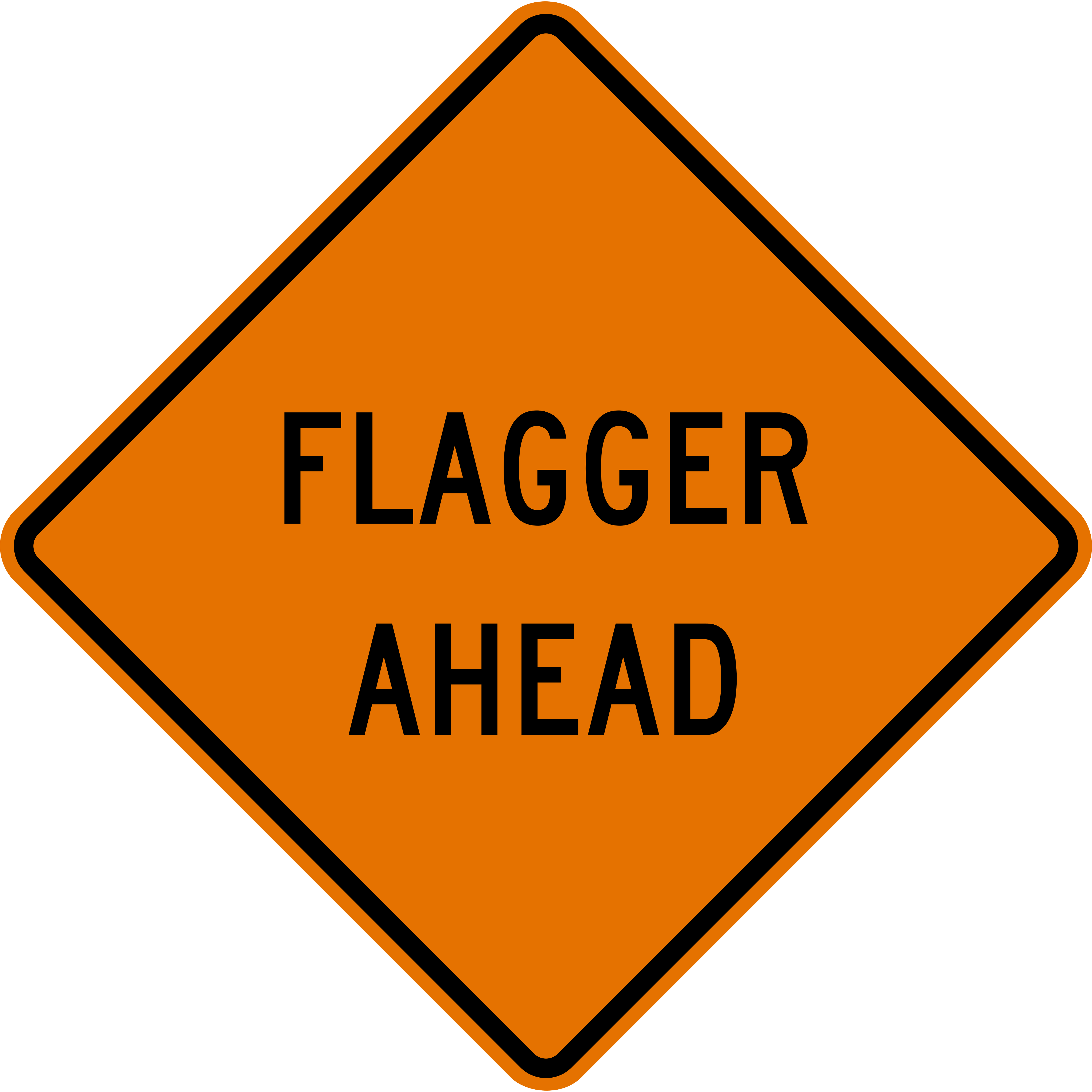
The sign chapter answers this directly, which is unusual for a driver handbook. Citing 47 O.S. §11-207, it states that obstructing or damaging roads, and defacing, damaging, destroying or removing any traffic control device, road sign board, guide sign or signpost, is a misdemeanor — and that where the act causes personal injury or death, the person responsible is guilty of a felony punishable by up to two years' imprisonment, a one-thousand-dollar fine, or both. The chapter attaches its own penalty note to construction and maintenance signs as well, including doubled speeding fines in a work zone when workers or equipment are present.
Official sources
Checked against official state sources on 2026-07-29.