Pennsylvania Road Signs and Their Meanings
Eighteen questions. That is the entire Pennsylvania knowledge test — the shortest car exam of any state on this site — and fifteen of them have to be right, which leaves room for exactly three wrong answers. PennDOT sums up what those eighteen questions measure in one line, and it puts signs at the front of it: the Knowledge Test will measure your knowledge of traffic signs, Pennsylvania's driving laws and safe driving practices. A short test is not a soft one. It is a test where every single question carries more than five percent of your result, and where three unlucky guesses about a sign you half-remember is the whole margin gone.
Pennsylvania sets no separate standard for the sign questions, and never breaks the eighteen down by subject at all. There is one score, fifteen of eighteen, stated in the manual in two flat sentences. Access, by contrast, PennDOT documents in detail: the test comes in written and audio format in eighteen languages, English among them, at every driver license center in the commonwealth. Voice tests, for anyone who would rather have the questions read aloud than read them, are offered at all centers on request. Applicants who use sign language can specify which system they need — ASL, Pidgin Sign Language, Signed Exact English, or an oral interpreter who reads lips — and once an interpreter has been hired, PennDOT calls back to confirm the test date.
Chapter 2 of the PA Driver's Manual is titled Signals, Signs and Pavement Markings, and it is where every published Pennsylvania sign question in this bank comes from. The chapter opens on signals, moves through signs — regulatory from page 10, warning from page 13, guide from page 19 — and closes on pavement markings. Its position in the book is itself a choice: Chapter 2 comes before Chapter 3, Learning to Drive, so PennDOT teaches you to read the road before it teaches you to operate a car on it.
What makes Pennsylvania's sign chapter unusual is that it rarely stops at what a sign means; it tells you what to do with the car. The entry for a right-bending curve does not merely report that the road curves — it says to slow down and position your vehicle slightly to the right of the center of your lane. Sharp turns get slow down substantially. The entry for a large one-direction arrow says the road ahead changes direction at an extreme angle, then tells you to slow down as much as you would to make a turn at an intersection — a comparison you can act on, rather than a definition. There is even an entry for the sign that identifies curves where trucks traveling at excessive speeds have the potential to roll over. Knowing that a diamond means sharp right turn is only half of what the page it came from actually asks of you; the other half is a lane position.
35 published Pennsylvania road-sign questions, each with an explanation and a citation to the handbook section it came from.
Content reviewed against official driver handbooks · August 12, 2026
Every sign you can be tested on in Pennsylvania
Regulatory signs
- Stop

- Yield

- Do Not Enter

- Wrong Way

- No U-Turn

- Speed Limit

- One Way

- All Way

- State Law: Yield to Pedestrians

- State Law: Stop for Pedestrians

- Truck Speed Limit

- Minimum Speed Limit

- Reduced Speed Limit Ahead

- Begin Higher Fines Zone

- End Higher Fines Zone

- No Right Turn

- No Left Turn

- No Turns

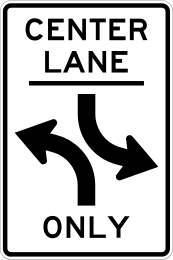
- Left Lane Must Turn Left

- Right Lane Must Turn Right

- Intersection Lane Control

- Bike Lane

- No Left or U-Turn

- No Straight Through

- Do Not Pass

- Pass With Care

- Slower Traffic Keep Right

- Begin Right Turn Lane — Yield to Bikes

- Trucks Use Right Lane

- Keep Right

- Keep Left

- Keep Right Except to Pass

- Do Not Drive on Shoulder

- No Trucks

- No Motor Vehicles

- No Bicycles

- No Pedestrians, Bicycles, or Motor-Driven Cycles

- No Parking Any Time

- Accessible Parking

- No Parking Bus Stop

- No Parking

- Stop Here on Red

- Do Not Block Intersection

- No Turn on Red

- Left Turn Yield on Green

- Road Closed

- Road Closed — Local Traffic Only

- Road Closed to Thru Traffic

- Weight Limit

- No Hazardous Materials

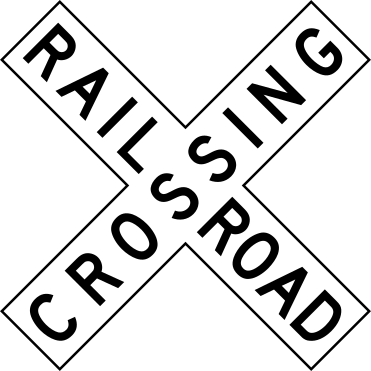
- Railroad Crossing (Crossbuck)
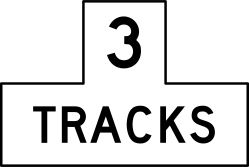
- Number of Tracks
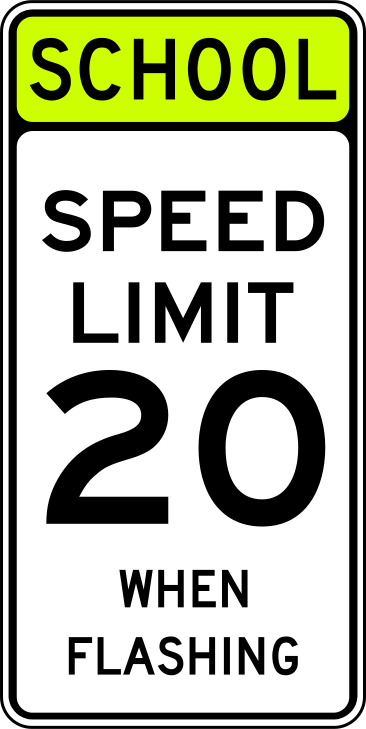
- School Speed Limit When Flashing
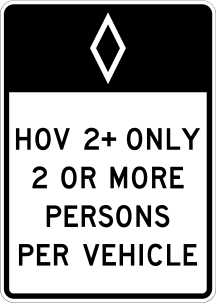
- HOV Lane
- Exempt

- Two-Way Left Turn Only
Warning signs
- Turn Ahead

- Stop Ahead

- Signal Ahead

- Pedestrian Crossing

- Curve

- Reverse Turn

- Reverse Curve

- Winding Road

- One-Direction Large Arrow

- Two-Direction Large Arrow

- Chevron Alignment

- Hairpin Curve

- Cross Road

- Side Road

- Roundabout Ahead

- Yield Ahead

- Be Prepared to Stop

- Reduced Speed Limit Ahead

- Merging Traffic

- Lane Ends

- Added Lane

- Lanes Merge

- Road Narrows

- Narrow Bridge

- One Lane Bridge

- Ramp Narrows

- Divided Highway Begins

- Divided Highway Ends

- Two-Way Traffic

- Hill / Steep Grade

- Bump

- Dip

- Pavement Ends

- Soft Shoulder

- Slippery When Wet

- Loose Gravel

- Rough Road

- Low Shoulder

- Uneven Lanes

- Grooved Pavement

- Metal Bridge Deck

- Railroad Crossing Ahead

- Bicycle Crossing

- Deer Crossing

- Cattle Crossing

- Farm Machinery

- Snowmobile Crossing

- Equestrian Crossing

- Persons with Disabilities

- Golf Cart Crossing

- Horse-Drawn Vehicle Crossing

- Low Clearance

- Advisory Speed

- Dead End

- No Outlet

- No Passing Zone

- Playground

- Speed Hump

- School

- Truck Rollover

- Bridge Ices Before Road

- Road May Flood

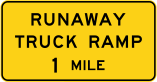
- Runaway Truck Ramp
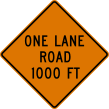
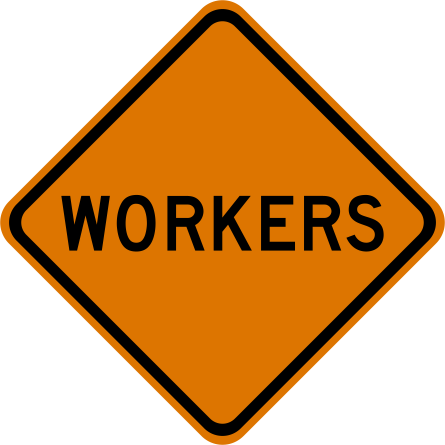
Construction & work-zone signs




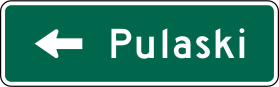
Guide signs


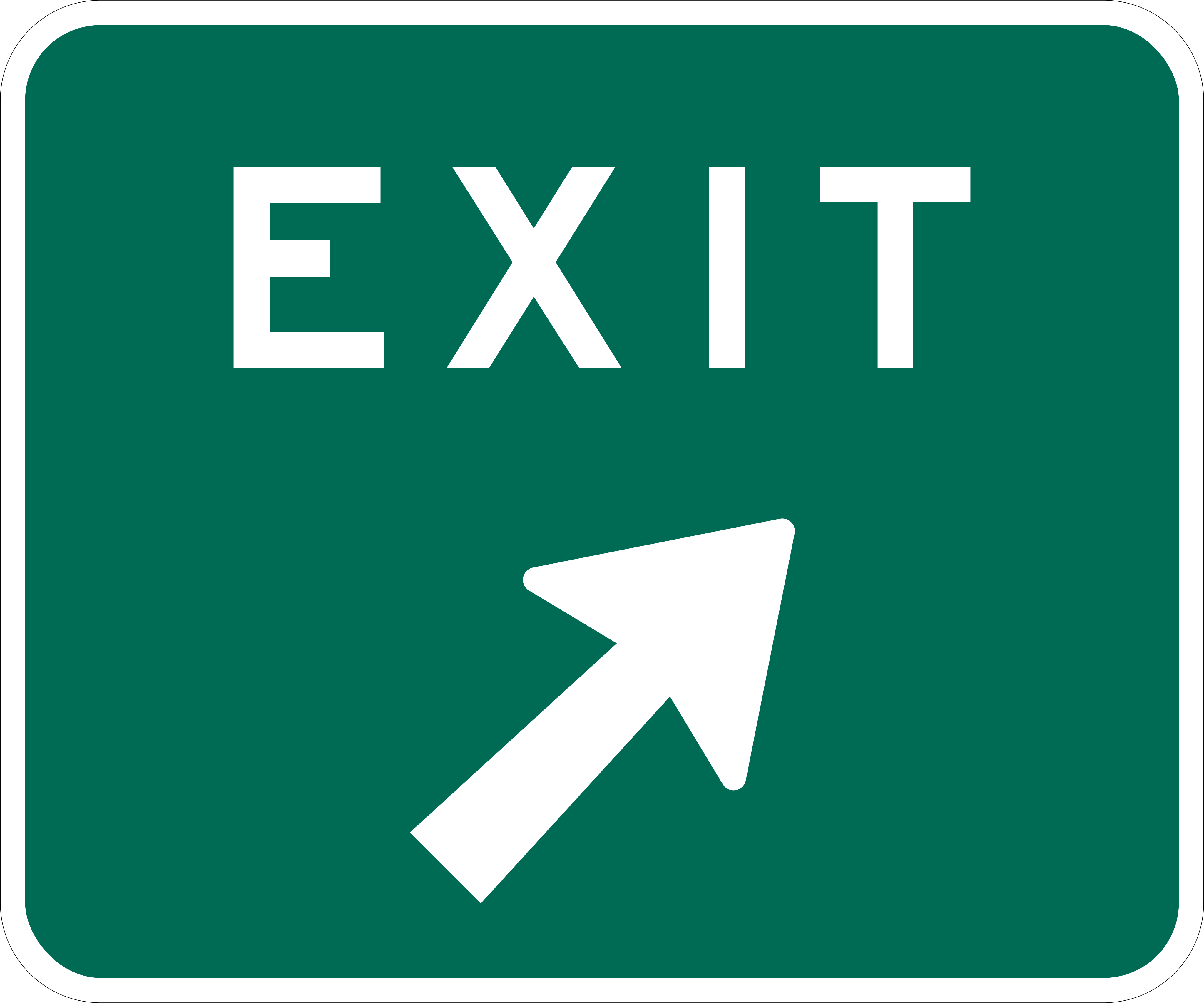


Service & information signs


Pennsylvania road signs: frequently asked questions
What shape and color are warning signs in Pennsylvania?
Usually diamond-shaped, with black symbols or words on a yellow background. The manual is specific about why they are posted where they are: warning signs tell you about conditions on or near the road ahead, and they are placed before the condition so you have time to see what is ahead, decide how you should respond, and slow down or change your travel path if necessary. "Usually" is the manual's own hedge, and it earns its place: a no-passing zone opens with a pennant, the school sign is the only pentagon-shaped sign used on the roadway, a bend of ninety degrees may instead carry a rectangular yellow sign with a large arrow, and some sharp curves add a run of chevrons. The school, pedestrian-crossing and bicycle-crossing signs may each carry either the standard yellow background or a fluorescent yellow-green one.
Can I retake the PA knowledge test the same day at a different driver license center?
No. Pennsylvania's rule is explicit that you may take the Knowledge Test only one time on any day regardless of test location, so a second center on the same day is not an option. You are permitted to retake it the following business day. Keep the Non-Commercial Learner's Permit Application and, if you are under 18, the parent or guardian consent form the examiner hands back to you, because you have to bring both again when you return.
Does PennDOT publish practice questions about road signs?
Yes, inside the manual itself — something few state driver manuals do at all. Chapter 2 closes with 58 review questions on signals, signs and pavement markings starting on page 23, with the answer key for all of them on page 30. Many are pictorial: they show a sign and ask what it means or what you must do. PennDOT does this for other chapters too, and not in proportion to the signs — Chapter 3, Learning to Drive, gets 110 review questions and Chapter 4 gets 16 — so the 58 is a thorough set rather than a hint about where the exam concentrates.
What is the pennant-shaped sign on the left side of Pennsylvania roads?
A NO PASSING ZONE sign. The manual calls it the only pennant-shaped warning sign there is, and notes that it marks the beginning of a no-passing zone and is placed on the left side of the road facing the driver — the opposite side from almost everything else you are watching for. The manual pairs it with the rectangular DO NOT PASS regulatory sign, which it says the pennant often accompanies.
What is the number underneath a Pennsylvania curve warning sign?
An advisory speed. The manual explains that an advisory speed sign may be used with any diamond-shaped warning sign, and that it gives the highest speed you should travel through the hazard ahead — so a curve sign with 25 below it is telling you 25 mph is the ceiling for that curve, not that the speed limit has changed. A related sign is the chevron, which the manual says is posted in series through a curve rather than once: the road bends in the direction the chevron points, and where chevrons appear there will normally have been an advance curve warning sign before them.
Official sources
Checked against official state sources on 2026-07-29.