Rhode Island Road Signs and Their Meanings
Rhode Island's Division of Motor Vehicles is not a department of its own. The manual places it exactly: "The Division of Motor Vehicles (DMV) is a governmental agency within the Department of Revenue for the State of Rhode Island," led by an Administrator the same sentence also calls the Registrar. The written test it gives is computerized, taken by reservation, and the state is specific about its shape — "The computerized knowledge exam has a 90-minute maximum and consist of forty (40) multiple choice questions." That count and that clock are Rhode Island's own published figures, in the state's own wording. The pass mark is not. Neither the manual nor the DMV's Knowledge Exams page prints a score you have to reach, so the 32 out of 40 this site sizes a practice run against is our own 80% model, offered as a study target rather than as a threshold the state has announced. What the manual will commit to is where the material comes from: the questions "are based on the motor vehicle laws and the rules of the road," and applicants "should study this manual to prepare for the knowledge exam."
No slice of those forty questions is reserved for signs, and no Rhode Island rule creates one. The manual never divides the exam by subject, the DMV's Knowledge Exams page never divides it either, and with no published pass mark there is no second score for a sign section to be measured against. What Rhode Island publishes instead is a section-by-section statement of what is testable. The DMV's Operator Manuals page carries the whole manual online, broken into chapters, and marks the parts that count with a flag it writes in asterisks: testing material. The flag reaches the signs. They appear in the appendices under the heading "Regulatory and Warning Sign Examples," and that entry is marked twice — once because the appendices as a block are marked, and once on the sign pages themselves. A few sections carry no flag at all: the chapter on applying for a license, the organ and tissue donor program, the road-test walkthrough, the closing word. The sign pages are not among them. So the state will not tell you how many sign questions to expect, but it has said in writing, and by name, that the sign pages are on the test.
The book is the Rhode Island Driver's Manual, dated April 2024 on its cover and issued by the Division of Motor Vehicles — though the DMV did not write it alone. The front matter says the manual "is co-produced by Rhode Island Division of Motor Vehicles, the Community College of Rhode Island, Driver Education Program, the Rhode Island State Police, and the Rhode Island Department of Transportation," and adds a warning that "this is not a legal document." Now look for a signs chapter in the table of contents. There isn't one. Section IV is Signals and Roadway Markings — arm signals, line colors, the rotary diagram, traffic lights — and signs are missing from the numbered chapters entirely. They are printed at the very back, past the index and past the DMV's phone directory, on two plates headed SIGNS: the first holding Regulatory Signs and then Guide Signs, the second holding Warning Signs, which runs from Yield Sign Ahead and Railroad Crossing Here through Slow Moving Vehicle, Object Markers and Slippery When Wet before closing on the construction group. What those plates give you is captioned pictures. The manual builds no prose system of shapes and colors underneath them — no passage teaching that an octagon means stop or that a diamond warns. Where a sign is genuinely explained, the explanation is filed under some other subject: the work-zone appendix, the rotary pages, the railroad-crossing emergency.
The citations under Rhode Island's published sign questions do not gather where you would expect them to. Some do point at the plate headings — Warning Signs, Regulatory Signs, Guide Signs — but others scatter into the body of the book: the construction and work-zone appendix, the stalled-on-the-tracks emergency, the numbered list of laws you must know. And there is a citation here that points at a diagram. That is deliberate. The rotary and roundabout material in this manual is built around a labeled figure, with the parts of the intersection lettered off to one side, and the description of the yellow diamond that warns a rotary is coming hangs off that figure rather than off any sign heading. In a book where the signs themselves are a picture plate and the reasoning lives elsewhere, a diagram is a real source, and naming it is more honest than pretending the plate said something it never said. The practical version: studying only the sign pages will leave holes, because Rhode Island explains its signs in the places where it uses them.
14 published Rhode Island road-sign questions, each with an explanation and a citation to the handbook section it came from.
Content reviewed against official driver handbooks · August 12, 2026
Every sign you can be tested on in Rhode Island
Regulatory signs
- Stop

- Yield

- Do Not Enter

- Wrong Way

- No U-Turn

- Speed Limit

- One Way

- All Way

- State Law: Yield to Pedestrians

- State Law: Stop for Pedestrians

- Truck Speed Limit

- Minimum Speed Limit

- Reduced Speed Limit Ahead

- Begin Higher Fines Zone

- End Higher Fines Zone

- No Right Turn

- No Left Turn

- No Turns

- Left Lane Must Turn Left

- Right Lane Must Turn Right

- Intersection Lane Control

- Bike Lane

- No Left or U-Turn

- No Straight Through

- Do Not Pass

- Pass With Care

- Slower Traffic Keep Right

- Begin Right Turn Lane — Yield to Bikes

- Trucks Use Right Lane

- Keep Right

- Keep Left

- Keep Right Except to Pass

- Do Not Drive on Shoulder

- No Trucks

- No Motor Vehicles

- No Bicycles

- No Pedestrians, Bicycles, or Motor-Driven Cycles

- No Parking Any Time

- Accessible Parking

- No Parking Bus Stop

- No Parking

- Stop Here on Red

- Do Not Block Intersection

- No Turn on Red

- Left Turn Yield on Green

- Road Closed

- Road Closed — Local Traffic Only

- Road Closed to Thru Traffic

- Weight Limit

- No Hazardous Materials

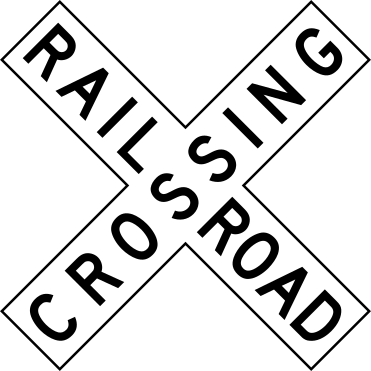
- Railroad Crossing (Crossbuck)
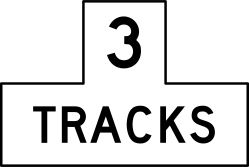
- Number of Tracks
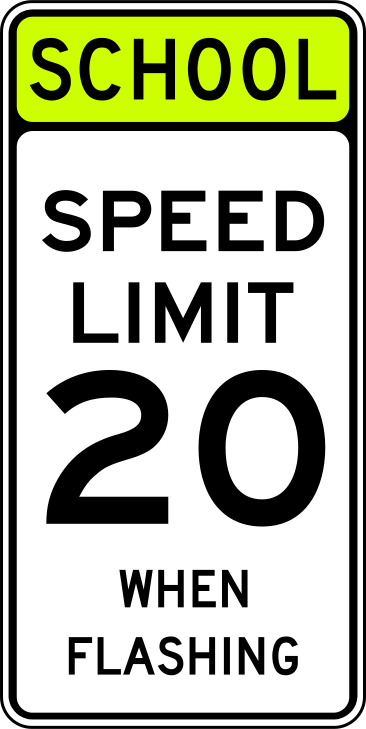
- School Speed Limit When Flashing
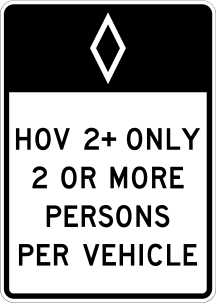
- HOV Lane
- Exempt

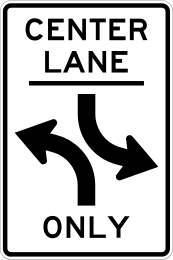
- Two-Way Left Turn Only
Warning signs
- Turn Ahead

- Stop Ahead

- Signal Ahead

- Pedestrian Crossing

- Curve

- Reverse Turn

- Reverse Curve

- Winding Road

- One-Direction Large Arrow

- Two-Direction Large Arrow

- Chevron Alignment

- Hairpin Curve

- Cross Road

- Side Road

- Roundabout Ahead

- Yield Ahead

- Be Prepared to Stop

- Reduced Speed Limit Ahead

- Merging Traffic

- Lane Ends

- Added Lane

- Lanes Merge

- Road Narrows

- Narrow Bridge

- One Lane Bridge

- Ramp Narrows

- Divided Highway Begins

- Divided Highway Ends

- Two-Way Traffic

- Hill / Steep Grade

- Bump

- Dip

- Pavement Ends

- Soft Shoulder

- Slippery When Wet

- Loose Gravel

- Rough Road

- Low Shoulder

- Uneven Lanes

- Grooved Pavement

- Metal Bridge Deck

- Railroad Crossing Ahead

- Bicycle Crossing

- Deer Crossing

- Cattle Crossing

- Farm Machinery

- Snowmobile Crossing

- Equestrian Crossing

- Persons with Disabilities

- Golf Cart Crossing

- Horse-Drawn Vehicle Crossing

- Low Clearance

- Advisory Speed

- Dead End

- No Outlet

- No Passing Zone

- Playground

- Speed Hump

- School

- Truck Rollover

- Bridge Ices Before Road

- Road May Flood

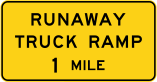
- Runaway Truck Ramp
Construction & work-zone signs




Guide signs




Service & information signs


Rhode Island road signs: frequently asked questions
How many of Rhode Island's 40 knowledge-exam questions are about road signs?
Rhode Island does not publish that split. It publishes the exam's size and its clock — "a 90-minute maximum" and "forty (40) multiple choice questions" — and then describes the content only as "the motor vehicle laws and the rules of the road." No subject quota appears in the manual or on the DMV's Knowledge Exams page. The pass mark is missing too, which is worth saying plainly: the state prints no score you must reach, so the 32 correct out of 40 this site works to is our 80% model and not a Rhode Island figure. Take the count and the time limit as published fact and the threshold as a target. The one thing the state does say about signs is that they count — the DMV's online edition of the manual flags the sign pages as testing material.
Can I take Rhode Island's knowledge exam in Spanish?
Yes. The DMV's Knowledge Exams page states that computerized knowledge exams "are administered in English, Spanish and Portuguese," during normal business hours and by reservation only. Anything beyond those three is handled differently: you may request the exam in a foreign language in a printed format, but it has to be booked in advance so the DMV can prepare it, under a specific reservation category. The manual says the same thing more briefly — "The exam is available in other languages upon request." For studying, the Operator Manuals page offers the English PDF and an online edition it passes through Google Translate. A Spanish PDF, the Manual del Conductor en Rhode Island, also sits in the DMV's own media library, and it moves the sign material to the front: regulatory and guide signs on its second page, with a line pointing readers to the inside of the last page for the warning signs. Read it for the driving material, but check any figure against the April 2024 English manual — the Spanish edition is an earlier revision and does not carry the exam's current wording.
Where do I take the Rhode Island written test, and is anyone excused from it?
For most people it is one building. The manual says first-time applicants — and anyone who fails the RI DMV knowledge exam taken through CCRI — "must take the computerized examination at the main office of the DMV in Cranston," and the DMV's Permits & Tests page fills in the hours: Monday through Friday, 8:30 am to 2:45 pm, at the Cranston headquarters on New London Avenue, by reservation only, with the vision test given at the same visit. The exemptions are real and worth checking before you study. "Licensed applicants from other states are exempt from taking the exam but must turn in their out-of-state licenses for cancellation." The manual widens that: if your out-of-state license is currently valid, or has not been expired for more than five years, no knowledge exam and no driving skills test are required — and the same five-year grace applies to a Rhode Island license you held before.
Will I have to take the written test again to renew?
For a license, the manual describes renewal with no knowledge exam in it: you may renew up to 90 days before the expiration date, online, at a branch office, or at a AAA branch if you are a member, and a Rhode Island license runs a maximum of five years, prorated from age 71 — every four years at 71, every three at 72, every two from 73. Permits are the strict case. The DMV's New License Permits page says a learner's permit may be renewed one time, that permits cannot be renewed online, and that "if your permit has been renewed and is expiring, you need to retake the learner's permit test" — as you do if it has been expired two years or more. The manual adds a timing rule that catches people mid-process: "You are not eligible to take the knowledge exam until your present permit has expired."
Rhode Island's manual calls them rotaries. What does it say about the signs there?
It treats the rotary as a place where signs do the work signals would otherwise do: "This type of traffic control does not have stop signs or traffic signals; instead, it utilizes yield signs, directional signs, and pavement markings to guide traffic through the intersection." Before you get there, the manual tells you to watch for the advance warning — a yellow diamond carrying a circular arrow pattern, with two or more arrows pointing away from the circle to represent the rotary's exits. It also scopes itself, which is unusual and useful: "The information in this manual refers to single lane roundabouts," and it notes that many states use multi-lane ones. The law behind the yielding is quoted outright. Under R.I.G.L. 31-17-8, where no traffic control device or sign is present, a driver about to enter a rotary yields the right-of-way to every vehicle already in it, no matter which direction that driver is approaching from.
What does the manual say about construction and work-zone signs?
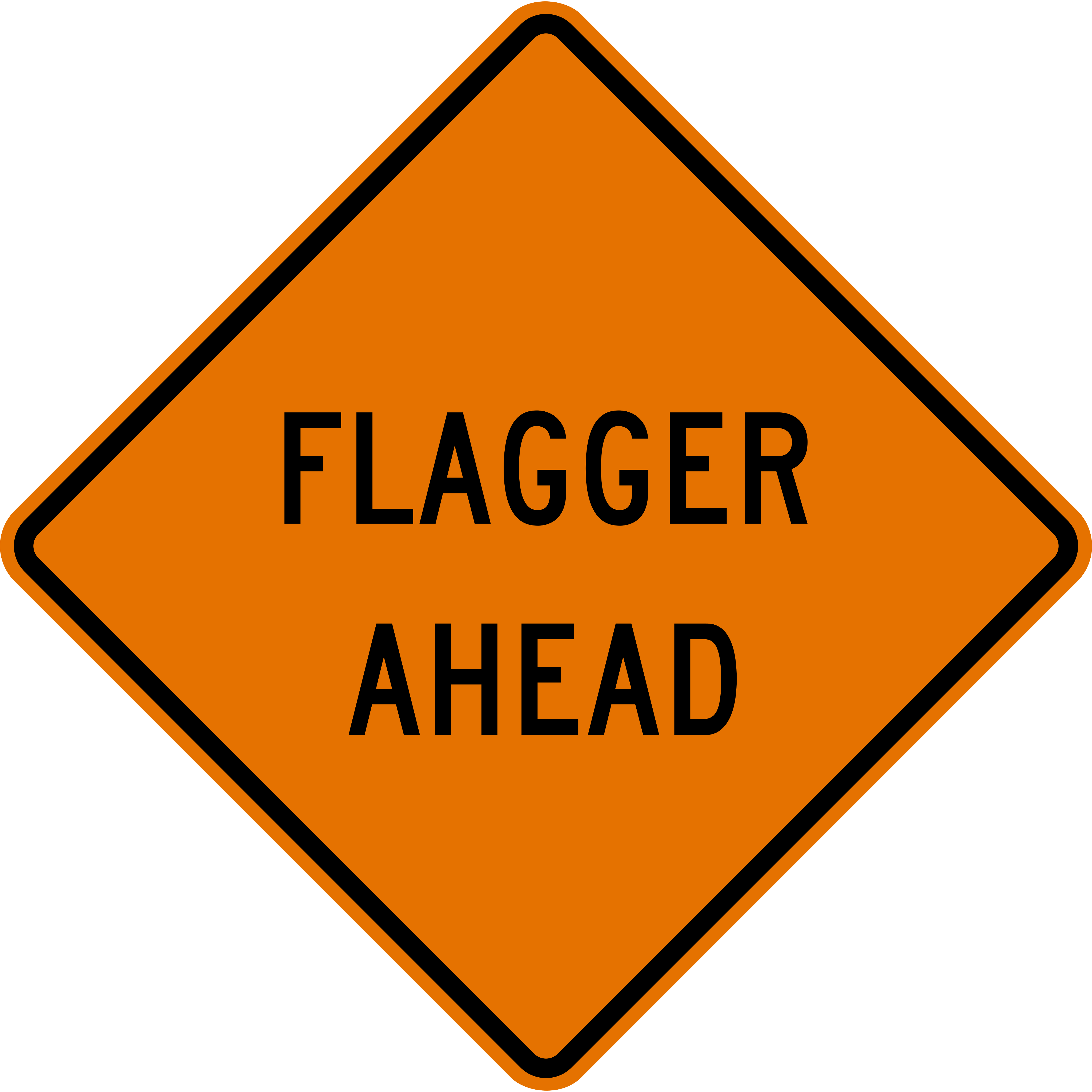
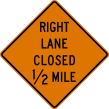
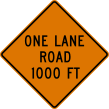
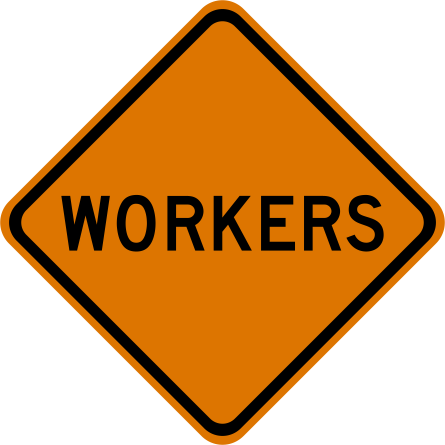
That material is an appendix, and it is the closest the book comes to teaching a family of signs in prose rather than in pictures. It leads with color: construction signs come in "high visibility colors" that it lists as fluorescent yellow-green, orange or pink, they are diamond or rectangular, and they are posted before, within and after the zone to warn of detours, lane closures, uneven pavement, flaggers and police officers ahead. Two points from it are worth carrying into the exam. Fines for speeding tickets issued inside these designated areas are doubled, and the manual says that holds twenty-four hours a day rather than only while crews are on site. And flaggers "have the legal authority to control traffic" — their hand signals and hand-held signs bind you the way a posted sign does. The appendix ends on the devices that are not signs at all: cones, barrels, tubes, panels, barricades, flashing arrow boards and temporary roadway markings.
Official sources
- Rhode Island Driver's Manual, April 2024 (RI Division of Motor Vehicles)
- RI DMV — Knowledge Exams (where the test is given, and in which languages)
- RI DMV — Operator Manuals (the online manual, with each section flagged as testing material or not)
- RI DMV — Permits & Tests (Cranston headquarters, hours and reservations)
- RI DMV — New License Permits (permit renewal and when the permit test must be retaken)
- Manual del Conductor en Rhode Island (Spanish edition, RI DMV)
Checked against official state sources on 2026-08-29.