Free Washington DMV Motorcycle Practice Test 2026
The Washington Motorcycle knowledge test has 25 questions, and you need 20 correct (~80%) to pass. Practice free with questions written from the official Washington driver handbook — every one has a clear explanation, and you can retake as often as you like with no sign-up.
Content reviewed against official driver handbooks · August 12, 2026
What's on the Washington written test
The Washington Motorcycle knowledge test has 25 questions; you need 20 correct (~80%) to pass.
Based on the official Washington exam format — always confirm current details with your state DMV.
Practice by topic
Focus on one area at a time — each topic has its own set of Washington practice questions.
Helmets, eye protection, and abrasion-resistant gear — what the motorcycle handbook requires and why each piece matters in a crash.
Throttle, clutch, both brakes, and shifting — the controls you must operate smoothly before the road test.
Countersteering, the slow-look-press-roll technique, and choosing the right line through a curve at motorcycle speeds.
Using both brakes together, stopping quickly without locking a wheel, and recovering from a skid.
Where to position yourself in the lane to be seen, managing blind spots, and sharing the road safely with cars and trucks.
Conspicuity — reflective and bright clothing, headlight use, and lane position that make a rider easier for drivers to see.
Gravel, wet pavement, grooved roads, and railroad tracks — reading and handling surfaces that matter far more on two wheels.
Learn the shapes, colors, and meanings of regulatory, warning, and guide signs — from stop and yield to construction and school-zone signs.
Speed limits, turning and signaling rules, headlight and seat-belt requirements, and the everyday laws every driver must follow.
Who goes first at intersections, four-way stops, roundabouts, and crosswalks, and how to yield to pedestrians and emergency vehicles.
Blood alcohol limits, zero-tolerance and implied-consent laws, and how alcohol and drugs — legal or not — affect your driving.
How to read traffic signals, lane lines, and pavement markings — including yellow and white lines, arrows, and flashing lights.
Following distance, scanning, blind spots, using your lights, and the habits that prevent crashes and keep you in control.
Driving safely around motorcycles, bicycles, large trucks, pedestrians, and school buses — and knowing who has the right of way.
Legal and illegal parking, colored curbs, distances from hydrants and crossings, and how to park safely on hills.
Choosing a safe speed, keeping a space cushion, adjusting for weather and traffic, and understanding stopping distance.
What to do when things go wrong — brake failure, tire blowouts, skids, and stalling on railroad tracks.
The point system, license suspension, provisional-license rules, insurance requirements, and other licensing basics.
How to pass the first time
- Read the official Washington driver handbook at least once before test day.
- Practice by topic to find your weak spots, then fix them.
- Take full-length practice tests until you pass comfortably every time.
- Read every explanation — understanding beats memorizing.
Washington Motorcycle test — frequently asked questions
How many questions are on the Washington Motorcycle test?
The Washington Motorcycle knowledge test has 25 questions, and you need 20 correct (~80%) to pass. Our practice tests mirror that format.
How many questions can I miss on the Washington Motorcycle test?
You can miss up to 5 of the 25 questions and still pass — you need 20 correct, which is ~80%.
Can I retake the practice test?
Yes — practice as often as you like, completely free. The questions and answer choices are shuffled each time.
Can I take the Washington practice test in Spanish?
Yes. Every question here is available in English and Spanish — switch languages anytime. Many states also offer the real knowledge test in languages other than English; confirm what Washington offers with your DMV.
Can I practice on my phone?
Yes. The practice tests work in any mobile or desktop browser — no app or sign-up needed — so you can study anywhere.
Are these the real DMV test questions?
No. Our questions are original, written from the current official Washington driver handbook to match the real test's topics and style. We are not affiliated with any DMV or government agency.
What's the best way to study?
Read the Washington driver handbook, practice by topic to target weak areas, and finish with full-length tests until you consistently pass.
Other Washington practice tests
Take the Motorcycle test in another state
Every Washington question is written from the official Washington driver handbook and checked against its current edition. DMV Test Free is a free, independent study resource — not affiliated with any DMV or government agency. About DMV Test Free
Washington Motorcycle questions with answers
20 sample questions from the Washington Motorcycle question bank — each with the correct answer, a short explanation, and the section of the official handbook it comes from.
Show all 20 questions with answers
1. To earn a three-wheel motorcycle endorsement, which tests are required?
Correct answer: A knowledge test for the permit and a skills test for the endorsement
For a three-wheel endorsement you must pass a knowledge test for the permit and a skills test for the endorsement.
Source: Washington Motorcycle Operator's Manual — Washington Motorcycle Safety Program: Obtaining Your Permit/Endorsement
2. For riders with less experience, which cornering line is usually the safest choice?
Correct answer: Riding the middle/middle/middle path
The middle/middle/middle path is generally safest for less-experienced riders and helps avoid both oncoming traffic and roadside debris.
Source: Washington Motorcycle Operator's Manual — Riding a Two-Wheeled Motorcycle: Cornering Lines
3. What can happen to the fine if you are cited for distracted driving a second time?
Correct answer: It can be doubled
Penalties escalate: a citation after your first offense can carry double the fine, on top of the heavy fines the first violation already brings.
Source: Washington Driver Guide — Distracted Driving Laws (3.4)
4. What information does a blue roadside sign give you?
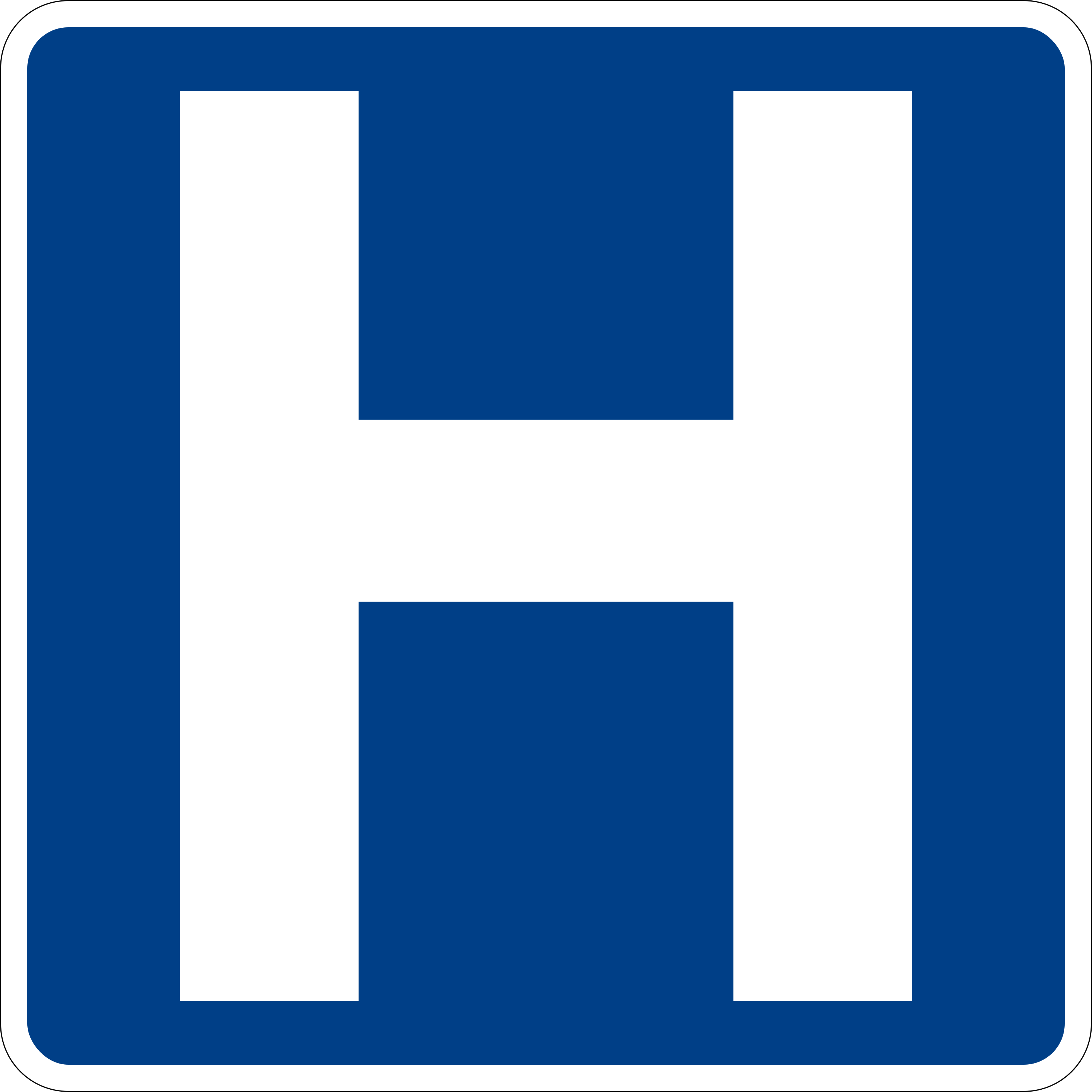
Correct answer: Directions toward services available to drivers
Blue is reserved for pointing motorists toward services, so it guides you to things drivers need rather than warning you of a hazard.
Source: Washington Driver Guide — Signs (4.12)
5. How far away from a railroad crossing must you stay when you park?
Correct answer: At least 50 feet
Parking within 50 feet of a crossing is not allowed, and parking on the tracks themselves is prohibited outright.
Source: Washington Driver Guide — Parking, General parking rules (4.18)
6. When does Washington law require a rider to wear eye protection?
Correct answer: Whenever riding on public roads, unless the bike has a windshield
Eye protection must be worn on public roadways unless the motorcycle is fitted with a windshield.
Source: Washington Motorcycle Operator's Manual — Preparing to Ride: Eye Protection
7. With respect to alcohol, what usually decides whether a rider is within or over the legal limit?
Correct answer: A breath or blood test
A breath or blood test typically determines whether you are within the legal alcohol limits, though officers may also use their discretion.
Source: Washington Motorcycle Operator's Manual — Impairments: Alcohol and the Law
8. To make a quick stop, how should you apply the brakes?
Correct answer: Use both brakes fully while keeping either wheel from locking up
Use both brakes to their full effect while keeping either wheel from locking, squeezing the front smoothly and progressively instead of snatching it.
Source: Washington Motorcycle Operator's Manual — Riding a Two-Wheeled Motorcycle: Quick Stops
9. Which of the following road-surface features tends to be slippery and reduce a two-wheeler's traction?
Correct answer: Painted lines, steel plates, and metal grates
Painted lines and arrows, steel construction plates, drainage grates, and manhole covers can all be slick, especially for two-wheelers.
Source: Washington Motorcycle Operator's Manual — Strategies for the Street: Surface Hazards
10. What is the point of keeping your right wrist flat on the throttle?
Correct answer: It guards against opening the throttle more than you intended
A flat wrist makes it much harder to roll on more throttle than you meant to, which is why the manual suggests starting from that position.
Source: Washington Motorcycle Operator's Manual — Riding a Two-Wheeled Motorcycle: Riding Posture
11. As you roll up to a roundabout, which way should you look and who holds the right-of-way?
Correct answer: Look left, and give way to vehicles already going around
Vehicles already circling hold the right-of-way, so glance to your left on the approach and wait for a gap before you enter the circle.
Source: Washington Driver Guide — Other Intersections, Roundabouts (4.15)
12. The three-second following distance is meant for which conditions?
Correct answer: Ideal conditions, and you should add more in poor conditions
Three seconds is the absolute minimum for ideal conditions; you should increase it for weather, fatigue, poor surfaces, and traffic.
Source: Washington Motorcycle Operator's Manual — Strategies for the Street: Following Distance
13. According to the manual, what single step does the most to improve your chances of surviving a crash?
Correct answer: Wearing a top-quality helmet that fits well and is fastened securely
The single most effective step for surviving a crash is wearing a top-quality helmet that fits well and is fastened securely.
Source: Washington Motorcycle Operator's Manual — Preparing to Ride: Helmets
14. What is a disadvantage of riding in the left portion of your lane?
Correct answer: It puts you closer to oncoming traffic and wind blasts
Riding in the left position places you closer to oncoming traffic and can expose you to wind blasts from oncoming vehicles and trucks.
Source: Washington Motorcycle Operator's Manual — Strategies for the Street: Lane Position
15. Why are intersections especially risky for motorcyclists in terms of visibility?
Correct answer: They often create blind spots that make it harder to be seen
Intersections frequently include elements that produce blind spots, which makes it more difficult for riders to spot others and be noticed themselves.
Source: Washington Motorcycle Operator's Manual — Strategies for the Street: Intersections
16. You are traveling the opposite direction from a stopped school bus on a multilane road. When may you continue without stopping?
Correct answer: Where the road has three or more lanes, or a median or barrier divides the directions
Oncoming traffic is excused only where the road has three or more lanes, or where a median or barrier separates the two directions. Anywhere else, and on any two-lane road, you must stop.
Source: Washington Driver Guide — Sharing with School Buses, When you are in front of the bus (4.2)
17. Why should you never brake and swerve at the same time?
Correct answer: Swerving requires a lot of traction, so doing both can overload the tires
Swerving needs a lot of traction, so braking at the same time can overload the tires; instead, separate the two actions.
Source: Washington Motorcycle Operator's Manual — Riding a Two-Wheeled Motorcycle: Swerves
18. In addition to turn signals and your brake light, what else can a rider use to communicate intentions to others?
Correct answer: Hand signals, when they are needed
Riders can use hand signals when necessary to help communicate their intentions to other road users.
Source: Washington Motorcycle Operator's Manual — Preparing to Ride: Create Your Own Safety by Taking Responsibility
19. What happens if you fail to renew your permit before it expires?
Correct answer: You must retest to get another permit
If you do not renew before expiration, you will need to retest to obtain a second permit.
Source: Washington Motorcycle Operator's Manual — Washington Motorcycle Safety Program: Instruction Permits
20. After you have entered a corner on a two-wheeler, what does gently rolling on the throttle do?
Correct answer: It helps stabilize the motorcycle through the corner
Smoothly rolling on the throttle once you are in the corner helps stabilize the motorcycle and maintain or slightly increase speed.
Source: Washington Motorcycle Operator's Manual — Riding a Two-Wheeled Motorcycle: Cornering Steps