Wisconsin Motorcycle practice
Wisconsin Motorcycle: Road Signs practice test
Learn the shapes, colors, and meanings of regulatory, warning, and guide signs — from stop and yield to construction and school-zone signs.
Content reviewed against official driver handbooks · August 12, 2026
13 questions · pass with 10 correct. You get instant feedback and an explanation after every answer.
Choose your level
Up to 20 questions on this topic, with feedback after every answer.
Study questions with answers
12 sample Road Signs questions with the correct answer, a short explanation, and the official handbook reference. Read through them, then take the quiz above.
Show all 12 questions with answers
1. You spot a yellow "Deer Crossing" sign while riding a rural Wisconsin highway. What does this warning tell you to do?

Correct answer: Stay alert for deer, and remember that spotting one often means others are nearby
A deer-crossing warning sign tells riders to watch for deer in the area; because deer travel in groups, seeing one is a clue that others may be about to cross.
Source: Wisconsin Motorcyclists' Handbook — Farm Safety / Rural Driving
2. You come to a stop sign with a marked stop line at a blind intersection. Where should you make your first stop?
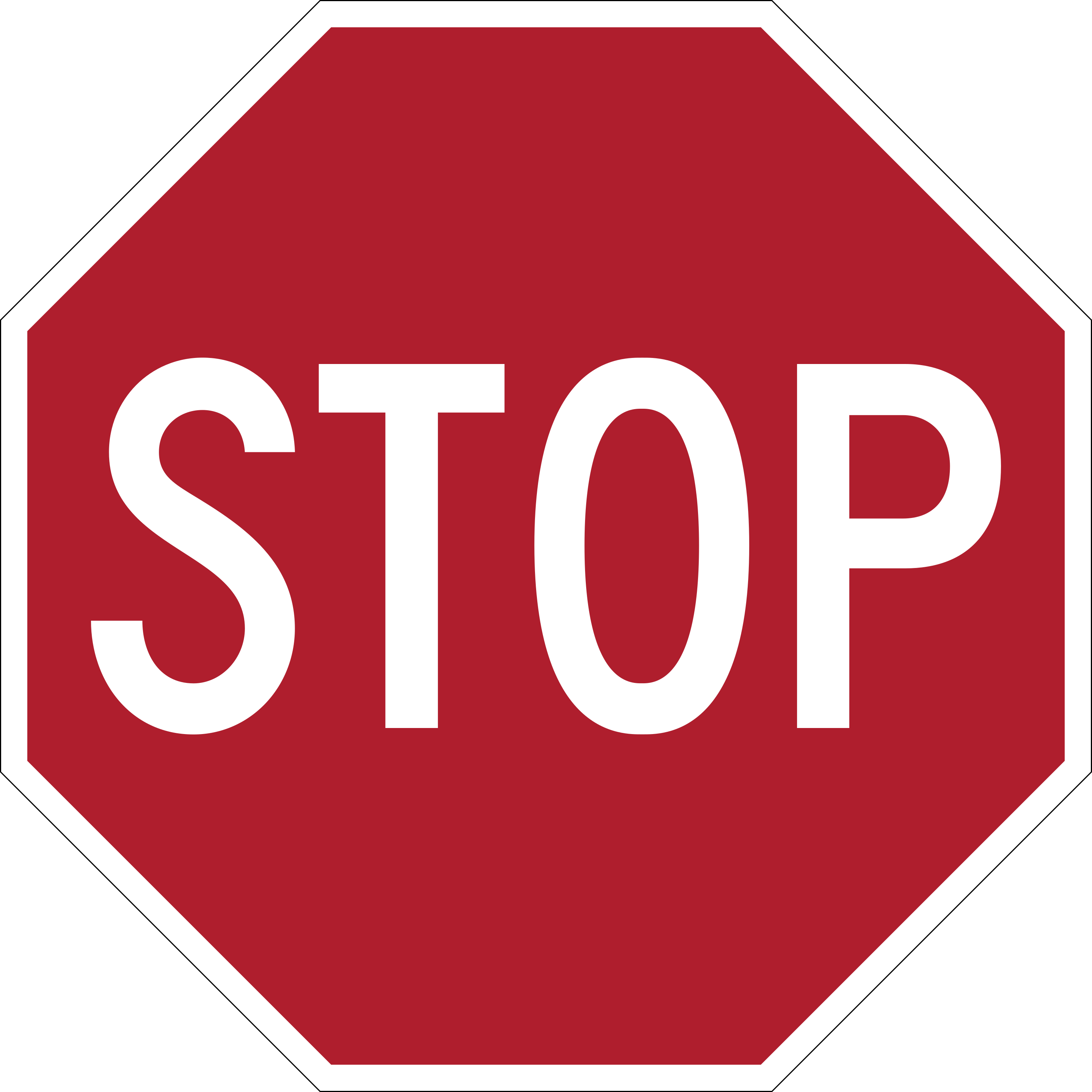
Correct answer: At the stop line, then edge forward and stop again before the cross lane
At a blind intersection with a stop sign or stop line, stop at the line first, then move up and stop again just short of the cross-traffic lane to look for approaching traffic.
Source: Wisconsin Motorcyclists' Handbook — Blind Intersections
3. You come upon a yellow diamond-shaped sign carrying a black symbol. What sort of sign is it?
Correct answer: A warning sign, telling you a hazard or special situation is ahead
Yellow signs bearing black symbols or wording, most of them cut as diamonds, are the warning family. They flag a hazard or an unusual condition waiting for you up the road.
Source: Wisconsin Motorists' Handbook — Section 4: Signs
4. When approaching a roundabout on your motorcycle, how should you treat the posted traffic signs?
Correct answer: Slow down and follow them just as you would at any intersection
The same rules that apply to other intersections apply in a roundabout: reduce speed and obey the posted signs as you approach.
Source: Wisconsin Motorcyclists' Handbook — Navigating Roundabouts
5. According to Wisconsin law, how must a moped operator treat stop signs and traffic signals?
Correct answer: Mopeds must obey them like any other motor vehicle, yielding in crosswalks and slowing in school zones
Mopeds are subject to the same traffic laws as other motor vehicles: obey signals and stop signs, yield to pedestrians in crosswalks, and slow down in school zones.
Source: Wisconsin Motorcyclists' Handbook — Types of Cycles: Moped
6. The handbook reminds riders to know their signs and road markings before passing. Why does this matter when passing?
Correct answer: Because they tell you where passing is legal and the speed limits you must stay within
Signs and pavement markings identify where passing is permitted and the posted speed limits; a pass must be finished within those limits and only where the road allows it.
Source: Wisconsin Motorcyclists' Handbook — Passing
7. What message does a yellow pennant-shaped sign with black lettering carry?
Correct answer: You are inside a no-passing zone and may not overtake any vehicle
The pennant is how a no-passing zone is marked. Wherever it stands, overtaking any vehicle is off limits until the zone ends.
Source: Wisconsin Motorists' Handbook — Section 4: Signs
8. As part of evaluating the road ahead, why should a rider pay attention to warning signs and pavement markings?
Correct answer: They help you judge upcoming conditions and hazards so you can plan ahead
Traffic control devices such as regulatory signs, warning signs, and pavement markings give riders information that helps them anticipate and prepare for what lies ahead.
Source: Wisconsin Motorcyclists' Handbook — S.E.E.: Evaluate
9. Orange diamond and rectangular signs with black lettering start appearing beside the road. What are they telling you?
Correct answer: A work zone is ahead, so slow down — fines are doubled inside it
Orange marks construction, maintenance and emergency work, and cones and flags usually appear alongside. Ease off the throttle: traffic penalties are doubled inside these areas, and a phone may be used there only to report an emergency.
Source: Wisconsin Motorists' Handbook — Section 4: Signs
10. A police officer standing in the intersection waves you forward while the signal facing you is still red. What should you do?
Correct answer: Do as the officer directs, because those directions outrank the signal
Instructions from police, school crossing guards and others directing traffic outrank whatever a sign or a signal is showing you, so do what the officer signals.
Source: Wisconsin Motorists' Handbook — Section 4: Signs
11. The vehicle ahead of you carries a reflective orange triangle on its rear. What does that emblem tell you?
Correct answer: It is a slow-moving vehicle that may be going 25 mph or less
That triangle identifies a slow-moving vehicle. Expect it to be traveling no more than 25 mph, and start planning your approach well before you reach it.
Source: Wisconsin Motorists' Handbook — Section 4: Signs
12. You reach a railroad crossing where the gates are down and the red lights are flashing. What is required?
Correct answer: Stay in your lane and wait until the gates rise and the lights stop flashing
When crossing gates are down and lights are flashing, you must stay in your lane and wait until the gates rise and the red lights stop; going around lowered gates is illegal.
Source: Wisconsin Motorcyclists' Handbook — Railroad Crossings
More Motorcycle topics
Practice Road Signs in another state
Every Wisconsin question is written from the official Wisconsin driver handbook and checked against its current edition. DMV Test Free is a free, independent study resource — not affiliated with any DMV or government agency. About DMV Test Free