Kentucky Road Signs and Their Meanings
The written test you sit in Kentucky is given to you by the Kentucky State Police. Not a motor-vehicle department, not a licensing bureau — troopers. You start at a Kentucky Transportation Cabinet Regional Driver Licensing Office, which prepares the application, and from there the manual is explicit that "the Kentucky State Police will administer all required tests." The driver manual is itself a State Police publication, carrying the KSP commissioner's name, and every written and road test runs by appointment through the KSP scheduling system. Kentucky publishes the score you must reach — "applicants must make a minimum score of 80% to pass this test" — but nowhere publishes how many questions that eighty per cent is measured against.
Kentucky's manual treats the sign questions as a distinct portion of the written test, and it says so in an unexpected place: the rules on accommodation. "Tests can be given orally for applicants who cannot read the English language," it reads. "However, the signs portion of the test must be answered by applicants from their own knowledge and understanding." That sentence does two things at once. It confirms a signs portion exists inside the single eighty per cent score, and it withdraws, for that portion alone, the help offered everywhere else on the paper. An applicant testing through an interpreter or an oral administration still meets the sign questions unaided. The manual never says how many of them there are — but it has told you exactly which questions nobody is permitted to carry you through.
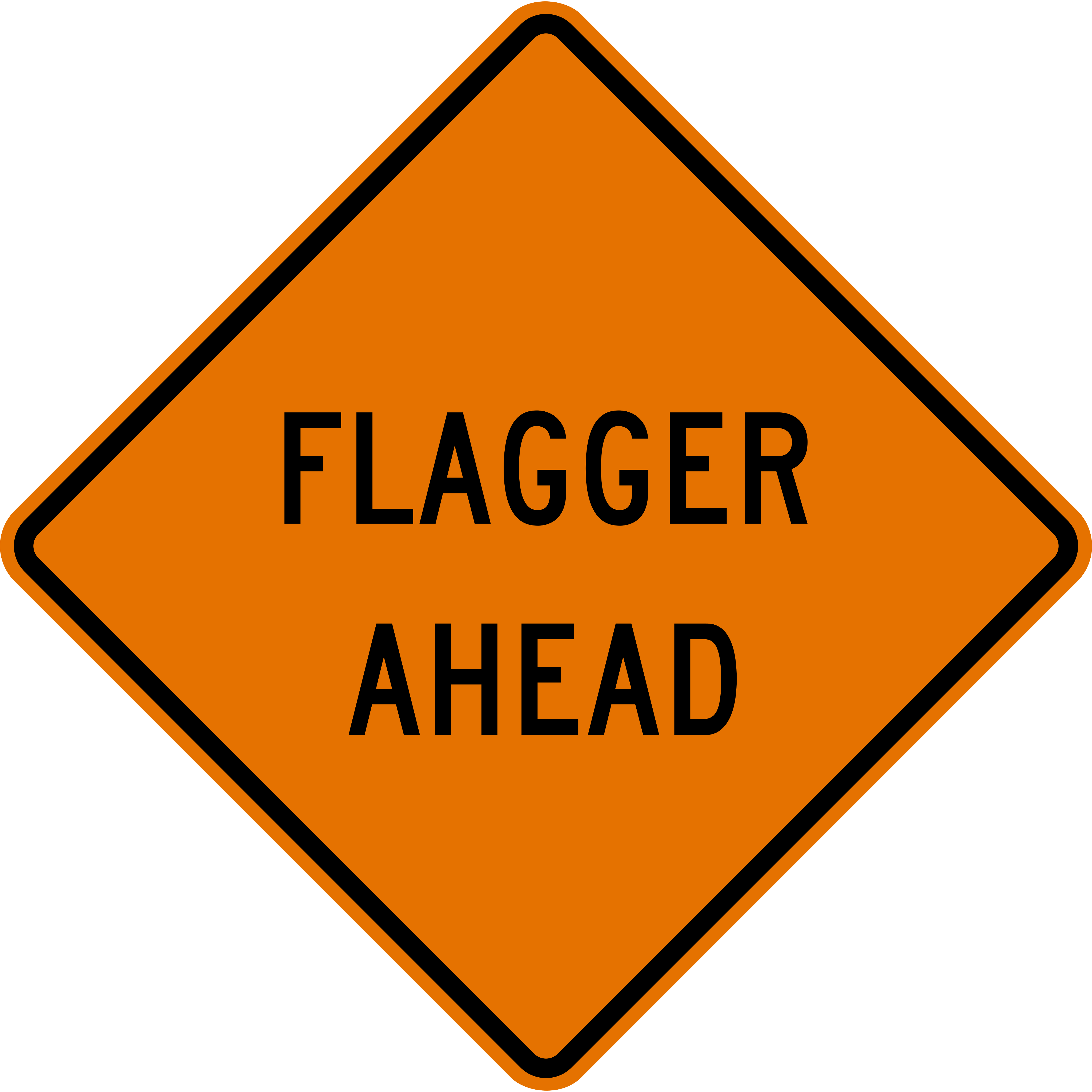
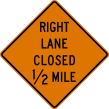
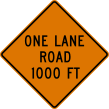
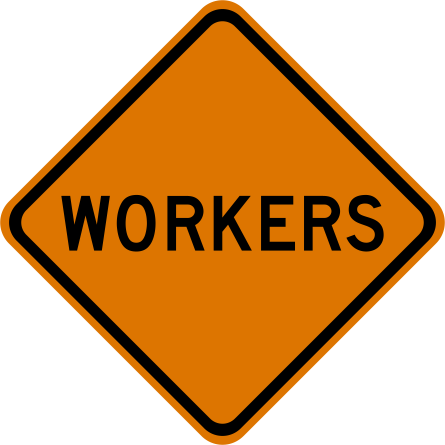
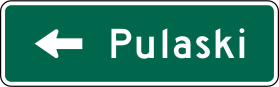
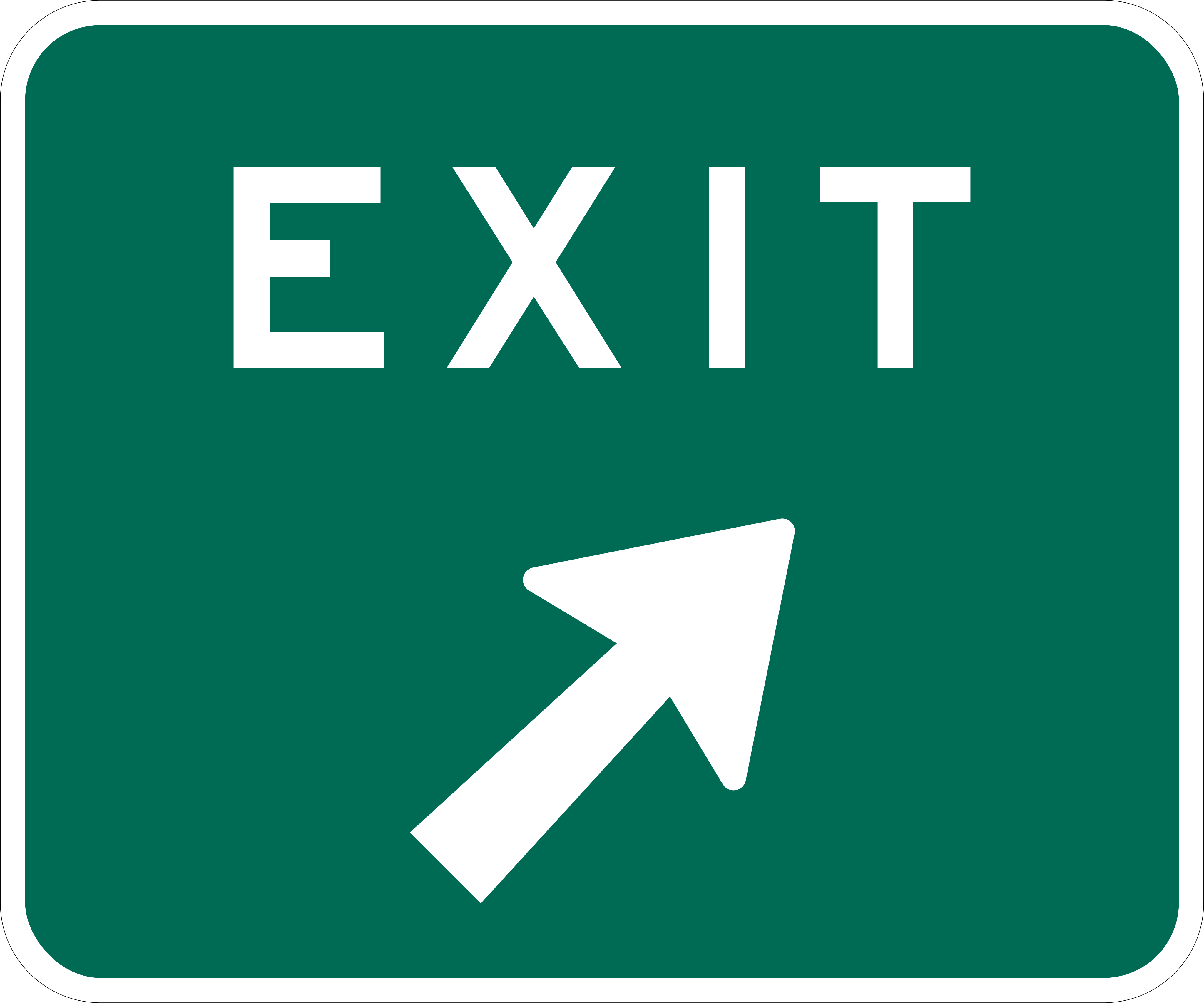
The sign material lives in Section Six: Rules of the Road, where Kentucky compresses the fundamentals into two labeled tables a page apart. STANDARD COLORS assigns three colors a job each — red for stop or forbidden, green for movement permitted and directional guidance, yellow for general warning. STANDARD SHAPES sets out six shapes: horizontal rectangle, equilateral triangle, vertical rectangle, diamond, pentagon and round. The other colors are not in that table. They arrive attached to the sign families that use them, so work zone signs are introduced as "generally diamond or rectangular shaped and orange with black letters or symbols" and guide signs as "square and rectangular and are green, brown, or blue." Anyone studying from the tables alone will be short of colors; the families are where the rest of the system is kept.
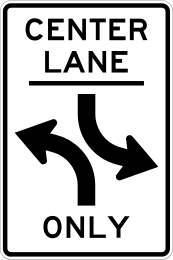
Begin with the three questions cited simply to Traffic Signs, because they are the ones that assume no preparation at all: what an eight-sided red sign demands of you, how a driver recognizes a yield sign, and what most signs warning of a hazard ahead look like. Nothing about those is Kentucky-specific, which is exactly why they are worth clearing first. The regulatory group is the largest single one here — a wrong-way sign, a do-not-enter sign, a shared center lane reserved for left turns, a black-and-white speed limit sign, all of them signs that state a law rather than describe a hazard. What remains divides between the standard-shapes table and railroad crossings, then one question each on guide signs, work zone signs and the slow-moving vehicle emblem. No group here is a majority, so no group is safe to skip.
15 published Kentucky road-sign questions, each with an explanation and a citation to the handbook section it came from.
Content reviewed against official driver handbooks · August 12, 2026
Every sign you can be tested on in Kentucky
Regulatory signs
- Stop

- Yield

- Do Not Enter

- Wrong Way

- No U-Turn

- Speed Limit

- One Way

- All Way

- State Law: Yield to Pedestrians

- State Law: Stop for Pedestrians

- Truck Speed Limit

- Minimum Speed Limit

- Reduced Speed Limit Ahead

- Begin Higher Fines Zone

- End Higher Fines Zone

- No Right Turn

- No Left Turn

- No Turns

- Left Lane Must Turn Left

- Right Lane Must Turn Right

- Intersection Lane Control

- Bike Lane

- No Left or U-Turn

- No Straight Through

- Do Not Pass

- Pass With Care

- Slower Traffic Keep Right

- Begin Right Turn Lane — Yield to Bikes

- Trucks Use Right Lane

- Keep Right

- Keep Left

- Keep Right Except to Pass

- Do Not Drive on Shoulder

- No Trucks

- No Motor Vehicles

- No Bicycles

- No Pedestrians, Bicycles, or Motor-Driven Cycles

- No Parking Any Time

- Accessible Parking

- No Parking Bus Stop

- No Parking

- Stop Here on Red

- Do Not Block Intersection

- No Turn on Red

- Left Turn Yield on Green

- Road Closed

- Road Closed — Local Traffic Only

- Road Closed to Thru Traffic

- Weight Limit

- No Hazardous Materials

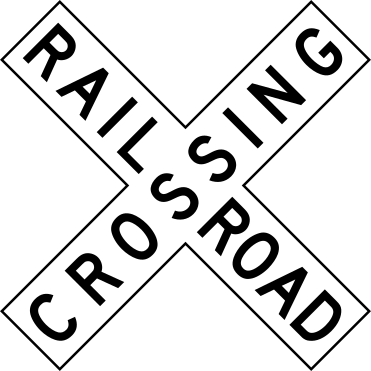
- Railroad Crossing (Crossbuck)
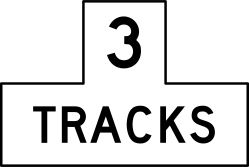
- Number of Tracks
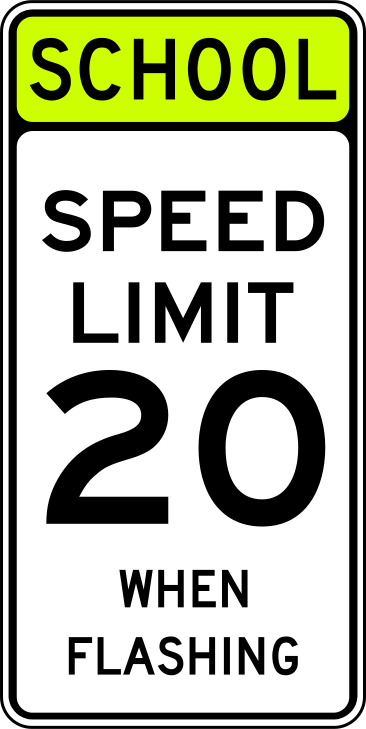
- School Speed Limit When Flashing
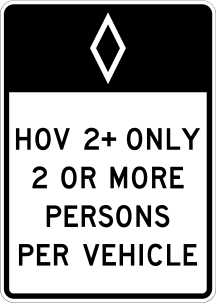
- HOV Lane
- Exempt

- Two-Way Left Turn Only
Warning signs
- Turn Ahead

- Stop Ahead

- Signal Ahead

- Pedestrian Crossing

- Curve

- Reverse Turn

- Reverse Curve

- Winding Road

- One-Direction Large Arrow

- Two-Direction Large Arrow

- Chevron Alignment

- Hairpin Curve

- Cross Road

- Side Road

- Roundabout Ahead

- Yield Ahead

- Be Prepared to Stop

- Reduced Speed Limit Ahead

- Merging Traffic

- Lane Ends

- Added Lane

- Lanes Merge

- Road Narrows

- Narrow Bridge

- One Lane Bridge

- Ramp Narrows

- Divided Highway Begins

- Divided Highway Ends

- Two-Way Traffic

- Hill / Steep Grade

- Bump

- Dip

- Pavement Ends

- Soft Shoulder

- Slippery When Wet

- Loose Gravel

- Rough Road

- Low Shoulder

- Uneven Lanes

- Grooved Pavement

- Metal Bridge Deck

- Railroad Crossing Ahead

- Bicycle Crossing

- Deer Crossing

- Cattle Crossing

- Farm Machinery

- Snowmobile Crossing

- Equestrian Crossing

- Persons with Disabilities

- Golf Cart Crossing

- Horse-Drawn Vehicle Crossing

- Low Clearance

- Advisory Speed

- Dead End

- No Outlet

- No Passing Zone

- Playground

- Speed Hump

- School

- Truck Rollover

- Bridge Ices Before Road

- Road May Flood

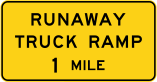
- Runaway Truck Ramp
Construction & work-zone signs




Guide signs




Service & information signs


Kentucky road signs: frequently asked questions
The Kentucky State Police say the only approved study material is theirs. What does that mean for a page like this one?
It means you should treat this page as practice and the KSP manual as the authority, which is how we would put it anyway. The KSP driver-testing page states that "the only approved or endorsed material to prepare for the Kentucky driver license exam is on kentuckystatepolice.ky.gov." This site is not approved or endorsed by the Kentucky State Police, is not affiliated with any government agency, and does not claim to be. Every question here is written from the manual KSP publishes and cites the part it came from, so you can check us against the source they name.
How is Kentucky's written test actually delivered — on paper, on a screen, or out loud?
On tablets. The manual states that all testing offices are equipped with tablet devices that will present the test audibly in English and several foreign languages, and that no special appointment is needed to use that feature. A special appointment is needed for two other situations: a test administered orally, and a test requiring an interpreter. The KSP driver-testing page lists the languages currently offered for the standard operator test, among them Arabic, Burmese, Chinese, Dari, French, Japanese, Kinyarwanda, Pashto, Somali, Spanish and Swahili.
Kentucky publishes a pass mark but no question count. What should I plan around?
Plan around the percentage, because it is the only figure Kentucky commits to. The manual sets the bar at a minimum score of eighty per cent and describes the subject matter as driving rules, regulations, procedures and highway signs, but it stops there. Any specific total you see quoted for Kentucky, including the one this site uses to size a practice run, is a model rather than a published number. The honest planning assumption is the one the manual itself offers: review the manual in its entirety, because it does not tell you which parts you could safely skip.
I am moving to Kentucky with a license from another state. Will I have to test again?
It turns on one year. If your out-of-state license is valid, or has been expired less than a year when you transfer, the manual says you will not be required to test. If it has been expired more than a year at the time of transfer, you will need a full certified Driver History Record or clearance letter from the previous state, and you will be required to take both the written and eye exams before a Kentucky permit or license is issued. Where testing is required, it is scheduled with the Kentucky State Police like any other.
Are speeding fines really doubled in a Kentucky work zone?
Under two conditions, both of which the manual spells out. Kentucky law allows fines to be doubled in a highway work zone when signs are displayed informing drivers that a highway work zone exists and that fines are doubled in it — and, additionally, at least one bona fide worker must be present. The sign is therefore doing legal work, not just advisory work: without it the doubling does not apply. The manual also advises reducing speed in a work zone even where no workers are visible, because narrower lanes and rough pavement are hazardous on their own.
Official sources
Checked against official state sources on 2026-07-29.