South Dakota Road Signs and Their Meanings
South Dakota publishes the bar you have to clear and keeps the length of the paper to itself. The bar is also not where you would look for it. It is not in the manual; it sits on a Department of Public Safety knowledge-base article titled South Dakota Driver License Testing Information, inside an answer that stays shut until you open it — the article's Frequently Asked Questions block prefaces itself with the instruction "Click on the arrow next to the question to reveal the answer," and the first question, "How do I get my driver's license?", lists the steps to a license. Among them: "Pass a knowledge test with a score of 80% or higher. This test will cover rules of the road and safe-driving practices." A line further down the same list applies the identical bar to the road test. What the department never prints anywhere is the number of questions behind that percentage. It is absent from the testing article, from the South Dakota Driver License Manual, and from the Driving Manuals article — so the total this site uses to size a practice run is a model of ours, picked because the published threshold falls on a whole number of questions, and not a figure South Dakota has released. Read the eighty percent as the state's and the length as an estimate.
In South Dakota's own account the knowledge test arrives as one undivided thing. The manual's Required Noncommercial License Tests section takes an applicant through the sequence — photograph, vision test, knowledge test, driving test — and disposes of the third in a single sentence: "You will be required to pass a test covering the rules of the road and safe driving practices." That is the entire description. Nothing follows it that would carve a sign portion out of the paper: no share of the questions reserved, no tally of signs to identify, no second threshold the sign material could miss while the rest of the sitting passed. Where South Dakota does attach a consequence to a sign, it attaches it in the car rather than at the desk. The testing article lists the infractions that force a drive-test applicant to wait thirty days before an examiner will take them out again, and between "Failure to yield to a car or pedestrian" and "Excessive speeding" stands "Running a stop light or stop sign." A misread sign is one of the nine named acts that ends the appointment and costs a month. The manual then restates the duty in the plainest words it uses anywhere, and it saves them for the roads most of the state actually drives on: "Driving on rural highways can be dangerous. Stay alert, watch for warning signs, and obey the speed limit." It goes on to warn that some rural intersections are "not controlled by yield or stop signs" at all — which makes the absence of a sign something South Dakota expects you to read as well.
The book is the South Dakota Driver License Manual, put out by Driver Licensing at the Department of Public Safety in Pierre and stamped REVISED 11/2024 on its last page. It opens before the table of contents, and not on a greeting: the first thing printed is the move-over law, cited to South Dakota Codified Law 32-31-6.1 and 32-31-6.2, so the manual's first business is a rule about somebody else's emergency. About This Manual then sets a condition rather than an invitation — "Unless you know the information contained in this manual, you cannot pass the knowledge test." Signs live inside the division the contents print as RULES OF THE ROAD, which is broken into six entries: Yielding Right-of-Way, Traffic Control Devices, Traffic Signals, Traffic Signs, Pavement Markings, Other Lane Controls. Traffic Control Devices arrives first and spends nearly all of itself on a single device, the pedestrian hybrid beacon, whose head "consists of two red lenses above a single yellow lens" and stays dark until a waiting pedestrian presses the call button. Traffic Signs then opens on the working principle the rest of the material hangs from: "Traffic signs tell about traffic rules, hazards, roadway locations, roadway directions, and the location of roadway services. The shape, color, symbols, and words of these signs give clues to the type of information they provide." You download the book from the department's Driving Manuals article, which lists it as Driver's License Manual - English beside a full Spanish edition. The last page asks for the book back: "To keep costs as low as possible, please return this manual to the Exam Station," printed above a line with blanks for the number of copies and the cost of each, left unfilled in the electronic version.
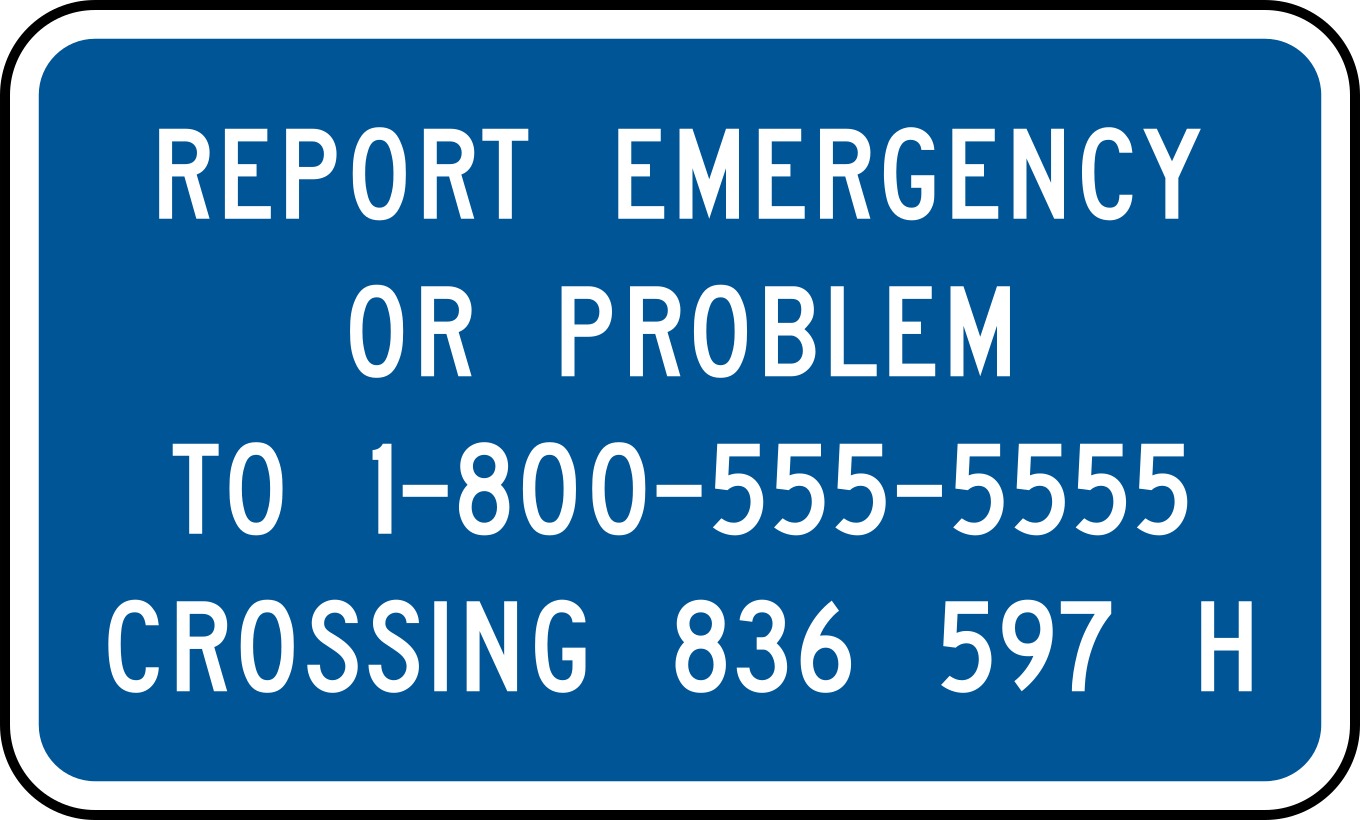
Look under any sign question in this bank and the citation has the same two-tier build: the South Dakota Driver License Manual, then Rules of the Road, then a heading — Warning Signs, Stop Sign, Yield Sign, Regulatory Signs, Speed Limit Signs, Work Zone Signs, Guide Signs, Destination Signs, Slow Moving Vehicle, Railroad Crossing Warning Signs, Railroad Emergency Notification System. That middle tier is not decoration. South Dakota keeps signs, signals and pavement markings together inside one division of the book, so a sign citation has no chapter of its own to name; Rules of the Road is the only address it has. The heading after the comma is the strange one. Look those headings up in the table of contents and they are not there — the contents stop at Traffic Signs and list nothing beneath it, so every heading these questions cite is printed in the body of the manual and invisible to anyone reading only the front. Where the citations bunch up shows what the state spends its space on. Warning signs and the stop sign each pull more than one question, and the railroad material pulls the most of all, because crossings get the longest unbroken run of sign prose in the book: the round advance sign, the crossbuck standing at the tracks, the posted count of tracks, flashing lights, gates, a bell or a horn, and a blue sign carrying a dispatch number and a crossing identifier for reporting a problem to the railroad. One thing the citations never point at is the quiz. The manual closes on a section headed Test Your Knowledge, a short multiple-choice set with an answer key beneath it, and these questions were deliberately written from the instructional prose instead, so nothing here restates the state's own items.
14 published South Dakota road-sign questions, each with an explanation and a citation to the handbook section it came from.
Content reviewed against official driver handbooks · August 12, 2026
Every sign you can be tested on in South Dakota
Regulatory signs
- Stop

- Yield

- Do Not Enter

- Wrong Way

- No U-Turn

- Speed Limit

- One Way

- All Way

- State Law: Yield to Pedestrians

- State Law: Stop for Pedestrians

- Truck Speed Limit

- Minimum Speed Limit

- Reduced Speed Limit Ahead

- Begin Higher Fines Zone

- End Higher Fines Zone

- No Right Turn

- No Left Turn

- No Turns

- Left Lane Must Turn Left

- Right Lane Must Turn Right

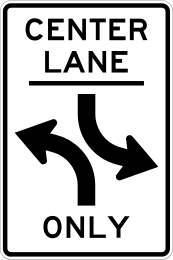
- Intersection Lane Control

- Bike Lane

- No Left or U-Turn

- No Straight Through

- Do Not Pass

- Pass With Care

- Slower Traffic Keep Right

- Begin Right Turn Lane — Yield to Bikes

- Trucks Use Right Lane

- Keep Right

- Keep Left

- Keep Right Except to Pass

- Do Not Drive on Shoulder

- No Trucks

- No Motor Vehicles

- No Bicycles

- No Pedestrians, Bicycles, or Motor-Driven Cycles

- No Parking Any Time

- Accessible Parking

- No Parking Bus Stop

- No Parking

- Stop Here on Red

- Do Not Block Intersection

- No Turn on Red

- Left Turn Yield on Green

- Road Closed

- Road Closed — Local Traffic Only

- Road Closed to Thru Traffic

- Weight Limit

- No Hazardous Materials

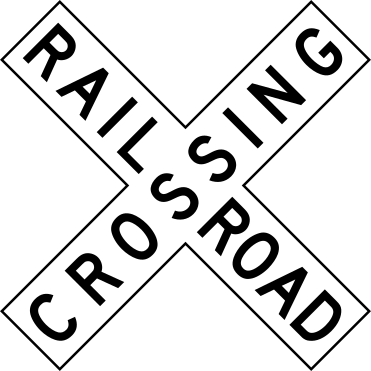
- Railroad Crossing (Crossbuck)
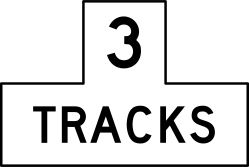
- Number of Tracks
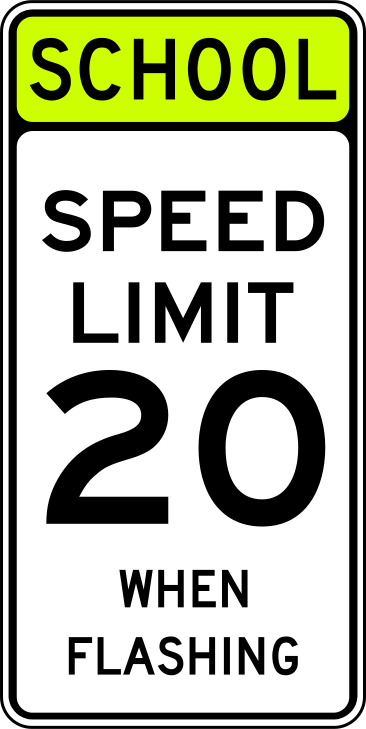
- School Speed Limit When Flashing
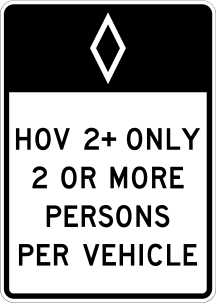
- HOV Lane
- Exempt

- Two-Way Left Turn Only
Warning signs
- Turn Ahead

- Stop Ahead

- Signal Ahead

- Pedestrian Crossing

- Curve

- Reverse Turn

- Reverse Curve

- Winding Road

- One-Direction Large Arrow

- Two-Direction Large Arrow

- Chevron Alignment

- Hairpin Curve

- Cross Road

- Side Road

- Roundabout Ahead

- Yield Ahead

- Be Prepared to Stop

- Reduced Speed Limit Ahead

- Merging Traffic

- Lane Ends

- Added Lane

- Lanes Merge

- Road Narrows

- Narrow Bridge

- One Lane Bridge

- Ramp Narrows

- Divided Highway Begins

- Divided Highway Ends

- Two-Way Traffic

- Hill / Steep Grade

- Bump

- Dip

- Pavement Ends

- Soft Shoulder

- Slippery When Wet

- Loose Gravel

- Rough Road

- Low Shoulder

- Uneven Lanes

- Grooved Pavement

- Metal Bridge Deck

- Railroad Crossing Ahead

- Bicycle Crossing

- Deer Crossing

- Cattle Crossing

- Farm Machinery

- Snowmobile Crossing

- Equestrian Crossing

- Persons with Disabilities

- Golf Cart Crossing

- Horse-Drawn Vehicle Crossing

- Low Clearance

- Advisory Speed

- Dead End

- No Outlet

- No Passing Zone

- Playground

- Speed Hump

- School

- Truck Rollover

- Bridge Ices Before Road

- Road May Flood

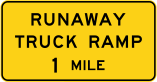
- Runaway Truck Ramp
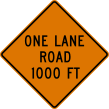
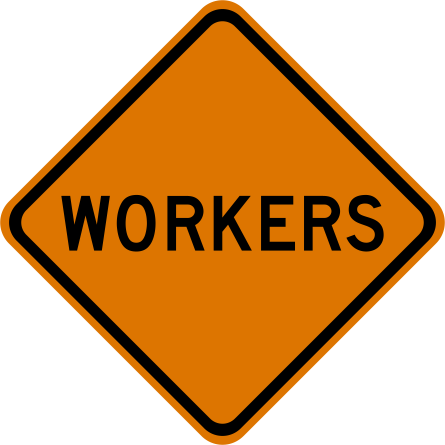
Construction & work-zone signs




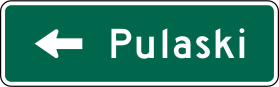
Guide signs


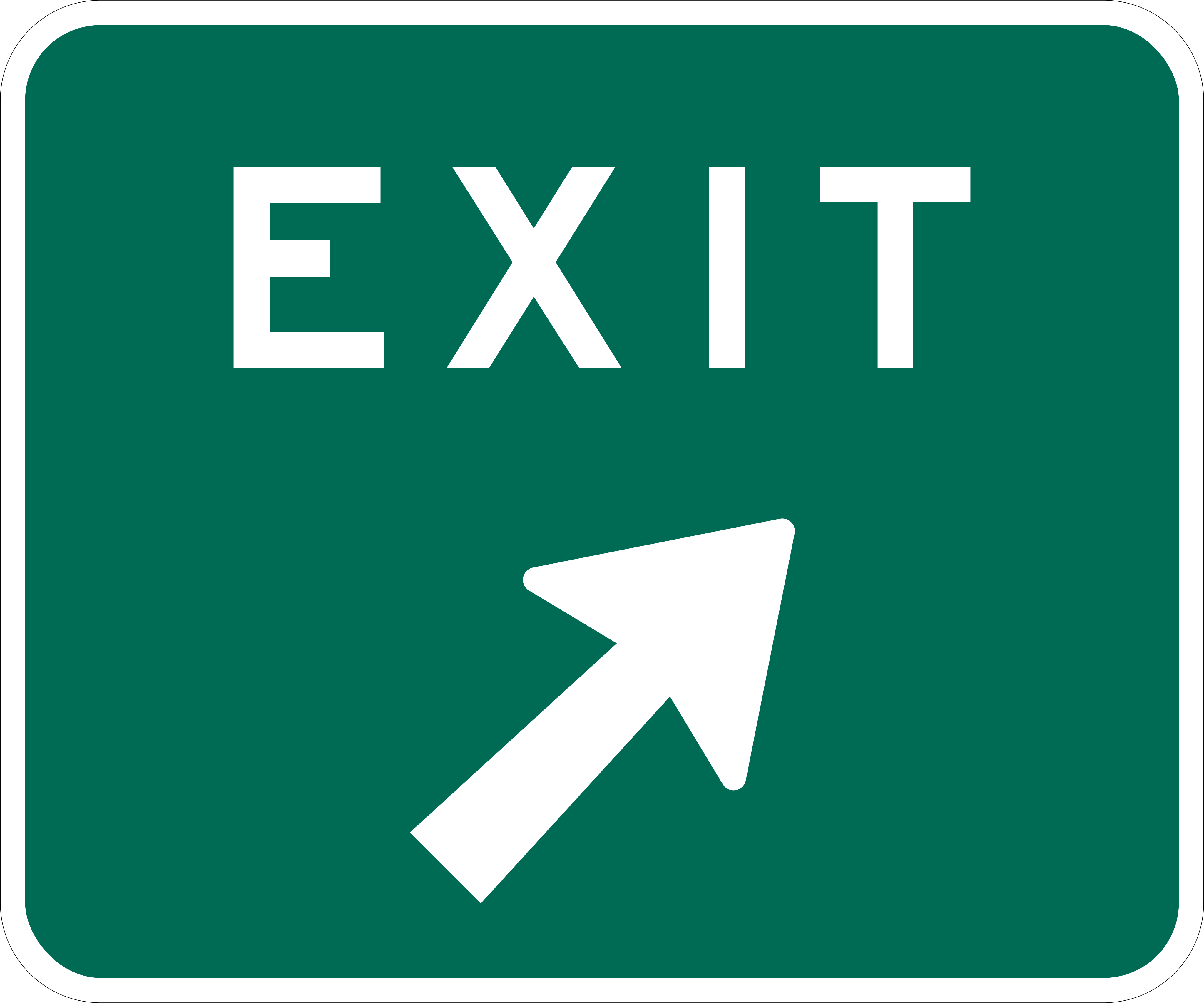


Service & information signs


South Dakota road signs: frequently asked questions
South Dakota publishes a passing score but no question count. So how long is the test?
Nobody outside the Department of Public Safety can tell you honestly. What the department does publish, on its testing article, is the threshold: "Pass a knowledge test with a score of 80% or higher." That sentence is South Dakota's and this page quotes it as written. The length is a separate matter and a separate claim. No count appears in the South Dakota Driver License Manual, on the testing article, or on the Driving Manuals article, so the total used here to size a practice run is our model — chosen so that the published eighty percent lands on a whole number of questions rather than between two of them. If the examiner's screen shows you a different total on the day, that one is the state's and this one was only ever scaffolding.
The manual also says 80%. Is that the same figure?
No, and mistaking one for the other is easy enough that it has fooled careful readers. The 80% inside the manual belongs to driver education, not to the exam. A minor holding an instruction permit must keep it for 275 days before upgrading — or 180 days on "score of 80% or better on both written and driving portions of driver education" in an approved Department of Education course. That number governs how long you wait, not whether you pass. The exam threshold lives somewhere else entirely: on the Department of Public Safety's testing article, folded inside the collapsed answer to "How do I get my driver's license?" Anyone who checks only the manual, reads its 80% correctly, and concludes that South Dakota publishes no passing score has reasoned well from the wrong document.
Does the state offer a practice test of its own?
It says no twice, in two places, in different words. The testing article states "There is no sample test." The Driving Manuals article, after telling you to study by downloading the manuals, adds "We do not provide pre-tests or sample tests." What that article does give you is the library: the Driver's License Manual in English and in Spanish, the Commercial Driver License Manual, the motorcycle manual in both languages, and a teen driver pamphlet. There is one wrinkle worth knowing. The driver manual's own final section is headed Test Your Knowledge, and it is a short multiple-choice quiz with the answer key printed under it — three of its ten items ask about signs. So the state that publishes no sample test ends its manual with a small one, and it is free.
My license expired, or I moved here. Do I take the knowledge test again?
Two situations, two opposite answers. A lapsed South Dakota license: "If your driver license has been expired for more than 30 days, you must schedule a testing appointment at a driver exam station, as you will be required to pass a knowledge test." A valid license from another state goes the other way — the manual says that if you hold one, "no testing will be required for the transfer of that license unless you have a hazardous materials endorsement," though you must apply within 90 days of establishing residency, or within 30 if you hold a CDL. One more line worth reading if you ride: a Class 2 motorcycle license means both tests, because "you must pass the operator's knowledge test and the motorcycle knowledge test."
What does getting a sign wrong actually cost in South Dakota?
On the knowledge test, one answer among the rest. After that, the price climbs and the state has written it down. On the drive test, "Running a stop light or stop sign" is one of the listed infractions that ends the appointment and puts the next attempt thirty days away. Once you are licensed, South Dakota's point system prices it again: a Stop Sign/Light Violation is assessed at 3 points, above the 2 for any other moving violation, while the manual states that "No points will be assessed for speeding" at all — so on the state's own schedule, missing a stop sign is a scored offense and driving over the limit is not. And if the written test itself goes badly, you may not retest before the next working day, with three attempts allowed per fee inside a six-month window; the manual adds that anyone caught cheating waits a minimum of two weeks.
Official sources
- South Dakota Driver License Manual, revised 11/2024 (DPS Driver Licensing)
- SD DPS — South Dakota Driver License Testing Information (the published 80% pass mark, in a collapsed FAQ answer)
- SD DPS — South Dakota Driver License and Motorcycle Manuals ("We do not provide pre-tests or sample tests"; English and Spanish editions)
- SD DPS — Driver Licensing (the department's landing page for every licensing article)
Checked against official state sources on 2026-08-30.